
The overhaul of machine tools is increasingly becoming an economically and technologically attractive alternative to new purchases. Especially with high-quality base machines, a comprehensive retrofit approach offers the possibility to significantly enhance performance, process reliability, and flexibility beyond the original delivery condition.
A current example of this is the modernization of an INDEX G300 turning-milling center, with a Y-axis, for Woodward L'Orange GmbH in Glatten, a global leader in the field of injection systems for large diesel engines.
The project was realized by BCS Maschinenbau GmbH in Kirchheim unter Teck in collaboration with EWS Weigele GmbH & Co. KG in Uhingen.
Holistic Retrofit as a Success Factor
BCS pursues a comprehensive approach in retrofit projects, which includes not only mechanical refurbishment but also the modernization of control systems, drive technology, and automation.
"We have deliberately specialized in INDEX machines of the G and V series, as their basic structure is extremely solid," explains Robert Eber, COO of BCS-Maschinenbau. "Our goal is not only to overhaul or replace assemblies but to comprehensively modernize the machines and bring them up to date in the areas of mechanical hardware, control technology, and customized automation solutions."
In this case, the existing Siemens 840C control system was replaced by the current Siemens SINUMERIK ONE generation. At the same time, the drive system was renewed, which improved dynamics, precision, and energy efficiency.
The retrofitter also places great importance on ease of use and has specifically integrated a BCS-HMI user interface with quick selection buttons to make the transition as easy as possible for the operator.
Optimization of Milling Processing through Turret Technology
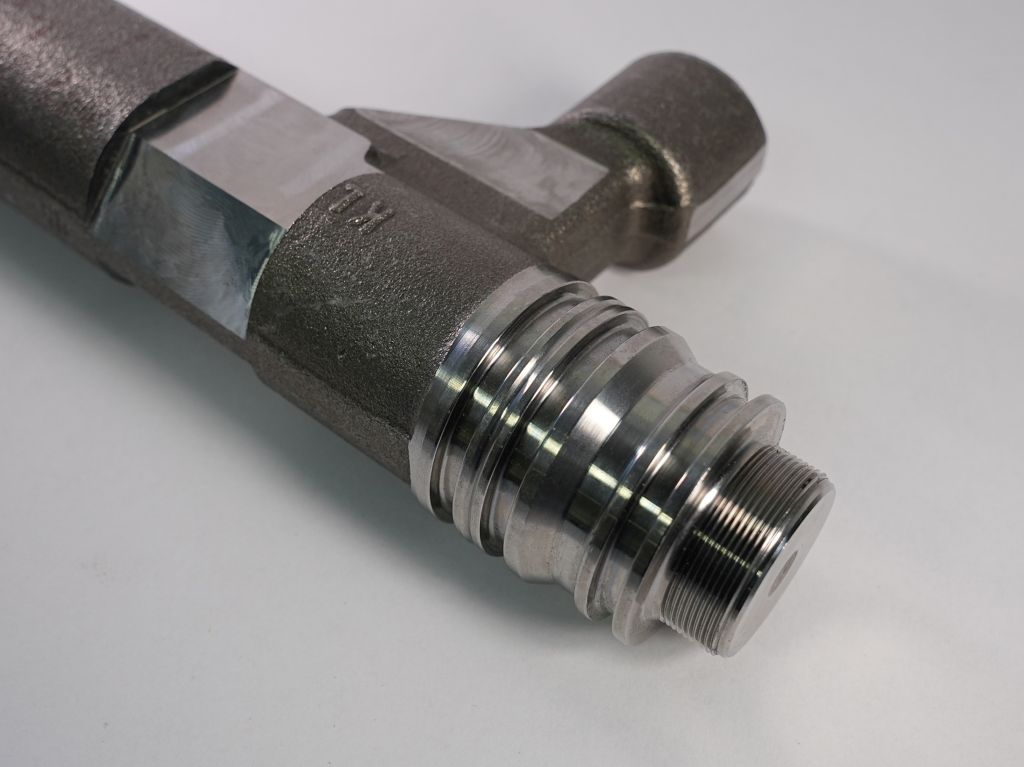
A central challenge of the project was to optimize the existing milling process. The original machine was equipped with an integrated milling spindle with an HSK50 interface, which was used for heavy machining. However, the necessary swiveling of the spindle led to extended cycle times. Additionally, there was no tool changer, which further limited flexibility. Therefore, one had to focus on the most demanding milling tasks with the HSK spindle.
Together with EWS, a new machining concept was developed: The goal was to fully integrate the performance of the milling spindle into the turret machining process.
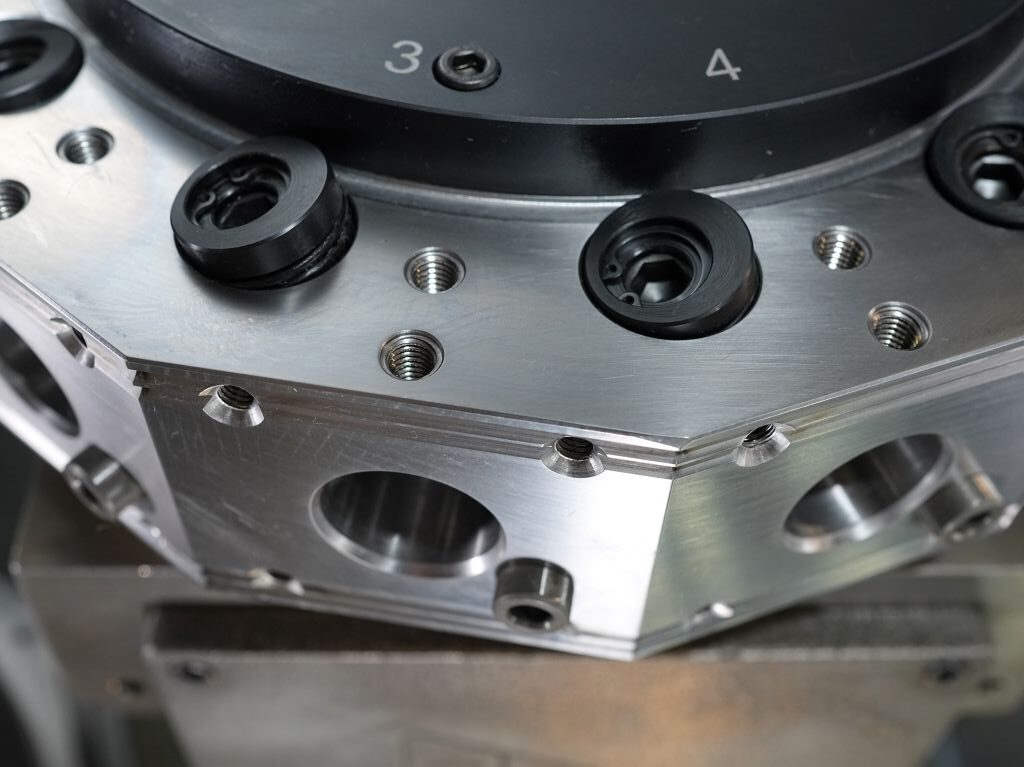
The core of the solution is the ProLine system from EWS. This combines the classic VDI interface with an additional fastening concept in the sense of a Base-Mounted Tool (BMT) approach. Tool holders are not only clamped using the classic VDI clamping pin but are also connected to the turret disk with four additional screws.
"The combination of VDI and bolted block holders combines flexibility and maximum stability," explains Matthias Weigele, CEO of EWS. "While simple machining can still be carried out using the VDI clamping, significantly higher forces can be safely transmitted for demanding milling operations through the 4 screws."
Additionally, the driven tools were equipped with high-performance bearings.
Renewal of the machine-side alignment system from V-rail to W-tooth profile
Another essential component of the modernization was the change in tool alignment from V-grooves to a W-tooth design. This ensures a completely form-fitting positioning of the tool holders and prevents twisting even under high loads.
In addition, the quick-change system EWS Varia VX was integrated. Despite initial concerns about stability in heavy machining, the system proved itself in practice.
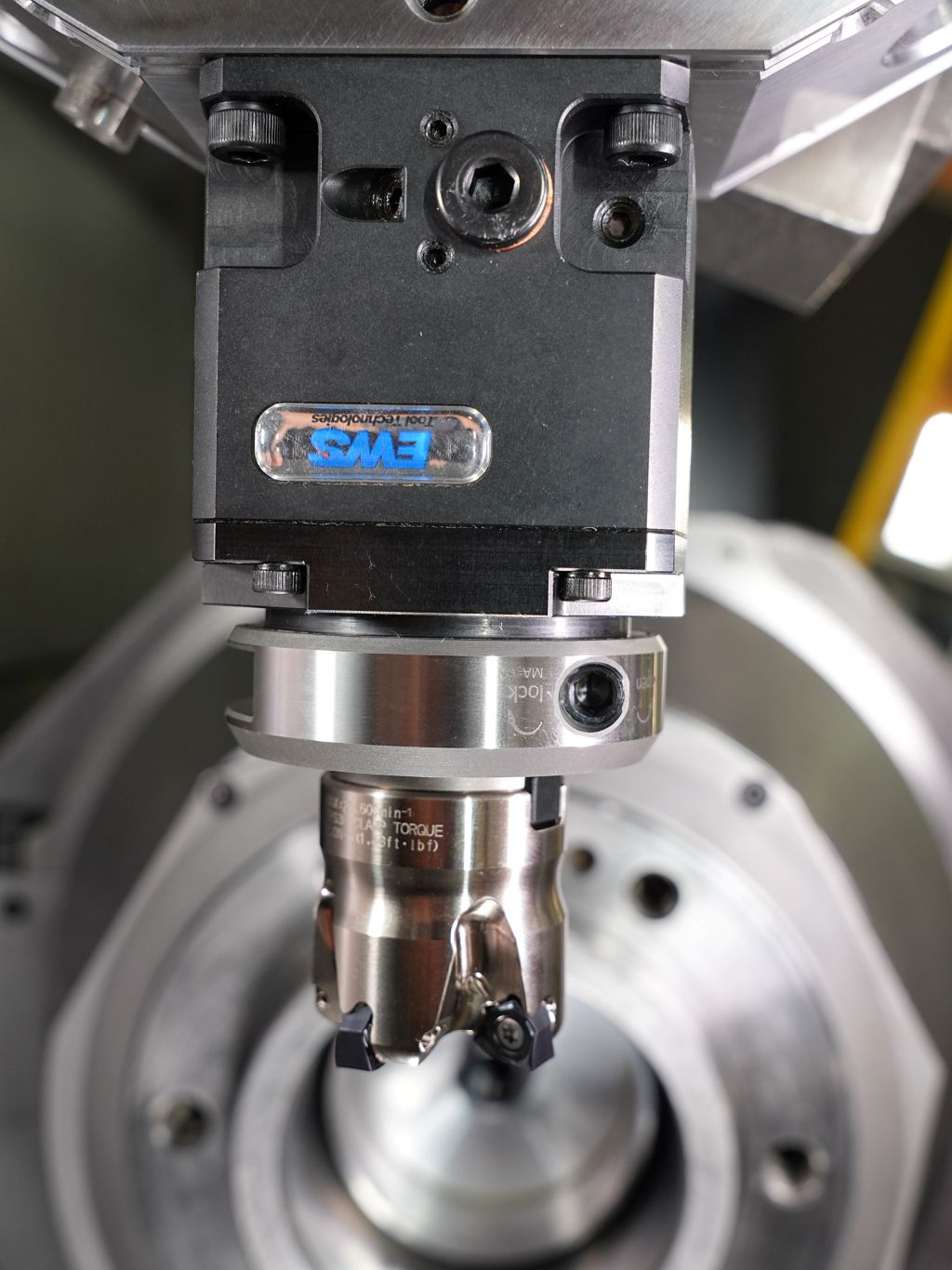 "The tool change takes place in about 20 seconds – as we exchange prepared sister tools," reports Tobias Mangold from process development at Woodward. "The repeat accuracy is particularly important: preset tools fit immediately and allow for uninterrupted operation." The potential for errors is also significantly reduced, as the tool lengths are ensured through tool presetting. The milling result is impressive, especially with a difficult-to-machine material like 42CrMo4, which is tempered to 1,000 N/mm².
Tool and cutting data:
• Cutter head: Ø 40 mm, 4 cutting edges
• Speed: 1,400 rpm
• Feed: 0.15/tooth; 0.6 mm/rev
• Feed: 2.5 mm
Productivity increase and reduced auxiliary times
The elimination of the spindle's pivoting results in significant time savings in the machining process. At the same time, the increased rigidity of the tool holder ensures better cutting values and longer tool life compared to conventional driven tools.
"The tools are clamped significantly more stably in the ProLine system," Mangold continued. "This has a direct impact on process reliability and cost-effectiveness. The quality of the milling image has also convinced us."
In addition to the complete retrofit solution, BCS also offers modular modernization concepts. Even just replacing the turret disk can significantly increase repeat accuracy and noticeably reduce setup times.
Result
The project exemplifies the potential of modernizing existing machine tools. By intelligently combining modern control technology, optimized mechanics, and innovative tool technology, it is possible not only to save costs compared to purchasing new equipment but also to achieve significant performance improvements.
Retrofitting is increasingly becoming a strategic tool to keep existing production systems sustainably competitive.
Contact: