
At the dentist, on the airplane, or the lathe – wherever something rotates, myonic's products are at the center of action. For almost 50 years, the company from Leutkirch has been developing ball bearings with the highest precision. Specific cutting tools made of carbide are required for their production, which myonic has recently been manufacturing with the Vollmer grinding machine VGrind 360S. Additionally, the machine from the sharpening specialist in Biberach is used for re-sharpening drills, mills, or reamers.
"Everyone has probably 'felt the tooth' of our products at some point – and in the truest sense of the word, as we develop high-precision ball bearings for dental handpieces and contra-angles," says Christoph von Appen, Managing Director of myonic GmbH. "We are globally leading in the dental sector and generate about one-third of our revenue from dental bearings. Furthermore, we develop ball and roller bearings that ensure the right rotation in X-ray machines, machine tools, or aerospace systems."
Ball bearings from Leutkirch are at home in the world
Founded in 1968 as 'MKL Miniature Ball Bearings Leutkirch GmbH', myonic has two locations in the Swabian Leutkirch and an assembly plant in Rožnov, Czech Republic. With nearly 550 employees, myonic generates around 63 million euros annually, with an export share of 60 percent. Moreover, the company belongs to the Japanese MinebeaMitsumi Group. The cross-border collaboration within the group, which unites 90 subsidiaries in 27 countries and employs more than 100,000 people, benefits myonic's customers worldwide.
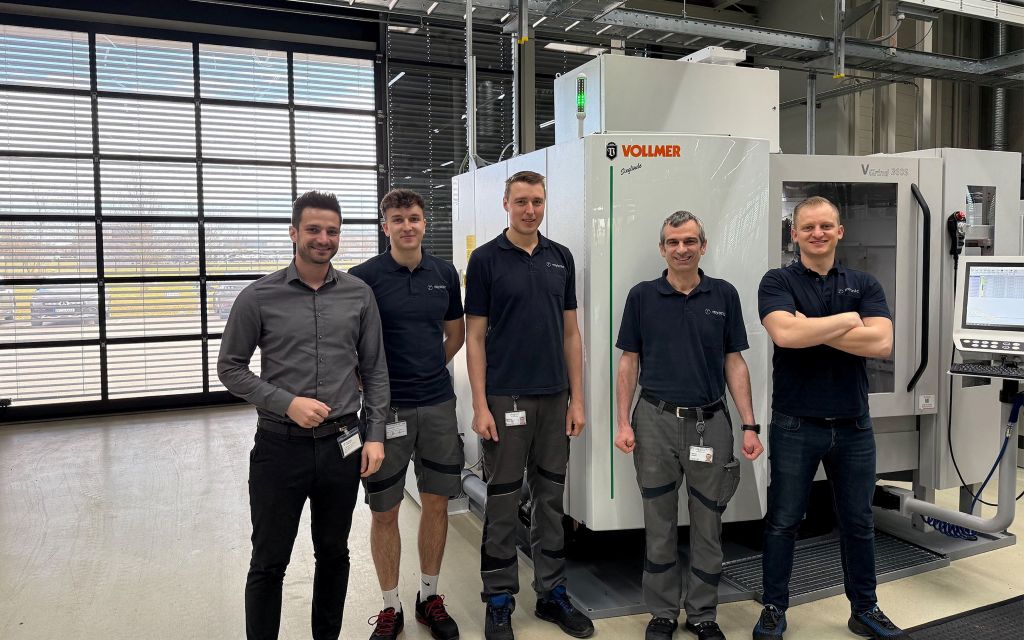
"To manufacture our ball bearings precisely, we need tailor-made tools of the highest quality for metal cutting, with diameters ranging from a few millimeters to several centimeters," says Christoph von Appen. "To produce the extremely thin tools for the dental sector ourselves, we decided on a VGrind 360S in 2024. The Vollmer machine was nicknamed 'Sieglinde' by us because it was delivered on the 100th birthday of Sieglinde Vollmer. Unfortunately, Sieglinde Vollmer passed away in January 2025 – but with the name of the VGrind 360S, we commemorate her."
Sieglinde Vollmer was the daughter of the company's founder Heinrich Vollmer and directed the company's affairs for decades – initially as managing director, later until her death as a supervisory board member and curator of the Sieglinde Vollmer Foundation.
World market leaders from Swabia have precision in their genes
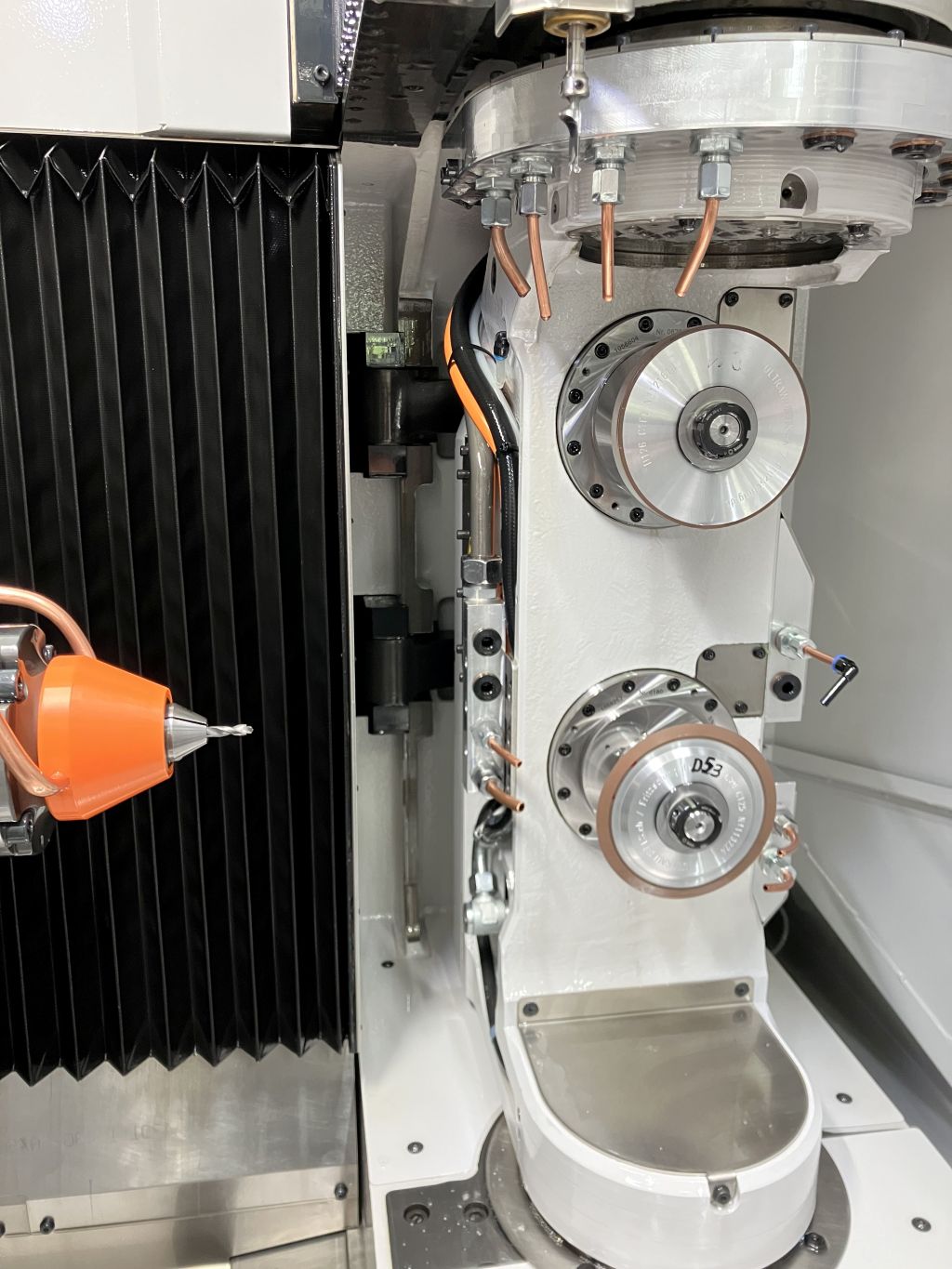
The sharpening specialist Vollmer from Biberach had less than 50 kilometers to deliver the grinding machine VGrind 360S to myonic. The proximity of the two Swabian world market leaders was one reason for myonic to choose the VGrind 360S. In addition, the mature technology combined with simple operation was a factor. The foundation of the precise sharpening processes of the machine is two vertically arranged grinding spindles that allow efficient multi-level processing, thus avoiding the typical fixed and loose bearing issues found in machines. Furthermore, the grinding wheel set at the pivot point of the C-axis and the wear-free linear motors on the X, Y, and Z axes ensure consistently repeatable and stable tool production.
Combined with the pallet magazine HP 170, which can accommodate up to 900 blanks, myonic can operate the VGrind 360S in unmanned operation around the clock.
In the dental sector, ball bearings are subjected to enormous forces
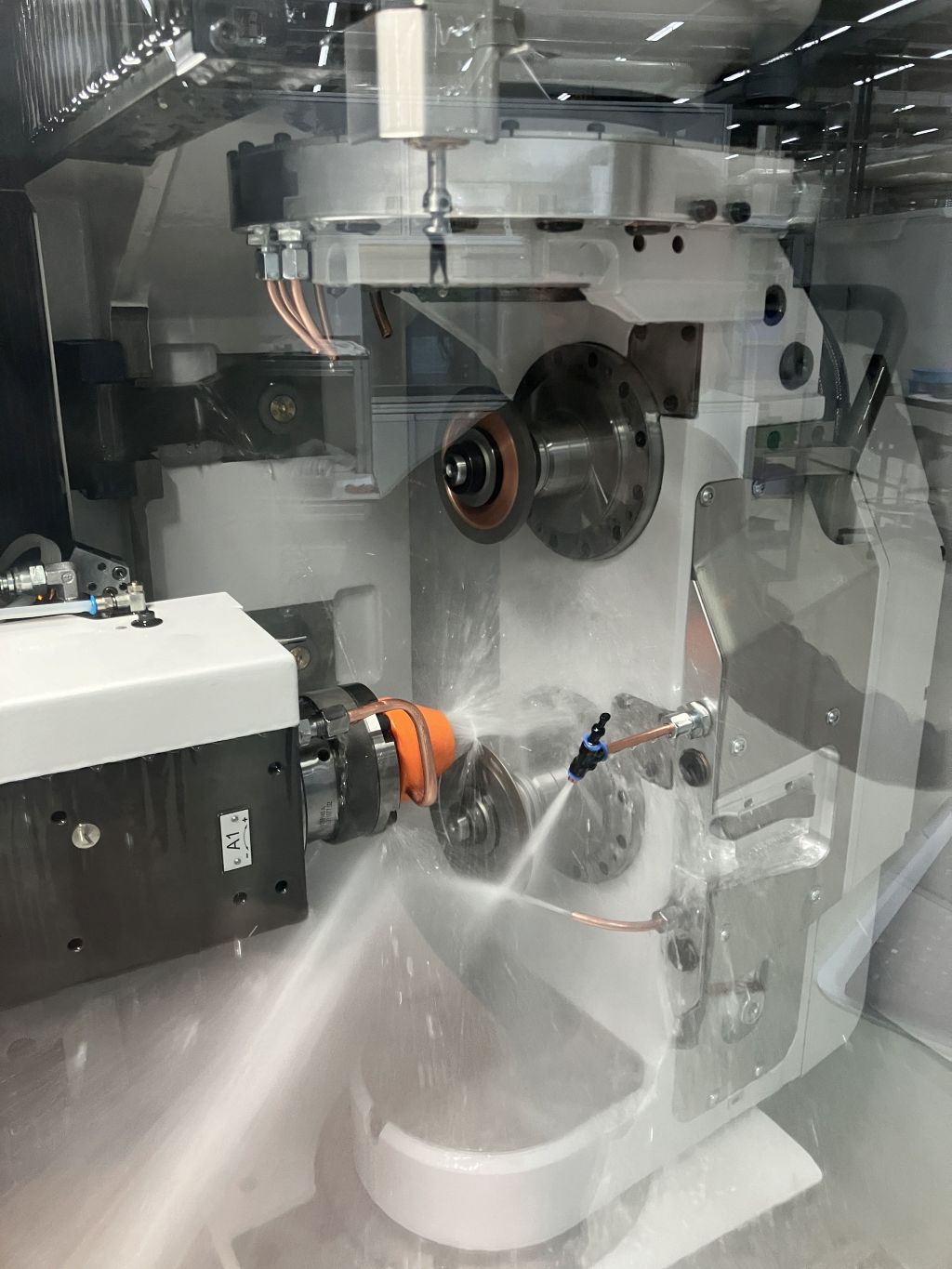
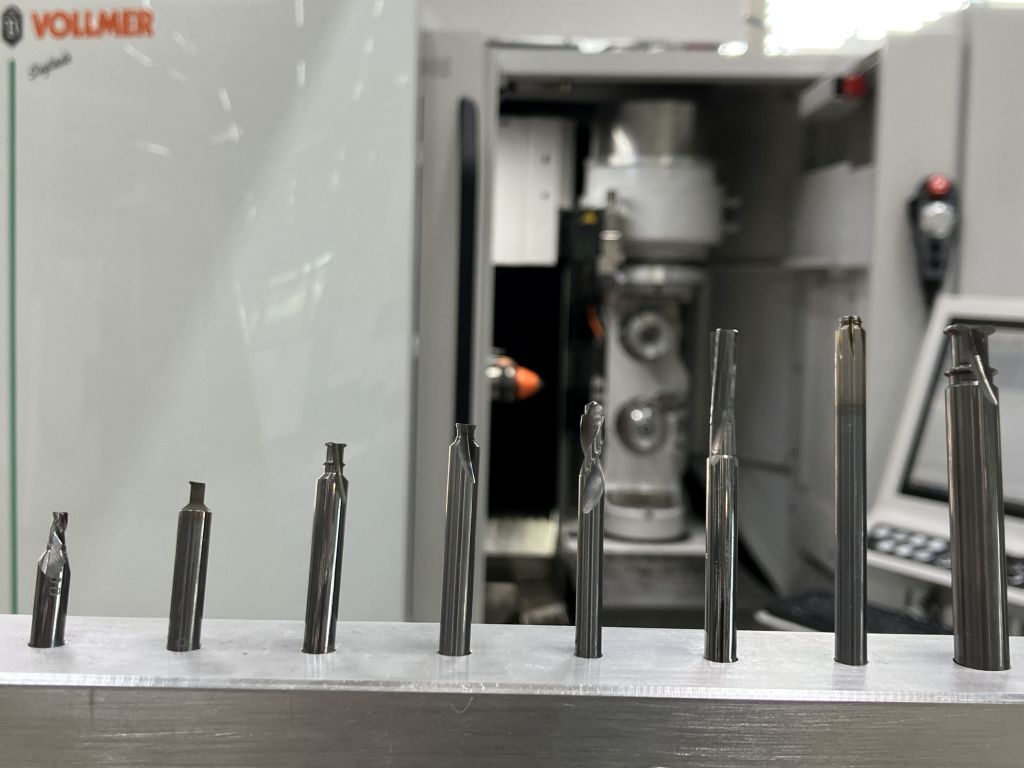
Particularly small drills and mills with special contours, which myonic needs for the production of its dental bearings, are rarely available on the global market. However, with the VGrind 360S, carbide tools with less than one millimeter in diameter can be manufactured precisely and application-specifically. Such precision is essential, as dental bearings are subjected to enormous loads in very confined spaces. When the dentist applies the drill, the delicate ball bearings with diameters of a few millimeters are exposed to enormous speeds of up to 500,000 revolutions per minute. In addition to high vibrations, they must also withstand attacks from hot steam and various cleaning agents. Furthermore, the special ball bearings from myonic must be hermetically sealed against penetrating contaminants such as blood or dental dust.
"We use the VGrind 360S for the production of internal carbide tools, but also for manufacturing special parts for production. For the coming year, we plan to produce up to 8,500 parts and tools on the machine. This will be with an unmanned, automated runtime of around 70 percent!" says Martin Haug, Manager Mechanical & Tool-Service at myonic. "The low maintenance and upkeep of the machine ensures us production time and thus high profitability."
Ball bearings from myonic fly to Mars
The roller bearings developed by myonic are used in X-ray tubes and must ensure a highly accurate, low-loss, and vibration-free operation in any positional direction under enormous forces and temperatures of up to 550 degrees Celsius. To generate the required number of images with a high-end CT device, an X-ray tube unit rotates up to four times per second around the patient. During this process, the components experience lateral accelerations that can correspond to 50 times the acceleration due to gravity. At the same time, the rotating anode spins at up to 10,000 revolutions per minute around its own axis.
The range of ball and roller bearings from myonic extends to industries such as aerospace, mechanical engineering, and the energy sector. In custom-made flywheel energy storage systems, electric vehicles, energy recovery systems, or rotary table systems, the diameters of the roller bearings can exceed one meter. In aerospace, myonic ball bearings are used not only in airplanes for precise and low-friction rotation but also in the depths of space: In satellites and probes that explore the Earth and the entire solar system, myonic ball bearings ensure the right rotation – including in NASA's Mars rover 'Curiosity', which has been roaming the Red Planet for 13 years.
"The automotive industry, mechanical engineering, and manufacturing industry use our grinding, eroding, and laser machines to produce their cutting tools for in-house use or to re-sharpen them," says Tobias Trautmann, Managing Director of the Vollmer Group. "Especially when it comes to complex special tools, whose external production is costly or even impossible, our sharpening machines are used for in-house production – and some customers have even developed a new business field from this and sell these tools."
Contact: