
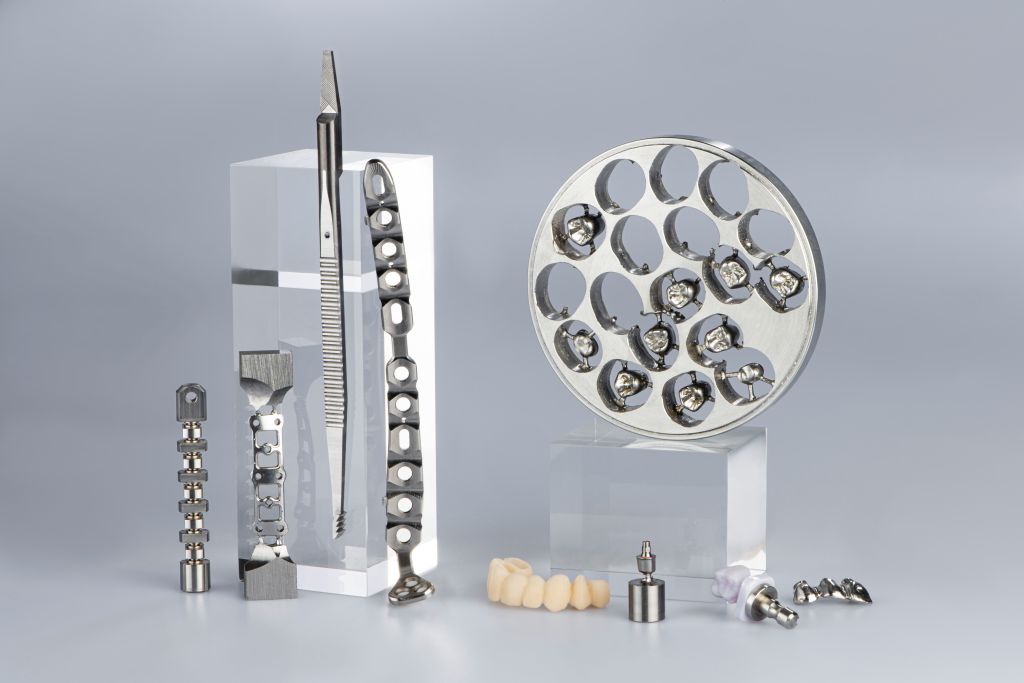
In dental technology, precision is essential. The human oral cavity is so sensitive that deviations of 10 µm in dental prosthetics – whether crown, bridge, or prosthesis – are perceived as foreign bodies. Manufacturing must not only be precise but also economical. For Becker Zahntechnik GmbH based in Hettenrodt, Rhineland-Palatinate, this means above all: as stable and wear-resistant tools as possible in digital manufacturing. The medium-sized laboratory produces dental prosthetic solutions of all sizes and types. CAD/CAM processes and high-performance milling machines are used in production. Becker Zahntechnik relies on solutions from the region: special tools from Müller Precision Tools from the neighboring town of Sien.
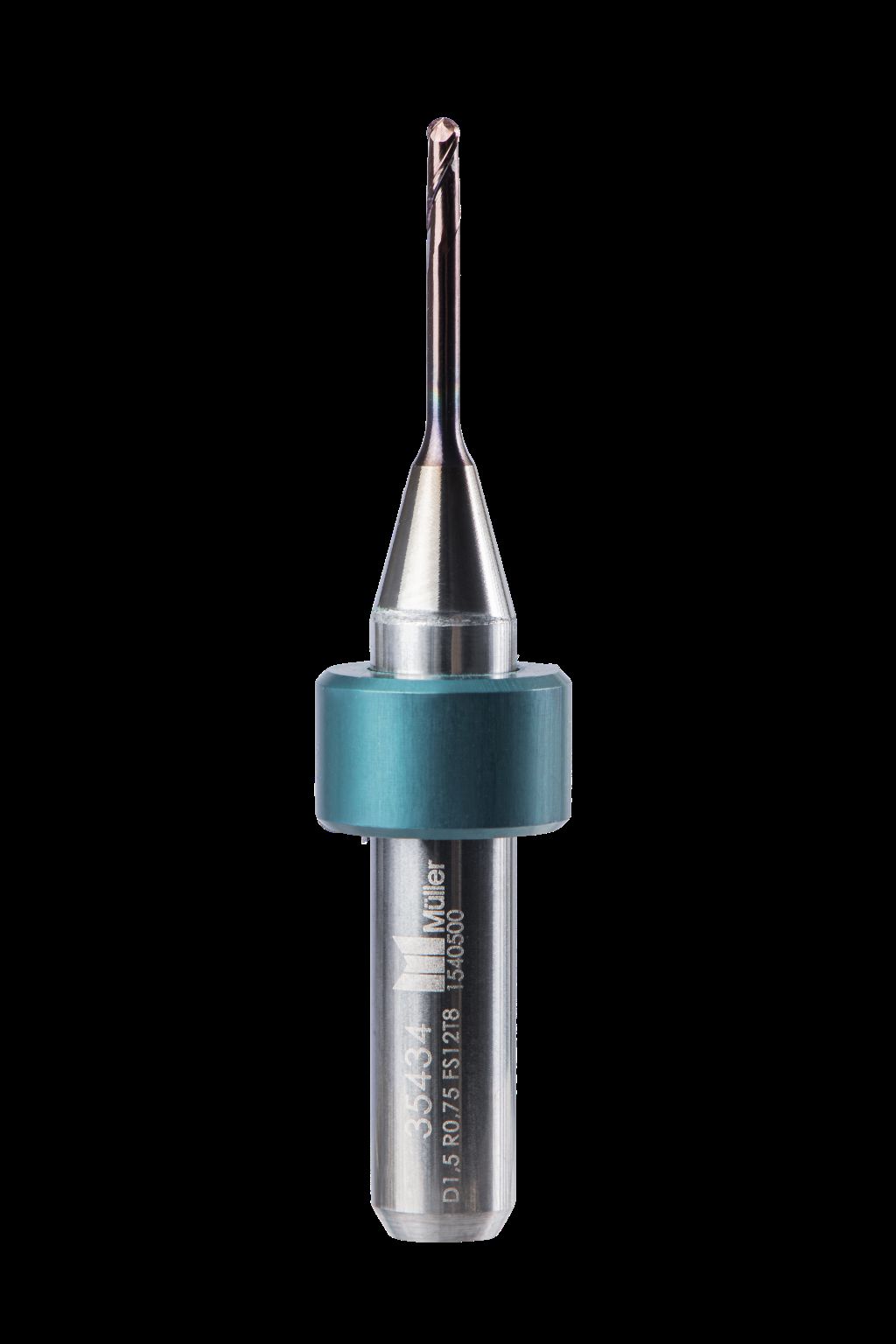
Müller's special tools have been established for decades in numerous companies from industries such as automotive, medical technology, mechanical engineering, mold and tool making, and aerospace for metal processing. In the search for new markets where Müller could become active, they came across dental technology. 'During the analysis of possible application areas for our tools, we noticed dental technology. The tool shapes for tool and mold making are the same as in dental technology,' explains Mathias Schmidt, Managing Director of Müller Precision Tools GmbH. To align the development of the tools as closely as possible with market needs, Müller decided to bring in a practical partner. This led to contact with Becker Zahntechnik.
'It was important for us to combine our expertise in machining with the know-how from dental technology. To best support the tests and ensure personal exchange with our partner, we specifically wanted a partner from the vicinity,' explains Schmidt.
From prototype to standard
Müller's precision tools are particularly known in the metal processing industry for their long tool life and process reliability. This is no coincidence: as part of a comprehensive process analysis, Müller adapts each tool to the specific application. Only when geometry and coating meet the specific requirements can lasting quality be ensured. The analysis also played an important role in the development of dental mills. Based on the processes in the dental laboratory and on experience from industrial machining, Müller experts developed the first prototypes. The challenge with dental mills lies in their very small dimensions. Achieving the best possible surface quality of the cutting edge and the radius shape, combined with a homogeneous coating including post-treatment, is a significant challenge compared to special tools for metal processing.
The prototypes were designed macro- and microscopically for the application at Zahntechnik Becker and tested on-site. Together with the dental technicians from Becker, the results were analyzed and the tools optimized based on insights regarding wear and tool life.
Thanks to iterative optimization, a mill was created that fully convinced the dental laboratory. The performance advantage is evident in high fracture resistance and long tool life. 'In the dental laboratory, the number of re-adjustments is a good indicator of the quality of a tool. It quickly became apparent that with our tools, significantly fewer re-adjustments, i.e., radial corrections, had to be made. This means that our tools wear less and retain the required sharpness longer,' says Christopher Schindler, Project and Application Engineer and Team Leader of Design at Müller Precision Tools GmbH.
The coating plays an important role in the excellent edge stability. Müller opted for a special carbide substrate that has already proven itself in industrial use with difficult-to-machine materials in the micro range.
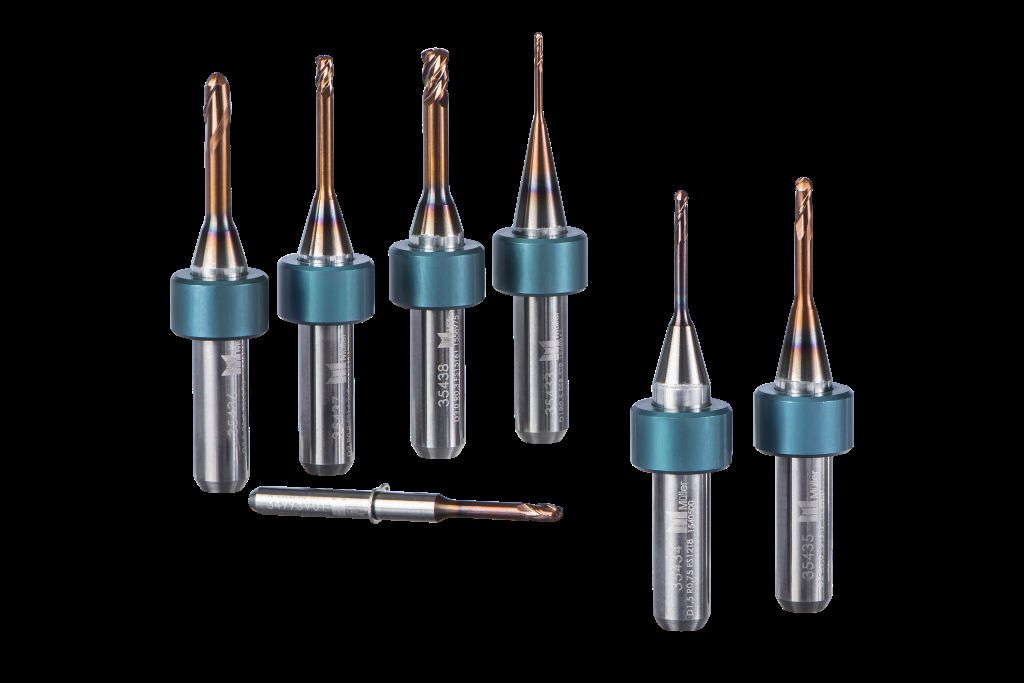
After just over a year of joint development work, the mills are now firmly integrated into Becker Zahntechnik's production processes. 'The mills have a significantly longer tool life, break less frequently, and are more cost-effective than the tools previously used,' explains dental technician master Viktor Litau, Managing Director of Becker Zahntechnik, justifying the decision. This is also supported by the practical figures: in test series, tool lives between 30 and 50 percent longer than conventional dental mills were achieved.
'What made the transition enormously easier for us was the machine compatibility that was considered from the beginning. The mills are designed as a plug-and-play solution and can be used without modification in all common dental milling machines. CAD/CAM systems automatically take over the tool adjustment – thus, special knowledge in the field of machining is not required. This greatly facilitates the transition for our technicians,' explains Litau.
Collaboration at eye level
Throughout the entire development phase, Müller and Becker worked closely together. 'The collaboration with Müller was uncomplicated and direct throughout the entire project,' says Litau. 'Questions are answered quickly, solutions are developed together. This has contributed to the excellent result.'
'We are pleased that our machining experts have successfully opened up a new application area for our tools. This also shows that a thorough analysis always pays off and helps with successful knowledge transfer,' says Schmidt.
The successful collaboration between Müller and Becker will therefore continue. The partners are next planning to optimize tools for zircon processing. Zircon is a tooth-colored, biocompatible ceramic material known for its high strength, aesthetics, and metal-free properties, primarily used for dental prosthetics. Zirconium oxide is significantly harder and more brittle than metal. While metals are usually ductile and tough, there is a risk of chipping and micro-cracking during processing with zirconium oxide. To avoid these damages, the tools must be specially adapted. 'We look forward to mastering this challenge together with Becker Zahntechnik,' says Schmidt.
Contact: