
In early 2025, MAN opened an engine production line for the classic 6-cylinder engine in Nuremberg. The production of cylinder heads, engine blocks, and camshafts is efficiently automated and interconnected in manufacturing facilities that include around 100 machine tools, designed for high cycle rates and maximum precision. The complex manufacturing processes – from minimum quantity lubrication to dry dust and wet processing (coolant) – place high demands on filter technology. Absolent Air Care GmbH installed a total of 14 extraction systems with complete piping and a total capacity of 104,000 m³/h for the extraction and filtration of aerosols.
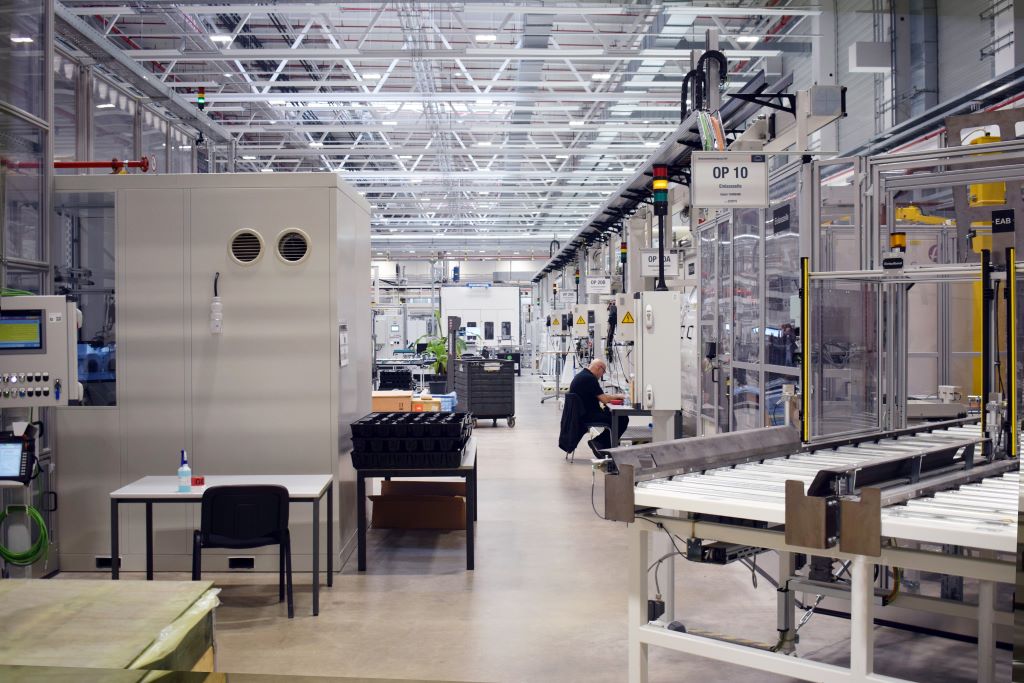
The Nuremberg location is the competence center for drive technology of the world's leading manufacturer of commercial vehicles. Here, engines and drive components for the company's own trucks and buses are produced. In addition, the drive division serves external customer applications with powerful engines such as the V12 for combined heat and power plants, maritime applications, and the agricultural sector.
With a strong focus on future technologies, a battery factory is currently being established at the site, which will produce up to 100,000 battery packs annually for its own commercial vehicles. In addition to manufacturing, Nuremberg is also a research and innovation center for drive technology. Currently, the 6-cylinder inline engine is the main business. A modern manufacturing infrastructure has been created for the production of the core components of the future D30 engine, including a new production hall.
Modern manufacturing with a focus on precision and capacity
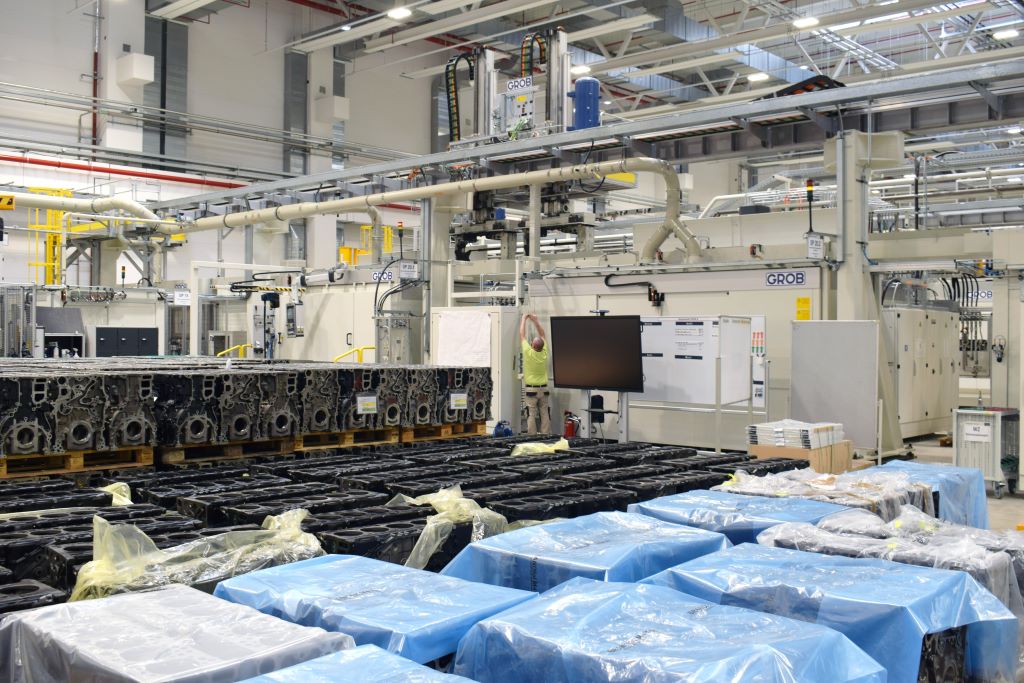
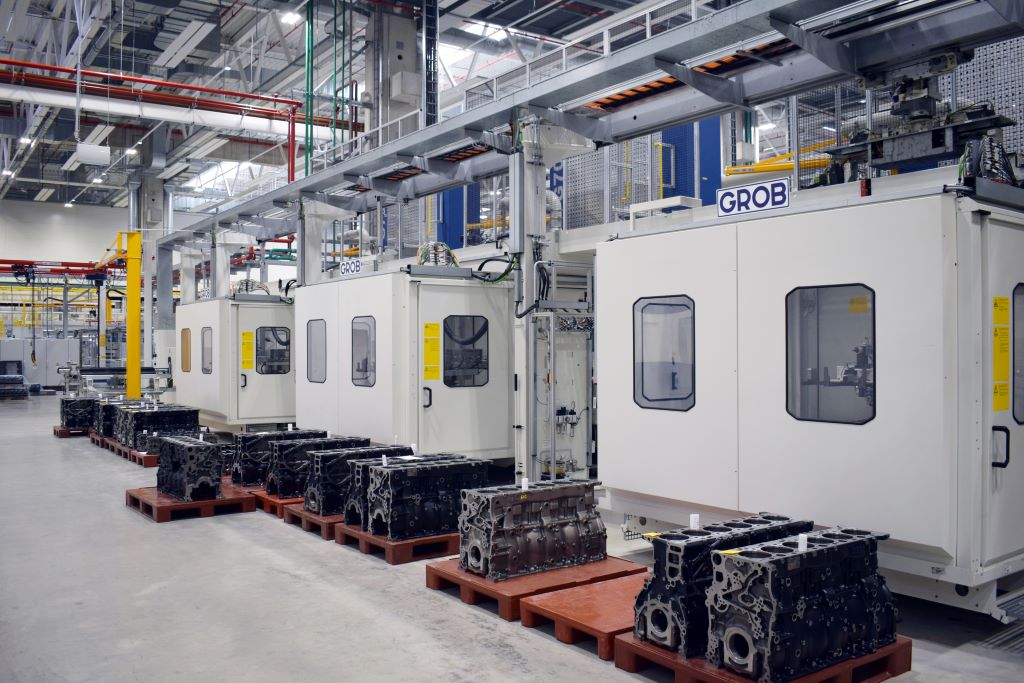
The state-of-the-art building encompasses 15,000 m² of space for the production of cylinder heads, engine blocks, and camshafts. Manufacturing processes and line processing were defined in collaboration with GROB and subsequently implemented on-site. The production lines are efficiently interconnected and designed for maximum precision. Cylinder heads and blocks are almost exclusively machined on GROB machines, with the raw parts delivered from the foundry at Scania in Sweden.
"Our production lines are highly automated – from the logistics concept and the inflow of raw parts to the production of finished parts," says factory planning expert Johannes Weiss.
Highly automated motor manufacturing
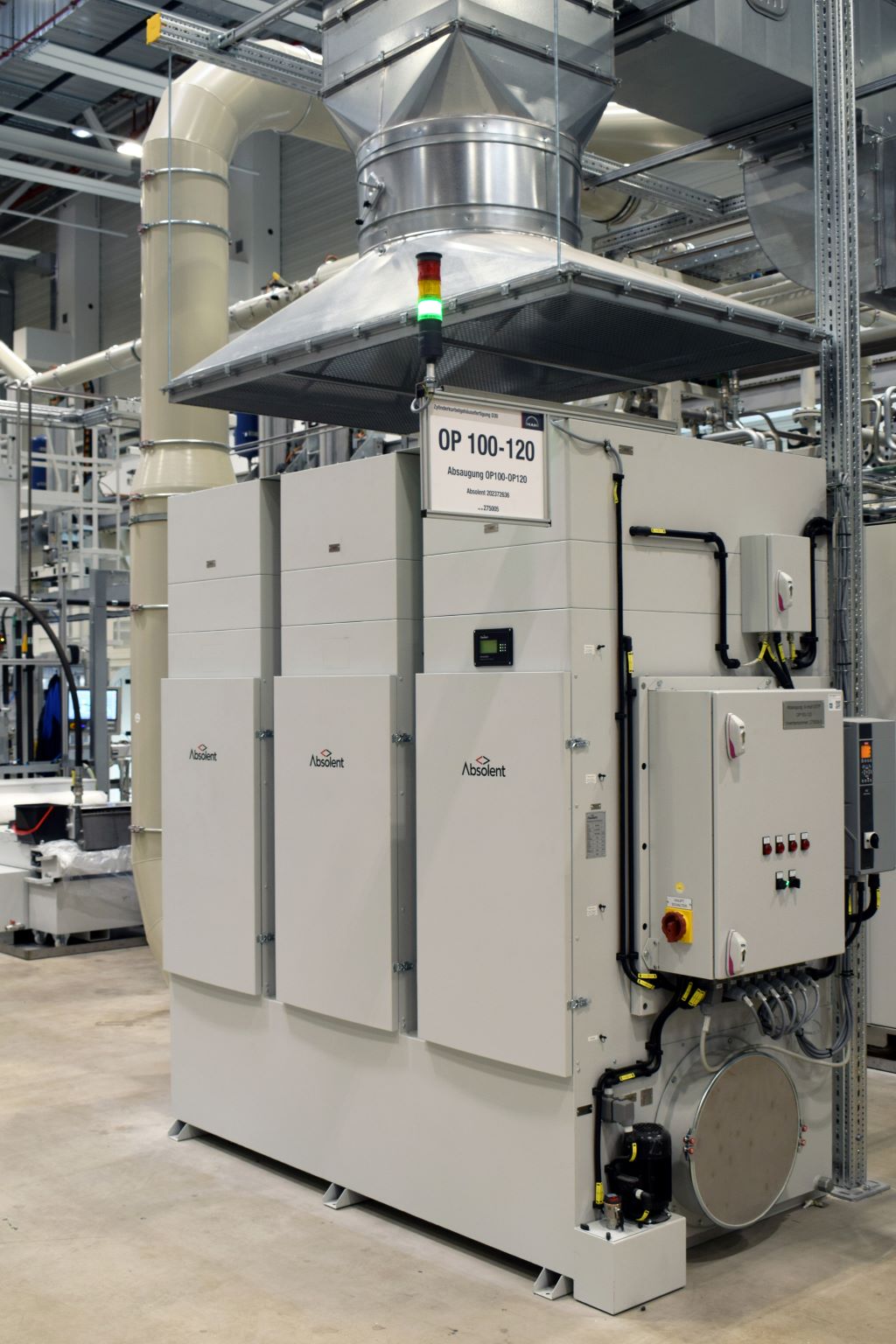
In the new engine manufacturing, a central extraction system was deliberately implemented.
Extraction ducts installed. This facilitates maintenance and improves accessibility. Image: PRX
In the modern production hall, around 100 machines are in operation. The cast raw parts are delivered fully automatically to the lines, removed from pallets, and supplied to the GROB machines using linear portal loaders. The lines also integrate washing technology and assembly stations, where components are pressed into cylinder heads and engine blocks, for example. The manufacturing process is also ergonomically designed: all three lines are arranged in a U-shape to ensure short distances for the operating personnel and to enable direct communication. The main tasks of the employees involve quality assurance and troubleshooting. In manufacturing, the process begins with the machining of cast blanks. First, reference points are milled to make the components clamped for further steps in production. Subsequently, the components pass through the highly automated and interconnected transfer lines. The systems
The Swedish manufacturer's products are used for air filtration and extraction in the new production hall.
Extraction specialist with MAN experience
In 2018, the air purification experts from Absolent Germany supplied a first production line with ventilation technology at MAN in Nuremberg. At that time, machine manufacturer GROB was also responsible for the extraction system as the general contractor. In this first joint project, Absolent was able to impress the commercial vehicle manufacturer with the outstanding quality of its filtration systems.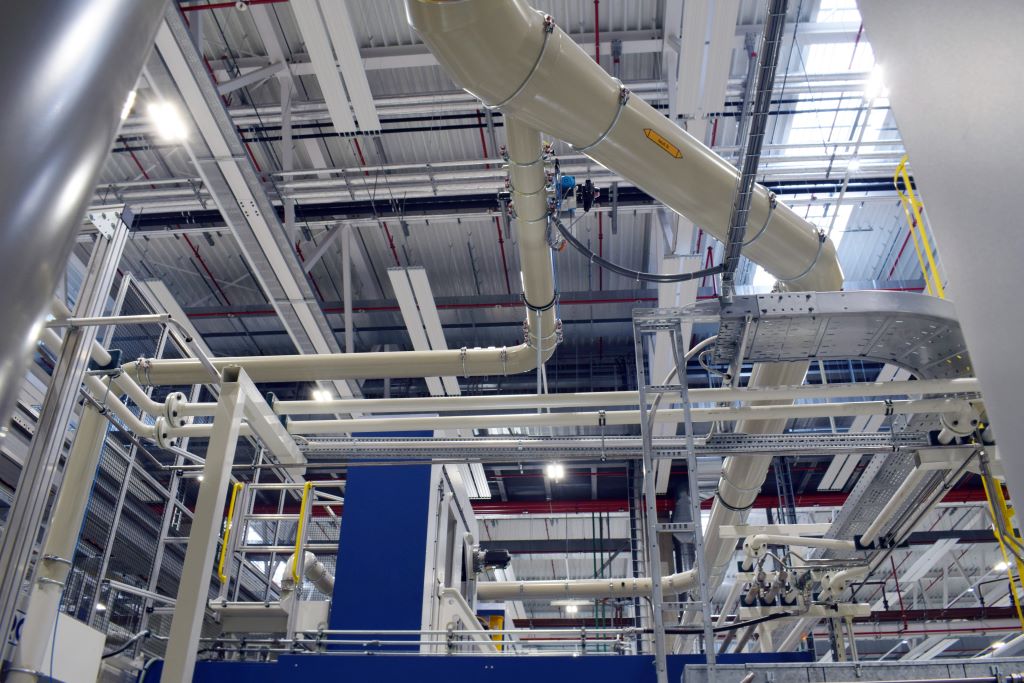
This confirms the performance and efficiency of Absolent solutions in demanding industrial applications. The systems guarantee reliable filtration according to H13 standards and are characterized by their exceptionally long service life. "Principally, it was the same concept, only on a much larger scale, and our client was directly MAN," emphasizes Hartmut Enderle, Sales Manager at Absolent Air Care GmbH in Sprockhövel.
Absolent took on the role of general contractor for the planning, delivery, and installation of a total of 14 extraction systems with filtration technology. Throughout the entire project, the teams from MAN and Absolent worked closely together to meet all requirements and develop customized solutions.
"We especially appreciated the flexibility of Absolent in adapting to our specific challenges and the smooth communication, which is by no means always the case in such massive projects," explains Manfred Fries, who has many years of experience as a factory planner at MAN Truck & Bus.
Mammoth project under control
Such a mammoth project naturally takes time. Already in 2022, the commercial vehicle manufacturer inquired with Absolent Germany about extraction technology. At that time, MAN planned a final engine production line for the classic 6-cylinder in Nuremberg, while additional lines were simultaneously planned at Scania in Sweden and in Brazil, with another one to follow in the USA.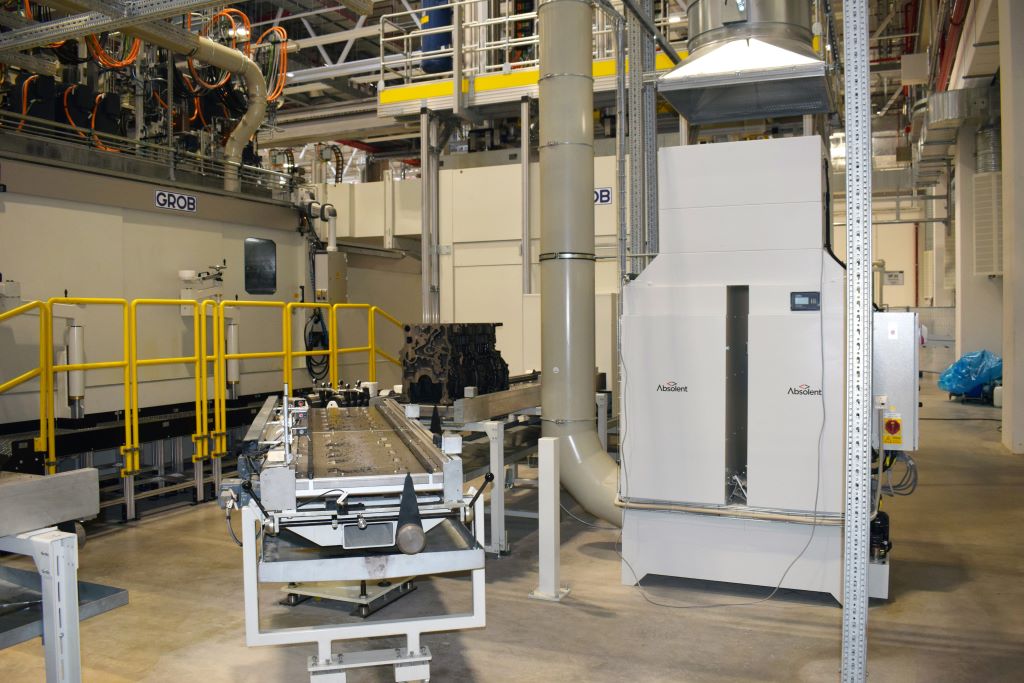
"Already in other production halls, we had been using Absolent extraction systems and appreciated the long maintenance intervals between filter changes – a crucial factor that led to the renewed choice of Absolent," recalls Manfred Fries about the planning process. The plan was to equip 16 production lines in Nuremberg with extraction technology. "The specifications document comprised several hundred pages, covering everything from filter and extraction technology to system control and the final pipe connection," Hartmut Enderle remembers clearly.
Several GROB machines were combined into so-called island solutions; the smallest island requires a suction capacity of 4,000 cubic meters, while the largest currently requires 12,000 cubic meters. "In the end, we were able to further optimize the production planning, resulting in a total of 14 suction systems being installed," specifies Hartmut Enderle. The use of central suction lines instead of individual machine suction systems has also significantly improved maintenance friendliness. "A long service life of the filters and the convincing CO₂ balance underscore the sustainability of the solution," the MAN expert is convinced.
Efficiently extracted
In the new drive manufacturing, MAN relies on customized extraction technology to meet the varying demands of the machining processes. Initially, different lubrication and machining systems are used – from dry machining, which primarily generates dust, to minimum quantity lubrication (MMS) and wet machining with cooling lubricants (KSS).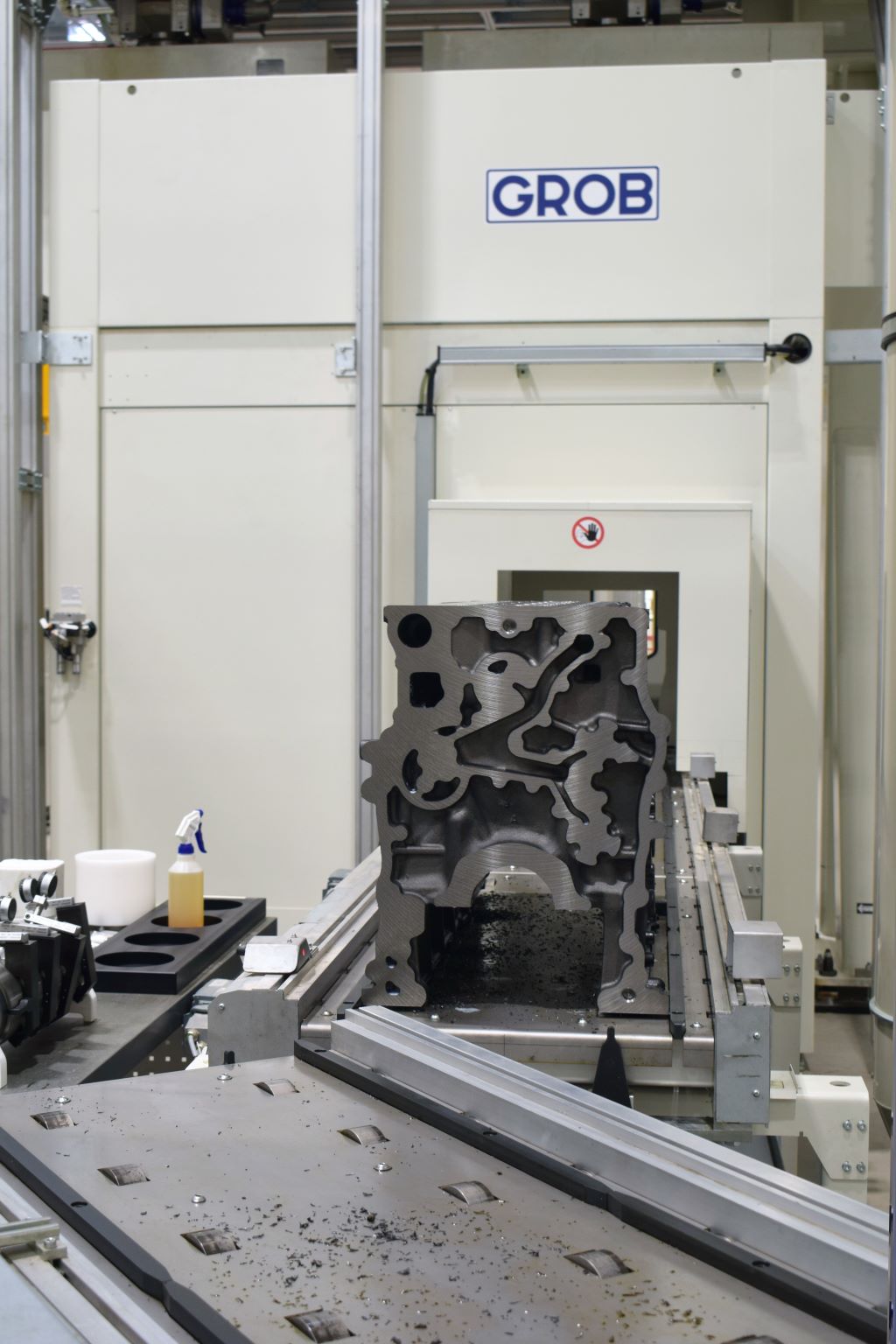
At the same time, in rough machining (rough processing), the cooling of the machine bed ensures that heat is efficiently dissipated through the coolant lubricant, maintaining stable process accuracy. The cooling system is based on a central facility that provides coolant lubricants at constant temperatures to ensure consistent conditions at the machining centers. "This is crucial for quality, process reliability, and high cycle times," emphasizes factory planner Fries. Especially in minimal quantity lubrication (MQL), where fine oil mist with particle sizes below 1 µm is generated, the requirements for filter technology are particularly high. Here, the A.smoke series from Absolent is used, which has been specifically developed for the filtration of finest oil particles.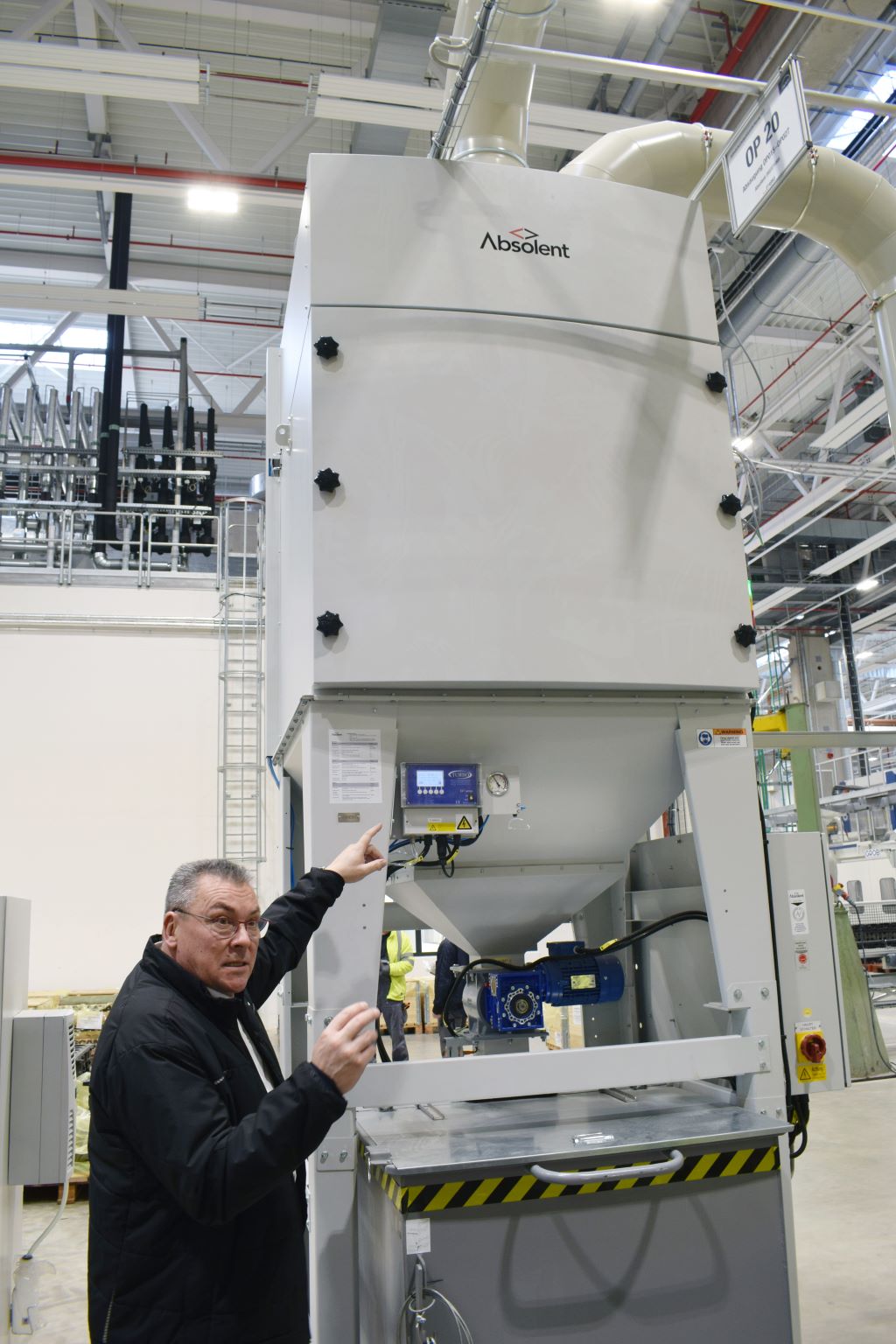
extraction systems: "We supplied MAN with 14 extraction systems, including filter technology
and complete assembly with piping. It was the largest project in the
history of our company." Image: PRX
In contrast, for classical wet processing with coolant lubricants (KSS), MAN relies on the Mist series, which is designed for the most common emulsion mists. Absolent extraction specialist Hartmut Enderle explains: "We guarantee a service life of one year in three-shift operation. You can't just use one filter for all
machining tasks. If deviations occur, we can always adjust the filter media application-specifically." During commissioning, the filters are checked against measurement values and optimized if necessary. Replacement and maintenance of the filters can be carried out directly on-site during maintenance. For the extraction technology, the aerosol load of the different machining processes played a central role. Based on the specifications defined by GROB, a tailored solution was developed with Absolent: The extraction systems operate with separate filter systems to separate the different working processes. This optimizes filtration and ensures a clean and efficient manufacturing environment.
Optimal piping using 3D
A customized piping minimizes energy losses by avoiding long distances. The 3D planning and optimized piping were also crucial to ensure precise and efficient installation of the pipelines. For this purpose, the planning team from Absolent received step files from GROB, which were integrated into the 3D software for the design of the individual lines. In advance, all pipe routes were detailed in 3D and coordinated before the commissioning took place. By using frequency converters and a thoughtful design of the piping, including branches with angles of less than 45 degrees instead of T-pieces, optimal flow technology was achieved. The placement of the filter systems was also defined in close coordination between MAN and Absolent during the planning phase.
The goal was to position the extraction as close to the source of generation as possible to avoid long piping routes. This reduced additional pressure losses and effectively minimized energy losses. Hartmut Enderle explains the approach: "We planned the entire pipe layout in advance in 3D and gradually sized the piping - similar to water pipes in house construction. The more machines are connected to the main line, the larger the pipe cross-section must be to ensure a
consistent volume flow and low energy consumption."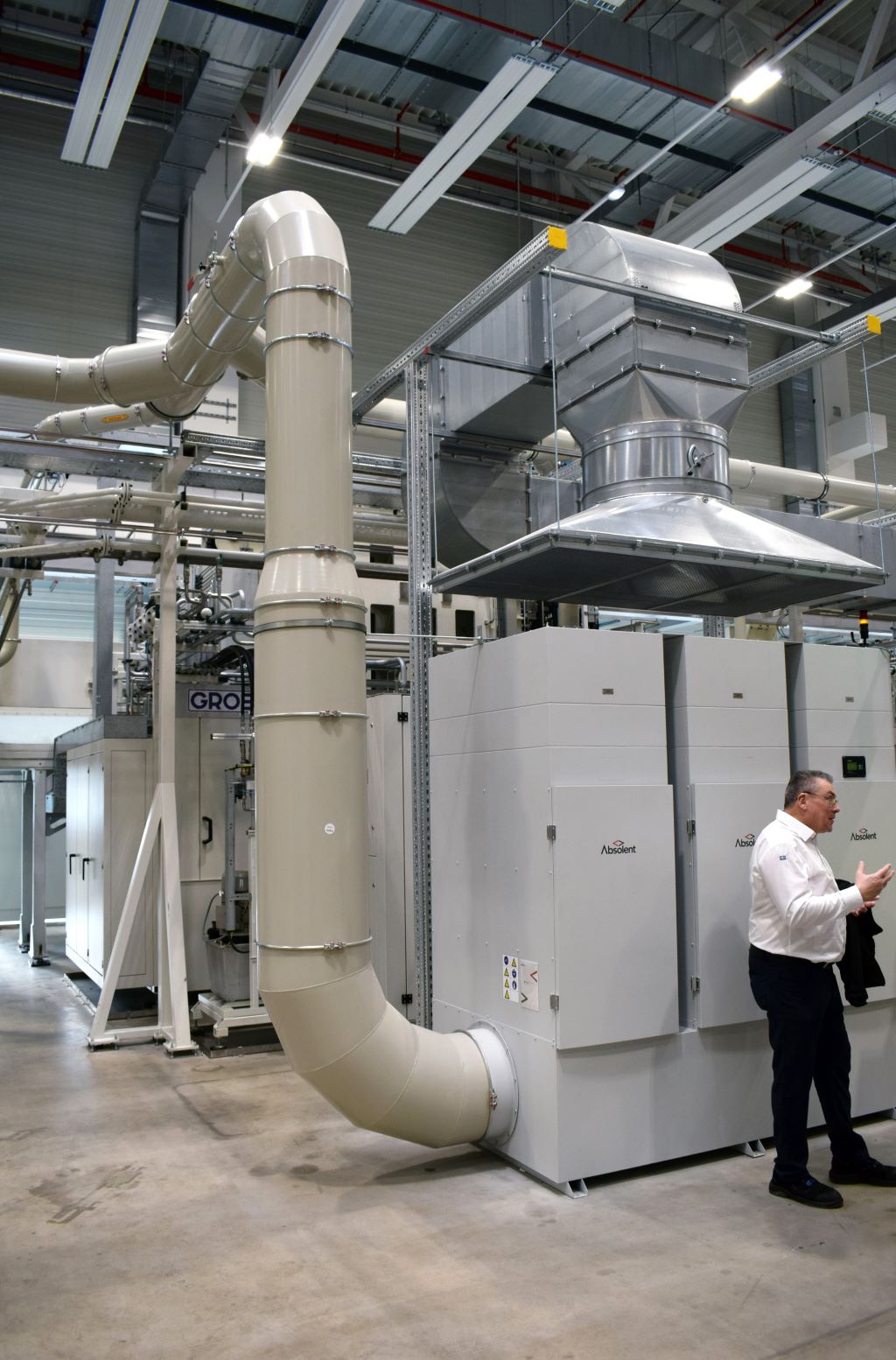
A total of 700 meters of piping were laid for the 14 extraction systems, which extract a total volume of 104,000 m³/h. The systems themselves have capacities between 4,000 and 12,000 m³/h. Based on the 3D layout, the required pipe parts, connections, sealing sleeves, and other components could ultimately be ordered, and the assembly effort could be precisely planned. High-quality materials were particularly emphasized in the selection of the systems. For example, no spiral seam pipes were used, as these could lead to leaks in the long term. Energy-efficient industrial extraction: 50% less consumption. "An optimal extraction technology is extremely important to us. The thoughtful solution from Absolent met all these requirements and also fit perfectly with our vision of efficiency and sustainability," explains factory planner Manfred Fries.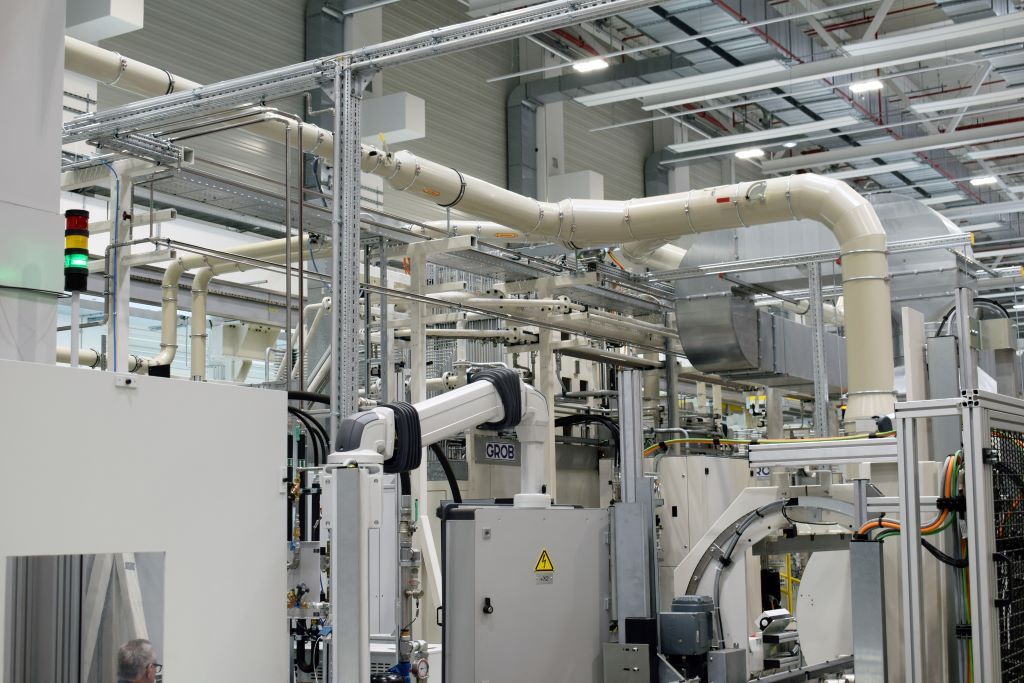
Thus, the focus was less on investment costs, but rather on energy costs and the lifespan of the systems. Absolent convinced him with technical expertise, innovative filter technology, and exceptional ease of maintenance. Decisive for the choice of extraction technology were, in addition to high energy efficiency (50% less energy consumption than originally expected), also the total cost of ownership (TCO). During the handover of operations, the predicted energy consumption values were thoroughly checked.
In addition, the durable H13-HEPA filters help minimize operating and maintenance costs throughout the entire lifecycle. An essential aspect is also the integration of intelligent control technology. As soon as a machine is out of operation, an exhaust flap automatically closes, increasing the negative pressure and reducing the performance of the extraction system. "This control technology ensures that the extraction performance always remains optimal while simultaneously extending the filter service life," explains Manfred Fries. Another highlight is the heat recovery of the filter systems. While in summer the warm exhaust air is vented outside, MAN uses the treated exhaust air for hall heating in winter. This not only saves energy but also improves the room climate.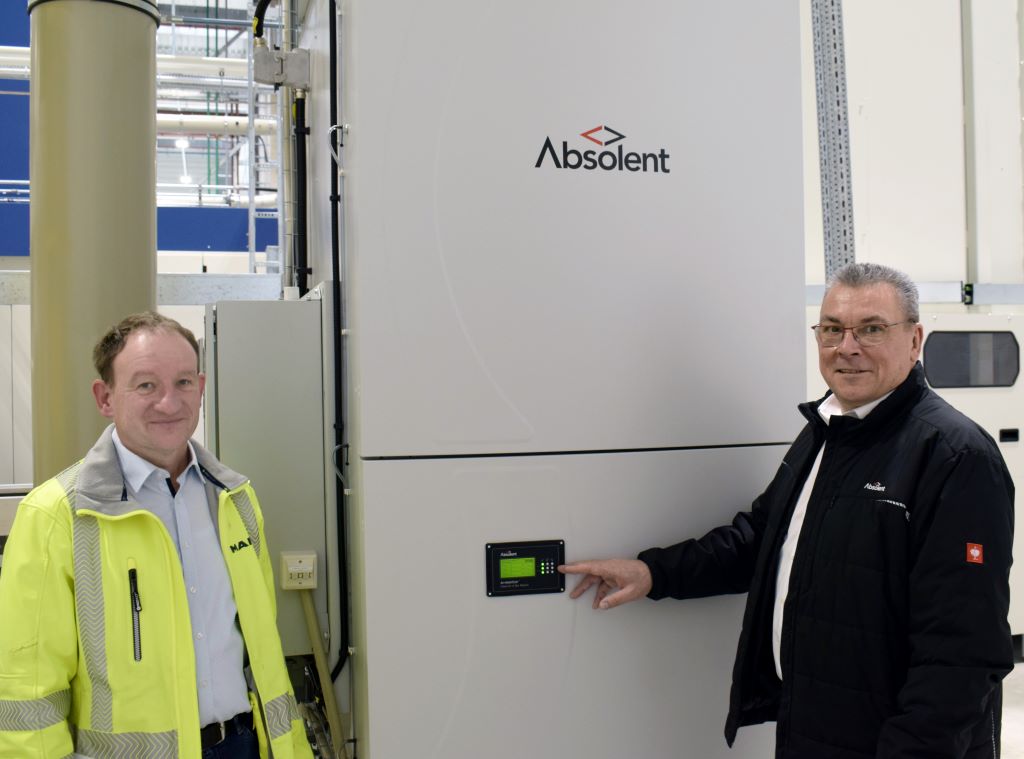
Particular attention is also paid to air quality in the production hall. The H13-HEPA filters ensure that no microparticles enter the recirculated air, thereby ensuring the protection of employees. At the same time, the clean exhaust air prevents deposits in the heat exchangers, which could lead to a gradual loss of efficiency in the long term. "With absolutely clean air, we prevent this effect and ensure the efficiency of the entire system," adds Hartmut Enderle.
Don't forget noise protection
Noise protection was also a significant aspect in the planning. Sound measurements showed that at all measurement points, the required 65 decibels were not exceeded. In addition to the technical implementation, the user-friendliness of the systems played a major role. Training for maintenance personnel ensured that maintenance work and filter changes could be carried out efficiently. The final milestone was the internal acceptance and inspection at the end of November.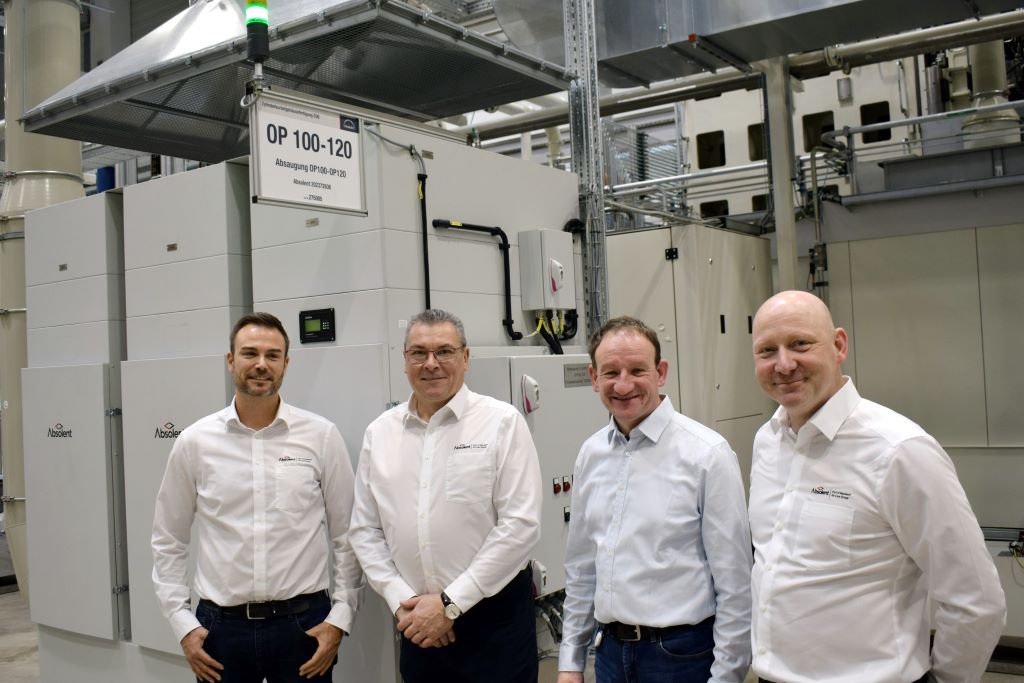
"Together with all operators, maintenance, and of course our experts for occupational safety and environmental protection, we inspected the new factory facility, so that we could start real operations in January 2025,"
Manfred Fries expresses satisfaction with the successful project. And the conclusion: Thanks to the well-thought-out combination of layout planning, intelligent control, and adapted filter technology, MAN was able to significantly reduce energy consumption while keeping processes stable and efficient.
In summary, it can be said that MAN has created a forward-looking drive manufacturing process through precise planning, high-quality extraction technology, and efficient heat recovery, which protects the health of employees and meets its own sustainability goals.
Contact: