

Thanks to secured raw material supply, local manufacturing in all major economic regions, and customers in diverse sales markets, the company is well positioned for the future.
In the past fiscal year 2024/25, demand from industries and economic regions varied significantly: While the business climate continued to cool mainly in Europe, there was a slight recovery in China. Demand from sectors such as mechanical engineering, the automotive industry, and the semiconductor industry remained subdued. In contrast, the consumer electronics and aerospace sectors provided noticeable growth impulses.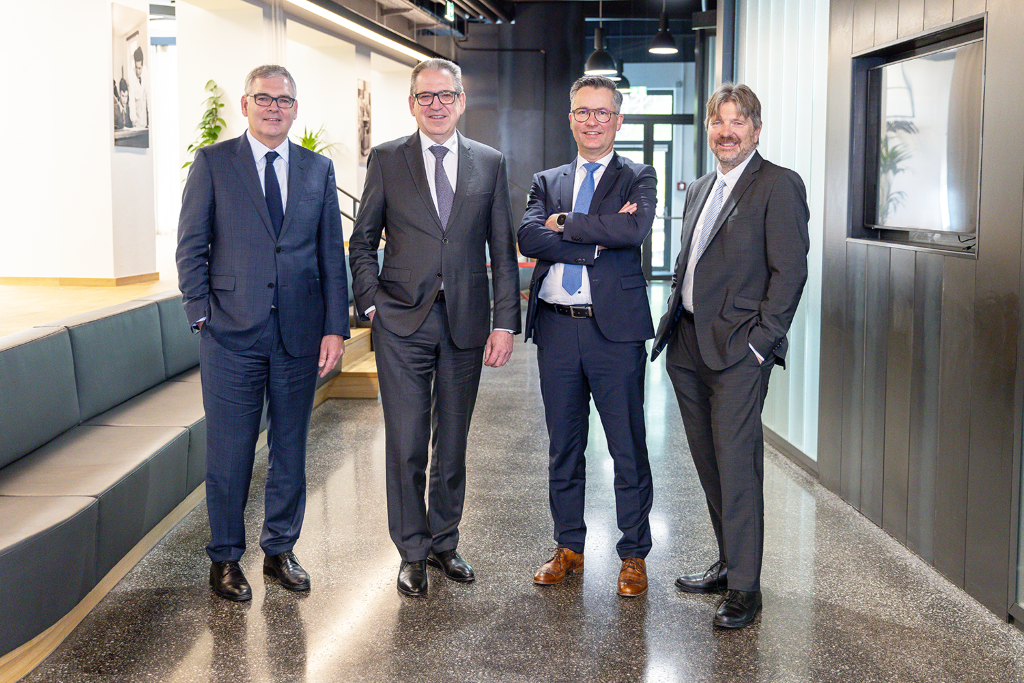
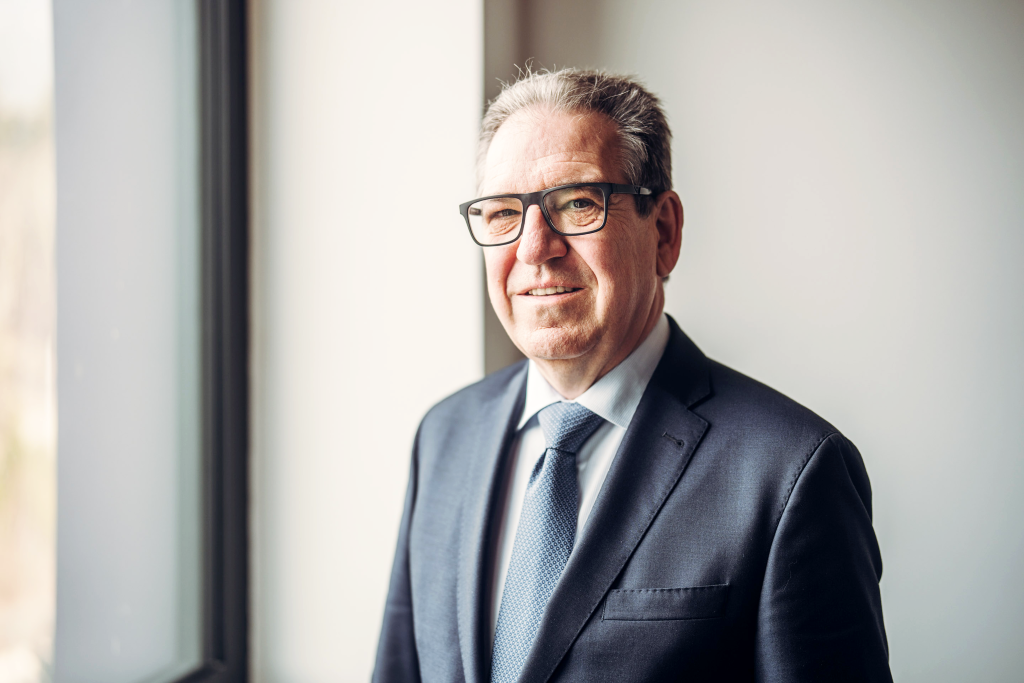
"We have worked on our operational capabilities and successfully implemented price increases. However, we could not fully offset the effects of declining utilization of our production capacities," said Karlheinz Wex, Chairman of the Plansee Group, at the annual press conference in Reutte. "Given these circumstances, we have developed solidly."
The four percent decline in sales volume compared to the previous year resulted in a one percent decrease in revenue to 2.25 billion euros. The equity ratio rose to 59 percent (previous year 57%).
Largest tungsten supplier
The security of supply for the raw material tungsten has been further enhanced. New business models for the procurement and recycling of tungsten scrap have been developed and successfully tested and introduced in the market. At the same time, the Sangdong mine in South Korea will begin mining and delivering tungsten concentrates in the coming months. The Plansee Group has secured financing for this ambitious project with long-term purchase agreements. "With these measures, we have ensured a stable tungsten supply in recent years and are further expanding our position as the largest tungsten supplier in the Western world," said Karlheinz Wex.
Investments in capacities and facilities
Investment focuses included capacity expansions at production plants in Bulgaria, France, Poland, and Lechbruck, Germany. In Austria, projects for the decarbonization of industrial furnaces and the automation of tungsten and hard metal product manufacturing have been initiated. In China and India, facilities for new products in medical technology, the semiconductor industry, and energy transmission have been installed. Further investments flowed into new machines and facilities as well as product and process development. The investment and innovation volume of the Plansee Group in the past fiscal year amounted to 249 million euros, of which 99 million was for product and process development.
Digitalization of offer and procurement processes
The Ceratizit business unit, specializing in hard metal tools, has acquired a minority stake in Spanflug Technologies GmbH. The Munich-based company operates a platform that automates and simplifies the procurement process for CNC-turned and -milled parts.
CO₂ reduction in plan
For the past fiscal year, the Plansee Group has published its second sustainability report. "The focus remained on reducing our CO₂ footprint and recycling our valuable metals molybdenum and tungsten," said Karlheinz Wex. The group's carbon footprint (Corporate Carbon Footprint, Scope 1, 2, and 3 upstream) was reduced by 26 percent compared to the base year 2020/21 to 313,000 tons of CO₂e. A significant lever is electricity from renewable sources, which accounts for 97 percent group-wide.
The calculation method introduced last year for how much greenhouse gas emissions are caused by the production of a product (Product Carbon Footprint) has been further developed in close coordination with the German Mechanical Engineering Industry Association (VDMA) and is intended to become an international industry standard. "This underscores our pioneering role as a driving force for sustainable changes in our industry," said Karlheinz Wex.
Number of employees declining
The number of employees worldwide fell to 10,890 - a decrease of three percent compared to the previous year, which occurred at most locations due to natural turnover (retirement, resignations). Special attention was paid to occupational safety. "We want every employee to return home healthy after work," said Karlheinz Wex. To ensure this, the company took numerous measures to prevent and avoid workplace accidents.
Competitiveness under pressure
At the group's largest production site in Reutte/Austria, costs continued to rise amid declining revenues. "Currently, personnel costs account for 30 percent of total costs and are thus the second-largest cost factor," said Karlheinz Wex. "Fortunately, the Plansee Group is a healthy company that can withstand such years. But the trend is worrying," said the chairman's message to policymakers. Urgent adjustments for the economic location of Austria are necessary, such as regarding internationally competitive labor costs and energy prices.
Outlook: Development at previous year's level
The board expects no easing in the economic environment in the current fiscal year and growth impulses only in a few selected industries. Overall, a development at the previous year's level is anticipated. At the Central European locations, a decline in competitiveness is observed due to persistently high energy, personnel, and bureaucracy costs. The announced closures of the German Ceratizit locations in Besigheim and Empfingen are to be realized by the end of 2026. Corresponding social plans are being developed. To be able to offer locally manufactured products to customers in all economic areas, further investments in India and the USA are planned.
Karlheinz Wex sees a slight recovery of the global economy at the earliest by the end of the fiscal year. "In the meantime, we continue to work on increasing the resilience of our organization, developing new products with our customers, achieving top performance in production, sales, and administration, and further developing and optimizing processes. With the completion of these tasks, we are well prepared for the next economic upswing," the chairman remains optimistic.
Contact: