
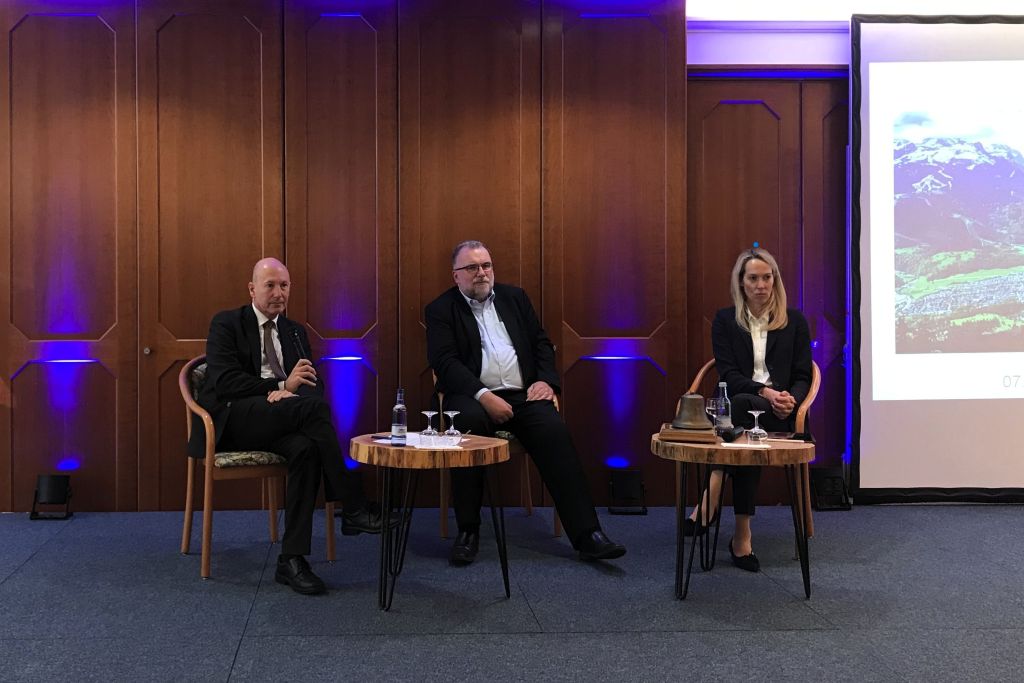
Sina Scheidle, Head of BodyTEC at Mercedes-Benz AG, and former BDI President Prof. Siegfried Russwurm discussed the digitalization of the German and European industry with professors at the Spring Conference in Garmisch-Partenkirchen. 'We are in global competition, we must acknowledge this and work on our competitiveness in production before we fall further behind,' emphasized Russwurm, current Chairman of the Supervisory Board of Thyssenkrupp and the Voith Group. WGP President Prof. Michael Zäh added: 'Despite many achievements already made, the potential for improvements is still great.'
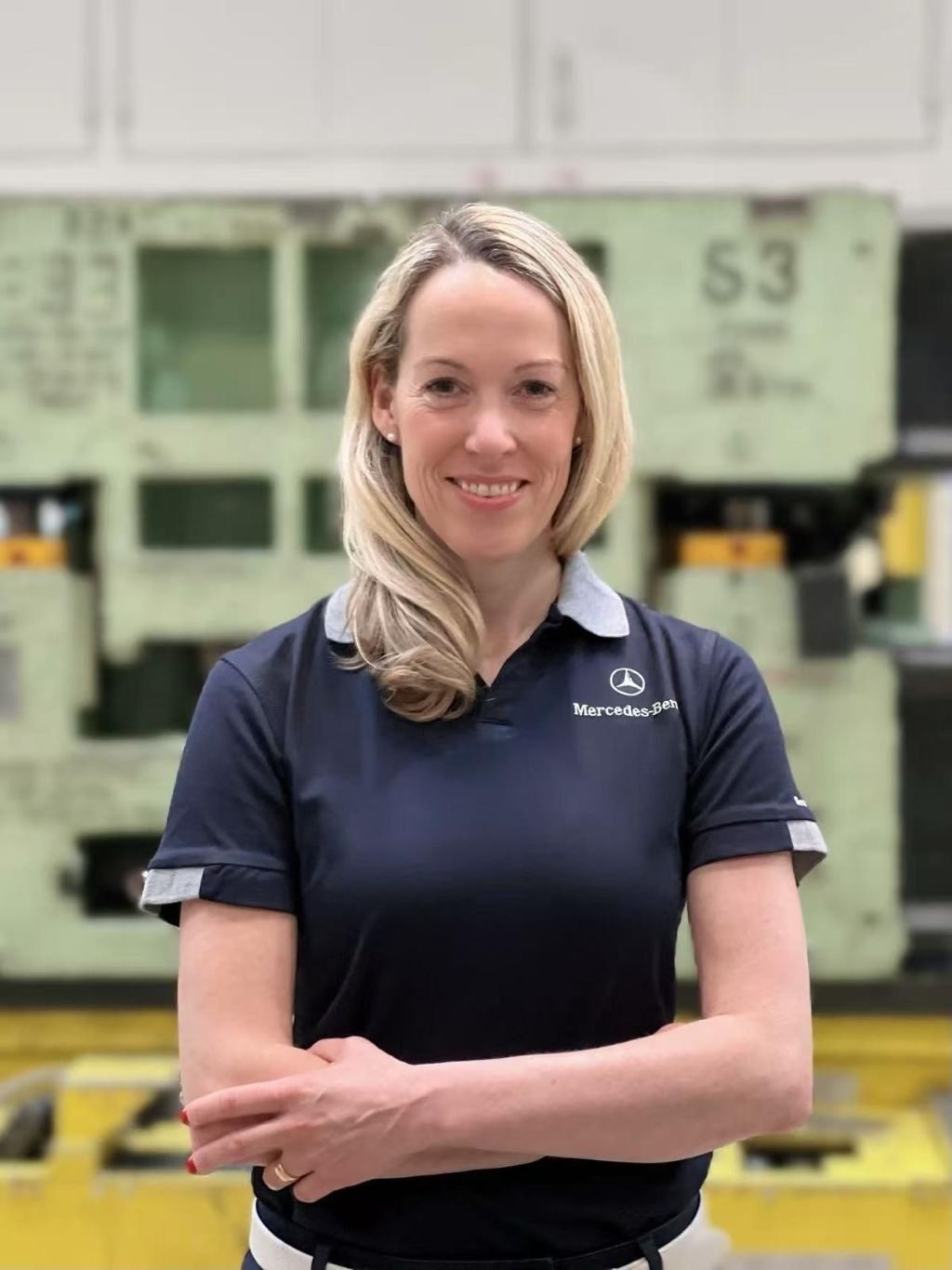
Sina Scheidle was able to share her experiences from the BodyTEC Center. The center bears end-to-end responsibility for the manufacturing of body parts and press tools. This includes all process steps from the development of forming tools to production in the press shop.
Scheidle also presented Mercedes-Benz's digital production ecosystem, known as MO360. She reported how, with the help of digital twins and virtual commissioning, all data from individual production facilities were digitally captured and planned, tested, and adjusted in the virtual space. 'Thanks to generative AI, for example, the E-demand in the topcoat booths of the Rastatt plant was reduced by 20%,' said Scheidle.
Interested employees can, for example, further their education as digitalization experts at the Digital Factory Campus Berlin while working.
Specialists and executives are the bottleneck
The training of today's and tomorrow's specialists and executives also took up a lot of space in the panel discussion. Siegfried Russwurm confirmed that companies must work 'significantly' on the topic of internships for students to showcase the attractive professional reality in engineering jobs while also enabling success experiences in concrete projects.
To meet the demand for so-called data workers, Mercedes-Benz has launched the internal part-time training program D.SHIFT.
'It qualifies employees for digitalization and AI tasks and shapes them into 'digital superheroes,' as they are called internally,' said Scheidle. Driving digitalization forward and finding sufficiently well-trained people for it is one of the biggest challenges for the German and European industry in light of global competition, warned Russwurm.
In response to the question of whether AI has been sufficiently integrated into university curricula, Russwurm countered with the statement that there is no such thing as 'enough.' It is more about showing young people that AI is not just in ChatGPT and mobile phones. They need to be introduced to AI applications in production, and then the digital natives should also be allowed to 'do' – in project work in industry and at university institutes.
To quickly advance Industry 4.0, collaboration between research and practice must also be deepened. Universities should not only rely on government funding for their financing but should actively seek private investors. Industry must also contribute and provide funding, said the former BDI president.
Further research on Manufacturing-X
In the 44 WGP institutes, Industry 4.0 or digitalization is one of the most important research topics. The WGP professors want to examine to what extent the further development of Industry 4.0 within the framework of the Manufacturing-X initiative – that is, the development of cooperating, decentralized data ecosystems along complete process and supply chains – should be addressed. 'In terms of further development in production research, we must not only understand the approaches in Manufacturing-X, but we must also shape them as WGP,' emphasizes Prof. Thomas Bergs, spokesperson for the working group.
This also includes making the potentials arising from these initiatives available to the manufacturing SMEs and thus, for example, unlocking traceability as a business model. Relevant questions for the German and European industry and which standards already work today should be examined based on concrete use cases, such as the end-to-end quality control of safety-critical engine turbine discs within the Aerospace - X project.
'At the autumn conference in November, we will then take a closer look at further project initiatives, such as Factory -X, and identify relevant fields of action for the WGP,' said Bergs.
Contact: