
The mood among the nearly 120 participants at the spring conference is optimistic and confident. This time, the Association of German Turned Parts Industry invited attendees to Fulda. Despite declining orders, rising costs, and palpable uncertainty, the strong community once again focused on information, exchange, and driving ideas forward. Board member Kathrin Heinrichs welcomed the attendees: 'These are wild times with very different problems – starting from customers and suppliers to personnel and tariffs. But that’s why we are here, to learn from each other and encourage one another.' The increasing membership underscores the importance of the association for the industry: Eight new companies have joined since last year.
Cautious Look Ahead
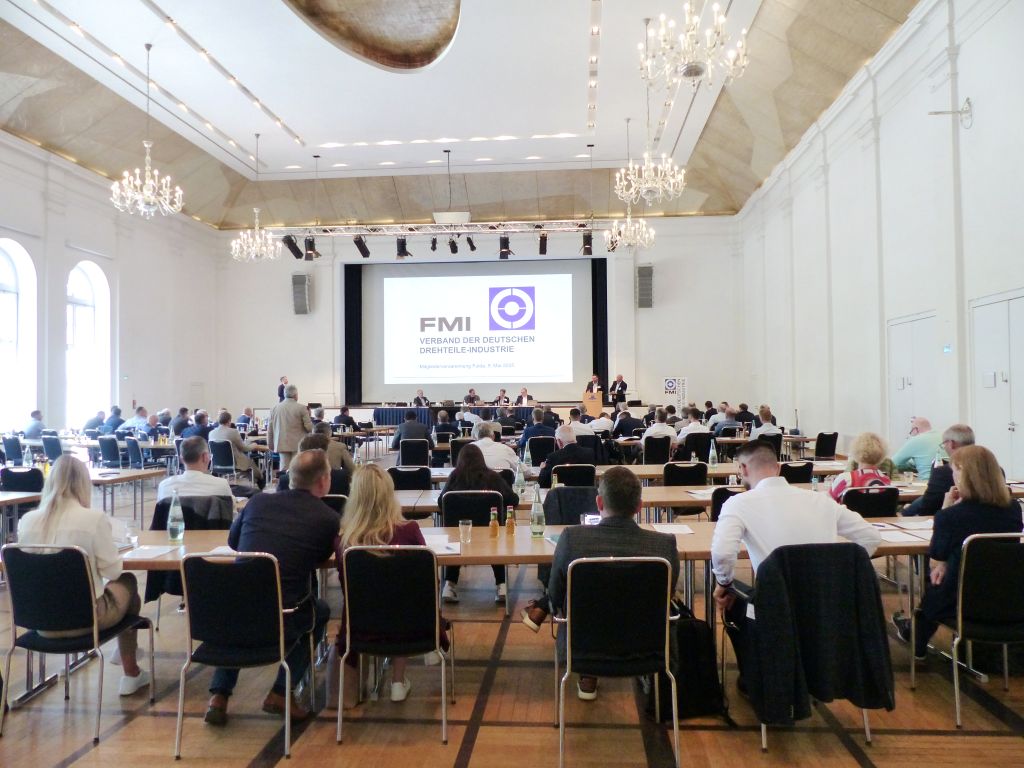
At the beginning of the event, members reported on their current situation and identified key challenges. Digitalization and data management are high on the agenda – many see potential for more efficient and stable production processes. Companies are also developing new strategies against the skilled labor shortage and place great importance on continuing to train their own young talent. To inspire young people for apprenticeships, the association provides short videos that explain the professions in a practical manner.
For 2025, many companies expect a slight recovery. Association Managing Director Werner Liebmann also looks ahead with optimism: 'Our members act creatively and develop their own solutions – this strengthens them in times of crisis. We rely on stable exports, reliable order volumes, and new impulses from future fields. This also includes the use of artificial intelligence (AI).'
Managing CO2 Balance and Chip Breakage
Tobias Hain from FRED GmbH presented the current status of the CO2 calculator FRED – a digital tool for CO2 accounting for medium-sized companies. He showed participants how the tool calculates the Product Carbon Footprint based on operational primary data using a square bolt, including raw materials, processing, and manufacturing overhead. FRED not only provides CO2 certificates but also analyzes hotspots as well as Scope 1, 2, and 3 emissions. There is already a dedicated industry module for the turned parts industry that can be integrated into environmental management and sustainability reporting in the future. 'The earlier you use the tool, the faster we can optimize it for your needs,' recommends board member Thomas Braun.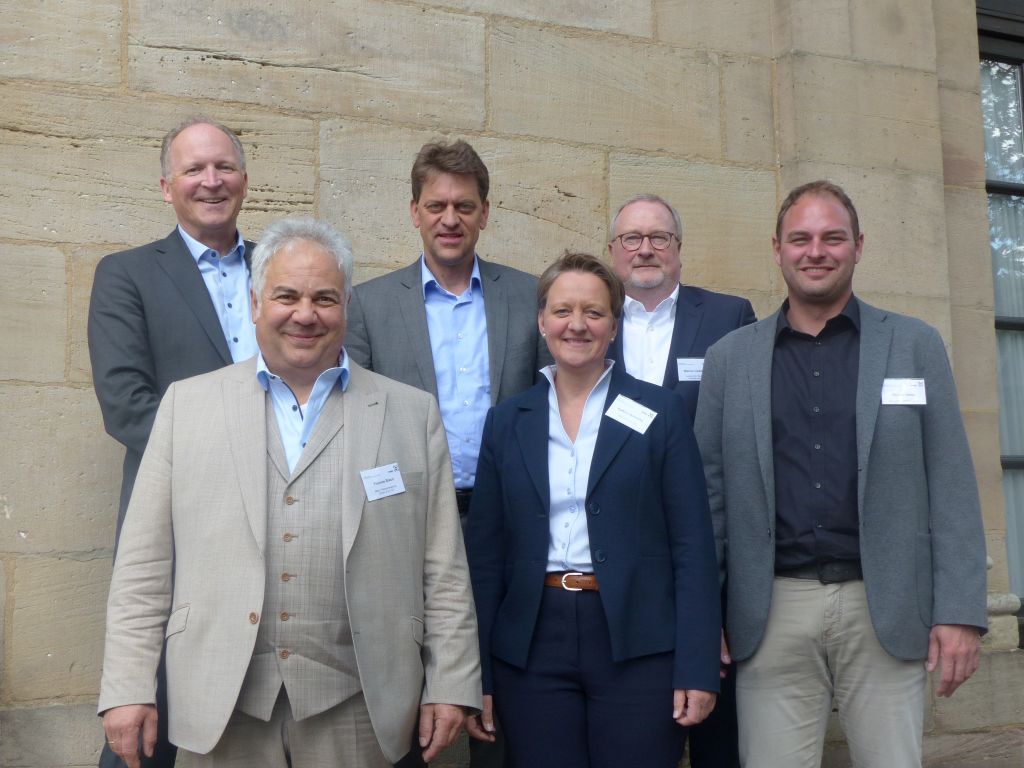
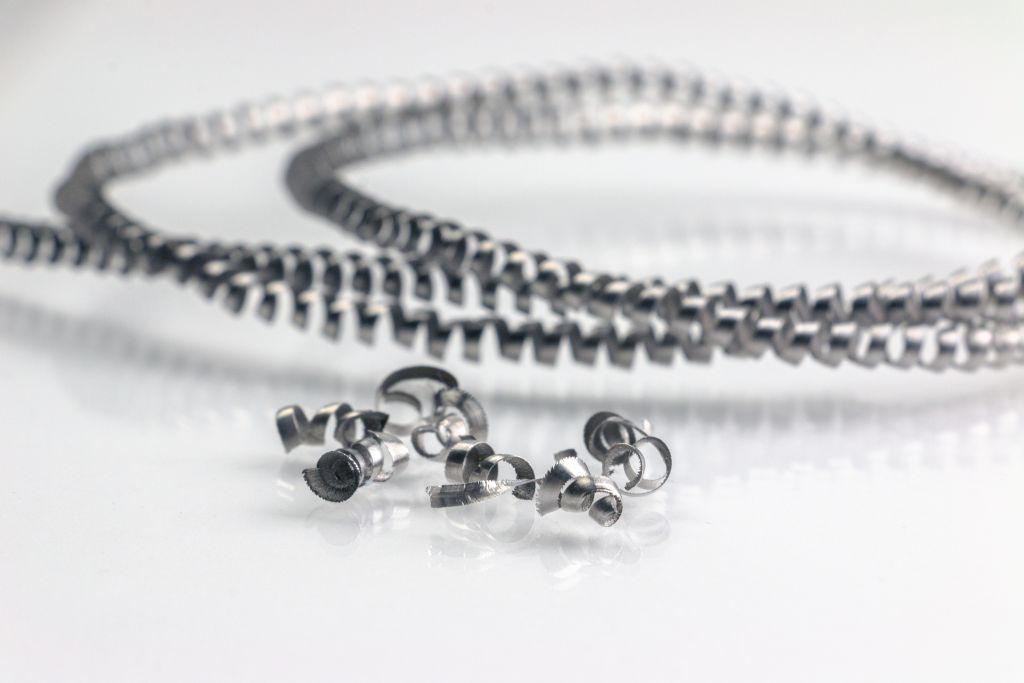
An innovative solution for the chip breakage problem during turning was presented by Dr.-Ing. Oliver Georgi from VibroCut GmbH in Chemnitz. The VibroCut oscillate system overlays the turning process with a targeted oscillation movement, creating predetermined breaking points in the chip and producing short broken chips. This increases process safety, prevents machine downtimes, and boosts productivity. The method can be applied regardless of material, cutting values, and tool geometries.
Securing Liquidity, Seizing Opportunities
Optimism also requires a financial foundation – this was discussed by Hans-Andreas Fein from Fein Unternehmensberatung in Stuttgart, as well as Julius Egen-Gödde, Michael Eisele, and Alexander Nagl from see finance Consulting GmbH in Filderstadt. Fein explained how suppliers can strategically use negotiations during turbulent times, for example, in cases of deviations from call-off quantities. The see finance team presented practical financial instruments – from credit and surety insurance to factoring and active financing advice.
In the presentation 'Promotion of Process Optimization and Efficiency Increase,' Walter Mauch from W Mauch Consulting in Dunningen introduced various options for supporting medium-sized companies in technical and organizational improvements. In addition to the ZIM program for research and development projects, the focus was primarily on the EEW funding program, which subsidizes investments in energy- and resource-efficient processes, plant modernizations, and electrification measures. Transformation plans for long-term decarbonization can also be co-financed through these modules.
Active in Working Groups
The association participates in several technical working groups on the machining of lead-free steels. The focus is on research projects at the universities of Dortmund and Hanover, as well as collaboration with the Association for Future-Oriented Machining. The goal is to develop new materials with optimized alloys and to test their practical applicability. The company Heinrichs successfully tested pre-alloyed automatic steels in machining in a project at TU Dortmund. Now, research is to be continued in a more application-oriented manner together with the partners.
'We look forward to the upcoming events, the SID Congress from June 8 to 13 in Chicago and the autumn conference on October 9 and 10 in Freiburg,' summarizes Werner Liebmann, emphasizing that the association is always available to members as a central point of contact for knowledge transfer, networking, and future work.
Contact: