
The history of the Aalen tool manufacturer MAPAL is closely linked to fluid technology. Over 50 years ago, fine drilling tools from the company were already in use there. Today, fluid technology as a market segment at MAPAL includes the areas of hydraulics, pneumatics, and process engineering. For machining solutions, the materials used make a significant difference. Since hydraulics work with fluids under high pressure, cast iron and steel are predominantly used there. In pneumatics, the lower working pressure allows for the use of lightweight aluminum materials.
In pneumatics, power and motion are generated, controlled, and efficiently transmitted through air or gas, primarily through valves and cylinders. Application areas for this can be found in mechanical engineering, logistics, and medical technology.
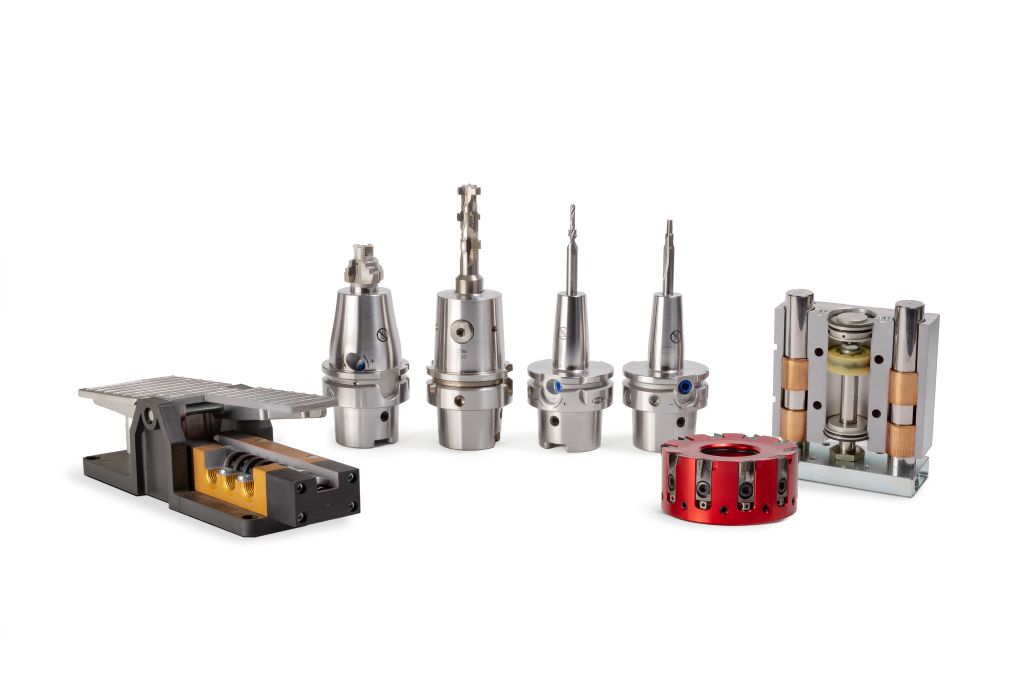
With a housing for pneumatic valves and a pneumatic cylinder, MAPAL has defined two focus components and designed economical and highly precise machining processes for them. Both components fit perfectly into the tool manufacturer's spectrum with production volumes of several million per year and the highest demands for process reliability, accuracy, and quality, while relying on its expertise and product portfolio for aluminum machining. The components are made from aluminum materials with a low silicon content, which places high demands on machining solutions regarding chip formation and chip removal. Special attention is paid to avoiding burr formation or scratches: Burrs on holes could significantly affect the function of a valve or even lead to its failure.
Clever tool combinations for pneumatic valve housings
A cost driver in the production of valve housings is the central hole for the slider, the slider bore, where tight surface, shape, and positional tolerances must be precisely maintained. The slider moves in this bore to control the airflow and ultimately move a pneumatic cylinder. MAPAL focuses on providing the customer with the most economical solution for their machining through tool combinations.
Solid carbide tools with special multi-phase technology and chip guiding steps for ideal chip control are used for stepped bores. Due to the production volumes and requirements, most tools are equipped with PKD cutting edges. For contour machining, MAPAL combines PKD reaming tools with milling applications. The tool first drills and then mills circularly. Such combination tools save several other tools and reduce machining and auxiliary time. Multi-stage PKD combination tools also ensure the highest coaxiality in contour machining.
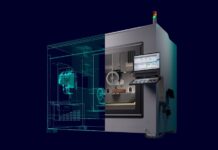
In the slider bore, there are several control edges that a PKD circular milling cutter processes. Its cutting edges are precisely adapted to the customer component. The tool completely mills the contours in one operation, resulting in significant time savings in the process. The mechatronic tool system TOOLTRONIC is a high-tech alternative to the conventional machining process of the slider bore with PKD circular milling cutters. Due to its flexibility and contour-free programmability, the number of tools can be significantly reduced. This also allows for component variants or changes to the component to be implemented easily and without the need for new tools.
The pneumatic cylinder, as the second focus component, also centers on the automated manufactured housing, where the challenges lie in fluctuating hardness properties of the cast material and high machining quality. While the characteristic features of the two focus components differ, the machining tasks are very similar. Accordingly, MAPAL also relies on clever engineering here. This includes, among other things, a PKD combination tool for the scratch-minimized complete machining of the bearing seat in the piston bore with reaming, circular milling, and chamfering.
Contact: