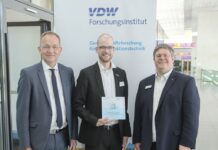

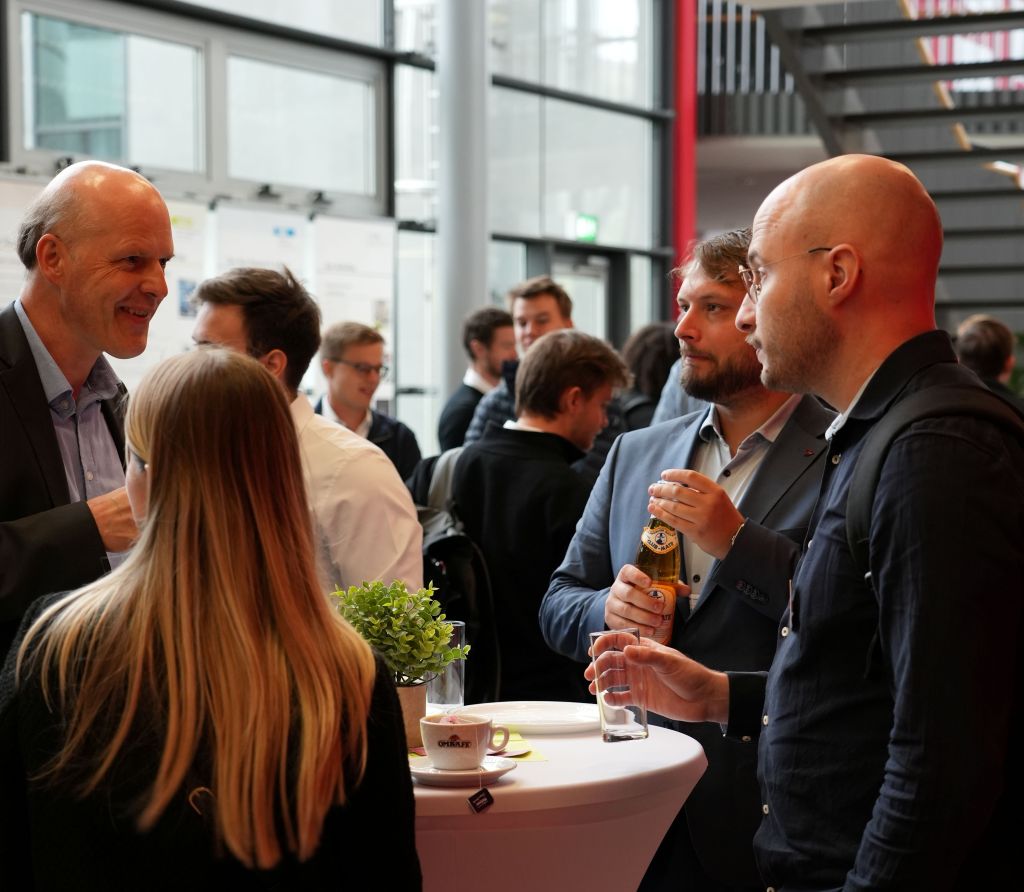
A competitive industry needs innovative manufacturing processes, which in turn depend significantly on modern production technologies. The WGP Annual Congress is a melting pot for the latest research findings. From October 6 to 9, 2026, young researchers from across the German-speaking region presented novel processes, technologies, and methods of industrial manufacturing in Hanover. Under the motto 'Competitive Factor Production Technology: Shaping Innovative Processes, Securing Value Creation', around 95 papers were presented over two days, exceeding the number of research works from the previous year. 'Not only the increasing number of contributions, but also their scientific rigor demonstrate the importance of the congress for the future of our industry,' says Prof. Jürgen Fleischer, President of WGP (Scientific Society for Production Technology) and head of the Institute for Production Technology (wbk) at the Karlsruhe Institute of Technology (KIT). 'Thus, a window to the production technology topics of tomorrow, which will shape the manufacturing sector, opened once again in Hanover.'
The research strengths of German universities in production technology were reflected in the wide range of topics. Papers were presented with currently strongly focused areas such as digital transformation and data-driven production, as well as robotics and automation. However, the focus was also on the scalability of individual production systems, new manufacturing processes, and not least sustainable value creation systems.
From new production processes to circular economy
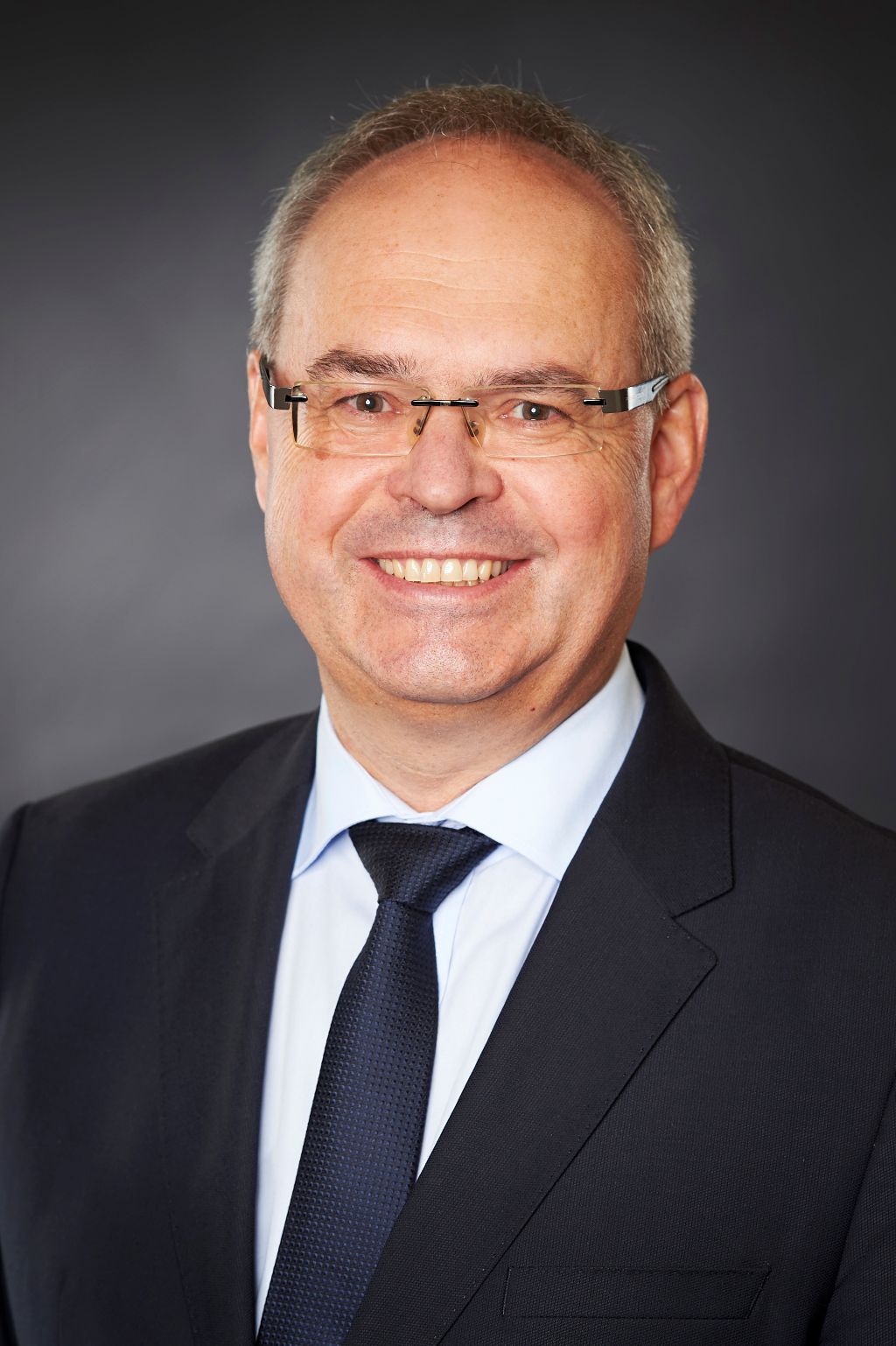
Due to decreasing resources and uncertain supply chains, more and more companies are considering sustainable value creation systems. This is where multi-robot manufacturing cells come into play, which are very suitable for flexible automation. Max Goebels from wbk Karlsruhe is addressing this topic in his dissertation. New programming of the cells for changing products often takes several weeks or even months and requires high expertise. Therefore, such cells are currently mainly used in standard processes with little variance. However, products to be processed in a circular economy are very variable: 'Accordingly, these processes are usually carried out manually. To make these processes economical, the programming of multi-robot cells must be automated,' says Goebels.
'We are designing a framework for task and motion planning for this purpose.' The framework, referred to as MR-TAMP, is designed as a comprehensive concept; the operation planning has already been tested by the researcher in simulations based on the disassembly of a battery for electric vehicles. The use of four instead of two robots reduced the processing time (Makespan) by 41.5 percent.
Regarding innovative manufacturing technologies, Jannik Lehner from the Institute for Control Technology of Machine Tools and Manufacturing Systems (ISW) Stuttgart presented his research work. In the production of very large components such as aircraft wings, rack and pinion drives are typically used. However, the rack and pinion can temporarily lose contact under certain system conditions, leading to path deviations and impairing product quality. Lehner was able to show that the effects of this backlash depend heavily on the course of the required acceleration after overcoming the backlash. 'By dynamically adjusting the target speed, we can shorten the duration of the backlash and reduce the induced positional error by more than 60 percent,' summarizes Lehner the remarkable result.
Clever solution for cooler saw blades
The Best Paper Award was also presented in the area of innovative manufacturing technologies. The jury was convinced by a team from the Institute for Machine Tools (IfW) Stuttgart. The researchers have developed a solution for the well-known problem that when sawing difficult-to-machine materials like titanium, circular saw blades are thermally stressed. By integrating internal cooling lubricant channels, the temperature in the machining process can be regulated downwards. However, due to the thin blade thickness, it is correspondingly complex to integrate the channels.
First author Johannes Ramme and co-author Dr. Rocco Eisseler, who gave the presentation, demonstrated that it is possible to change the geometry of the thin blade in such a way that the flow characteristics of the cooling lubricant (KSS) are optimized, requiring fewer channels to be integrated into the saw blade.
'A deliberately shaped inlet geometry, inspired by flow shapes from aviation, directs the coolant on its way to the adjacent tooth gaps,' explained Fleischer in his laudation. 'This way, significantly more coolant reaches the areas where it is needed, and all without additional channels. Simulations show that the tooth gaps are filled faster and about nine percent better.'
These and numerous other research works and collaborations inspired the audience for two days before companies opened their production halls for the young researchers on the last day: thus, the annual congress was also an inspiration for all participants this year.
Contact: