
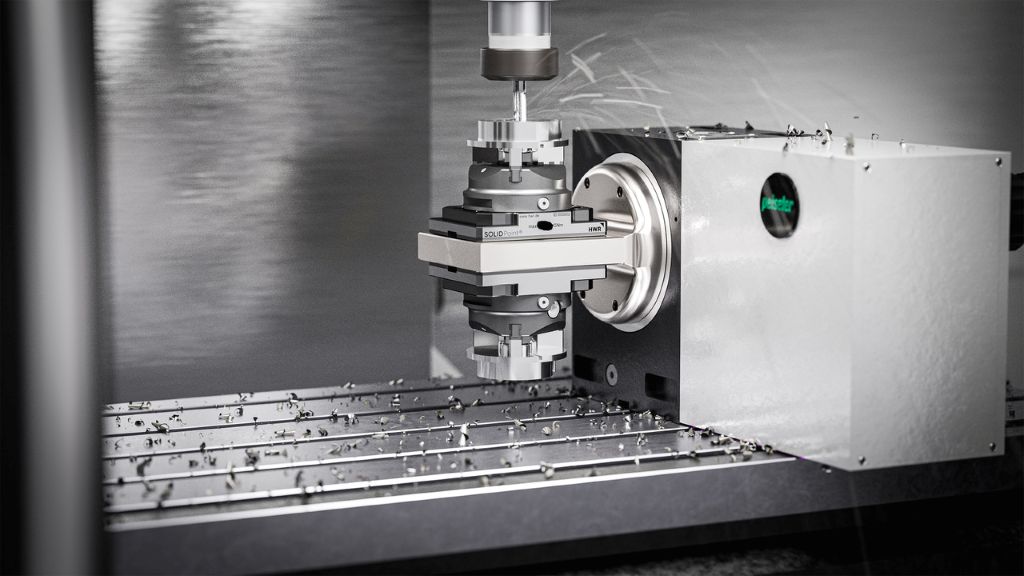
Like many companies in the machine tool industry, Peiseler is increasingly targeting additional user industries due to the structural change in the automotive industry. At the AMB, trade visitors can get an impression at booth 10B86 in Hall 10. The manufacturer of turning devices, rotary tables, two-axis swivel units, swivel heads, and workpiece change tables will showcase further developments that are tailored to the specific requirements in the aerospace and optical industries.
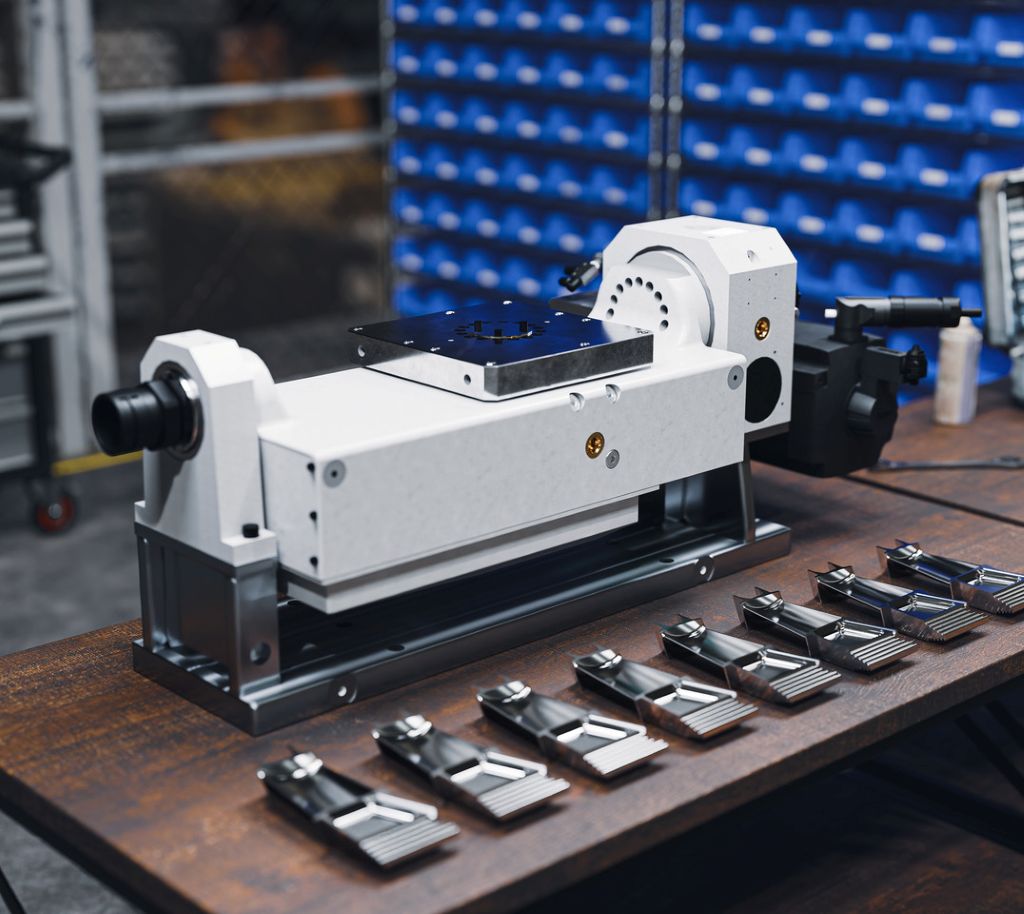
Modified ZAS 250 Facilitates Turbine Construction
"When aerospace customers manufacture engine components from high-temperature resistant alloys or complex geometries with extreme surface qualities, the highest precision, quality, and safety are required," emphasizes Peiseler's managing director Arnd Kulaczewski. "That is precisely why we are the right partner in our segment." This also applies to the manufacturing of turbine components, where special demands must be met. In addition to their use in aerospace, these components also play an important role in energy technology.
The Remscheid-based company has further developed the two-axis solution ZAS 250, which is integrated into a grinding machine. It is specifically tailored to these requirements with a special axis arrangement and geometry.
The user benefits from better accessibility, especially with demanding component geometries, and greater flexibility with different workpiece shapes. In addition, Peiseler has placed high value on continuous sensor technology and actuation throughout the grinding process. The resulting continuous monitoring and active control of the cutting process also means higher process reliability for manufacturers of turbine components.
Further Developed Turning Device AWD 160 for the Optical Industry
For use in the optical industry, Peiseler has further developed the turning device AWD 160 and specifically adapted it to the prevailing conditions. "Here, it was first about integration into the tight, special construction spaces typical in eyeglass lens processing," describes Kulaczewski. "And about adapting our positioning technology to the exceptionally high requirements in the existing process environment."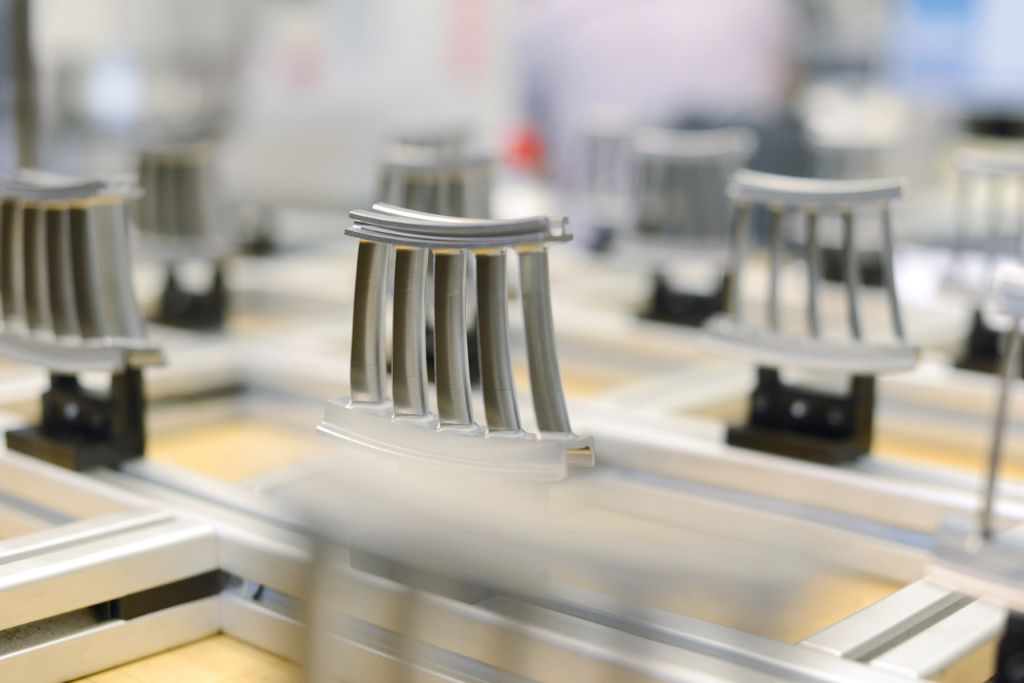
For example, specific materials had to be selected for the rotary axis used here that can withstand the prevailing conditions. Because coolants, polishing suspensions, and fine plastic abrasion continuously affect the machine components. Thanks to the complete further development, it has been possible to achieve high durability over the entire service life. The result of the Peiseler solution for the optical industry: fewer wear-related downtimes and consistently high surface quality.
ATC Series for Versatile Use
Also a topic at the Peiseler booth is the ATC series, whose horizontally and vertically usable NC sub-devices and rotary-tilt tables are suitable as upgrade or retrofitting solutions as well as for retrofit projects. An optimized drive train now ensures higher power density. Visitors to the Peiseler booth can personally convince themselves of this in a strength measurement. An ATC arm pressure machine provides a striking impression of the force conditions of such a small device. "This is certainly a bit of a gimmick, but at the same time an invitation to get to know our precision technology," emphasizes Kulaczewski. "And thus also how we further develop our solutions for new application fields."
Contact: