
After the death of their father, brothers Thomas and Axel Hellmich initially pursued parallel paths with a tool manufacturing company and a design office. After their merger, enormous synergies of the two areas of expertise became apparent.
The current Hellmich Werkzeugbau GmbH traces back to a design office for mechanical and tool engineering founded by Manfred Hellmich in 1991 in Bad Honnef. He could not fulfill his big dream of having his own tool manufacturing before his early death. This was later achieved by his two sons, who were encouraged to start the company by a customer of Manfred Hellmich. The stamping company from Cologne wanted the business to continue and supported the young entrepreneurs with advice, orders, and an erosion machine.
Axel Hellmich had already helped his father during his studies in design, while Thomas Hellmich is a trained toolmaker who started in the garage with small devices and tools.
In 2008, the initially separately managed companies merged. The current company building in Rheinbreitbach, with an area of 1,000 square meters, was occupied in 2016. Currently, 15 employees work here.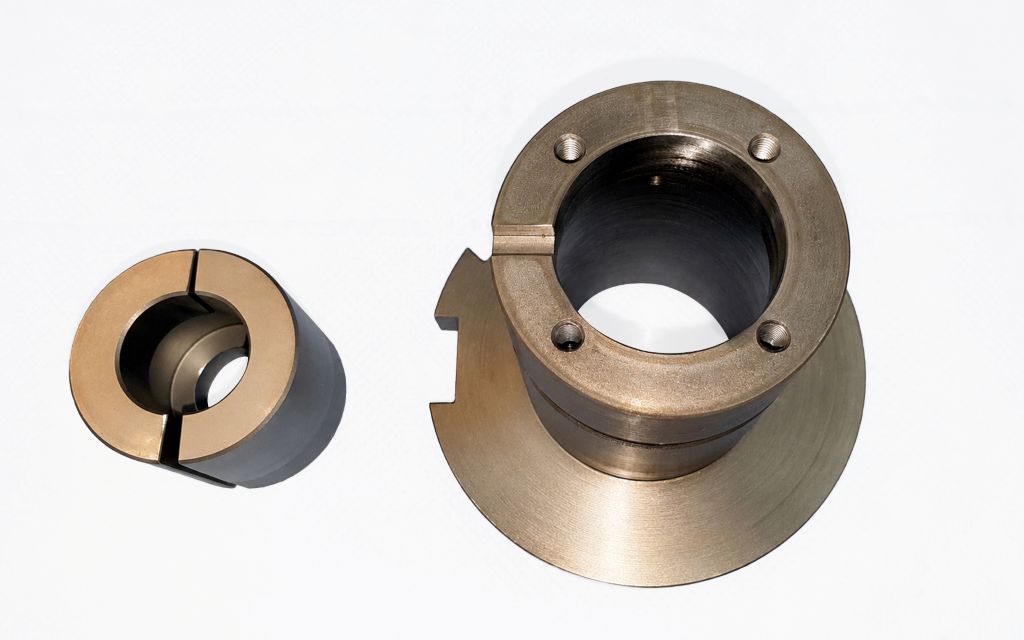
The company has grown with the development and construction of sheet metal forming tools for the automotive industry. Hellmich's specialty is fully automatic tools and special devices, such as progressive dies, which are highly complex, automated stamping and forming tools used in industrial sheet metal processing for the economical mass production of complex metal components.
The tools supplied by Hellmich were primarily used for the production of sheet metal parts for combustion engines. This market has now completely collapsed. 'A combustion engine requires more stamped parts than a comparable electric car,' explains Thomas Hellmich. 'The suppliers are now mostly in China and produce at prices we can no longer compete with.'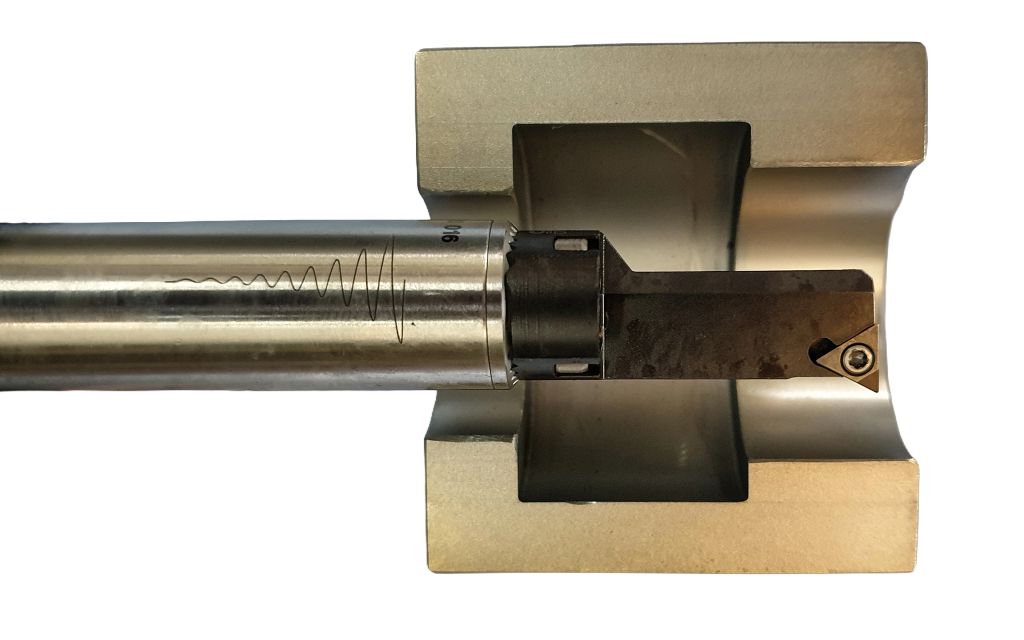
From Tool Manufacturing to Contract Manufacturing
The family business reacted early to this development and shifted from tool manufacturing to contract manufacturing, which now accounts for 80 percent of the business. The customers now mainly come from the electrical industry. For them, Hellmich produces milling and turning parts made of steel, aluminum, or plastic in single or series production. For machine components, mainly individual parts and small series of 5 to 20 pieces are produced. Higher quantities are achieved with wear parts and series parts. The largest customer is also a manufacturer of stamping and bending machines for the electrical industry based in Rheinbreitbach. For him, Hellmich also acts as an extended workbench and produces prototypes with the help of its experienced design department.
Especially in the turning area, the precision tools used at Hellmich predominantly come from INGERSOLL. CNC turner Sven Bendix is very satisfied with the manufacturer's service: 'One call is enough, and the tool is quickly there. This helps us to respond very flexibly to customer requirements.' Especially when it comes to special solutions, INGERSOLL is in demand in manufacturing.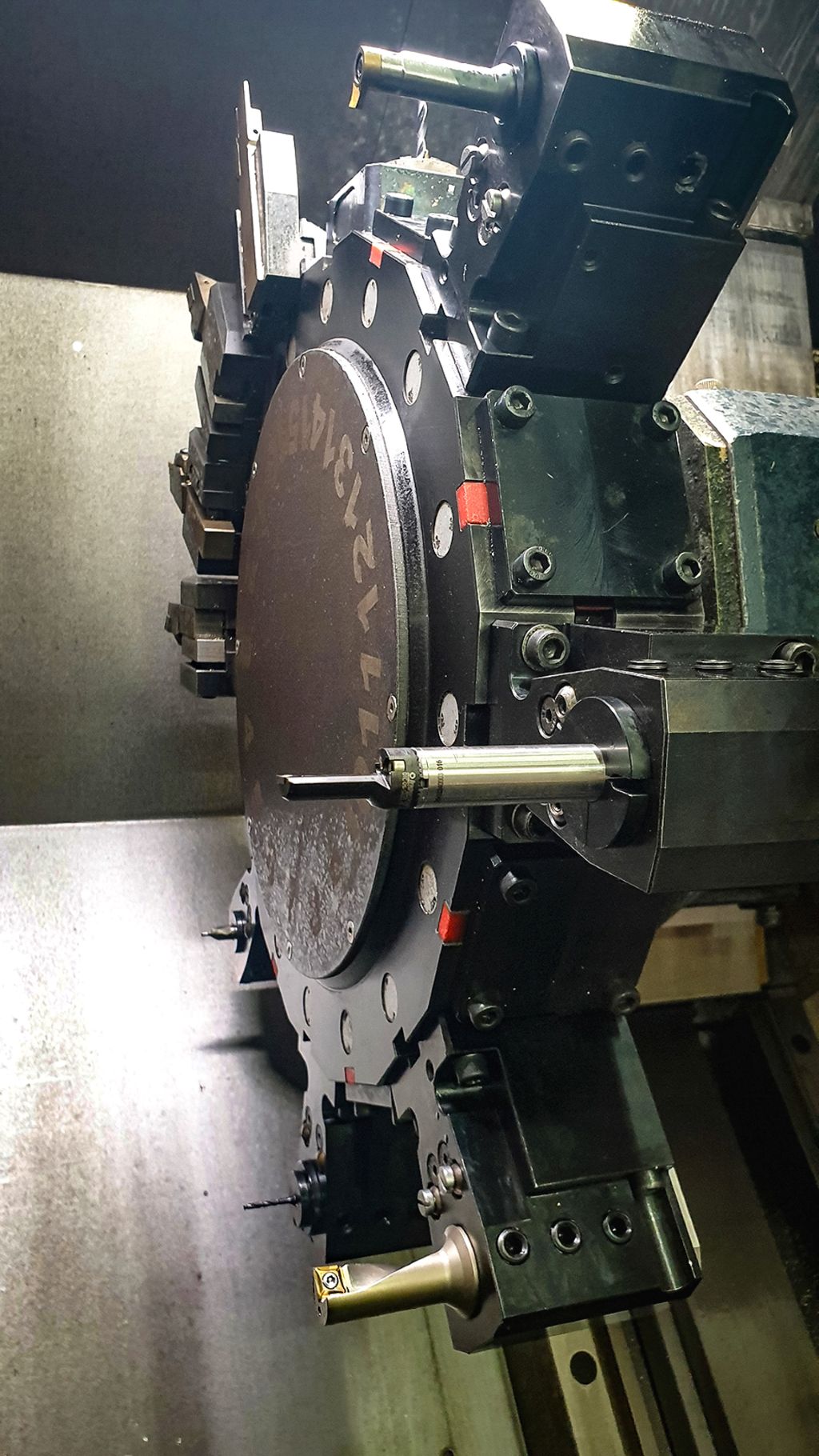
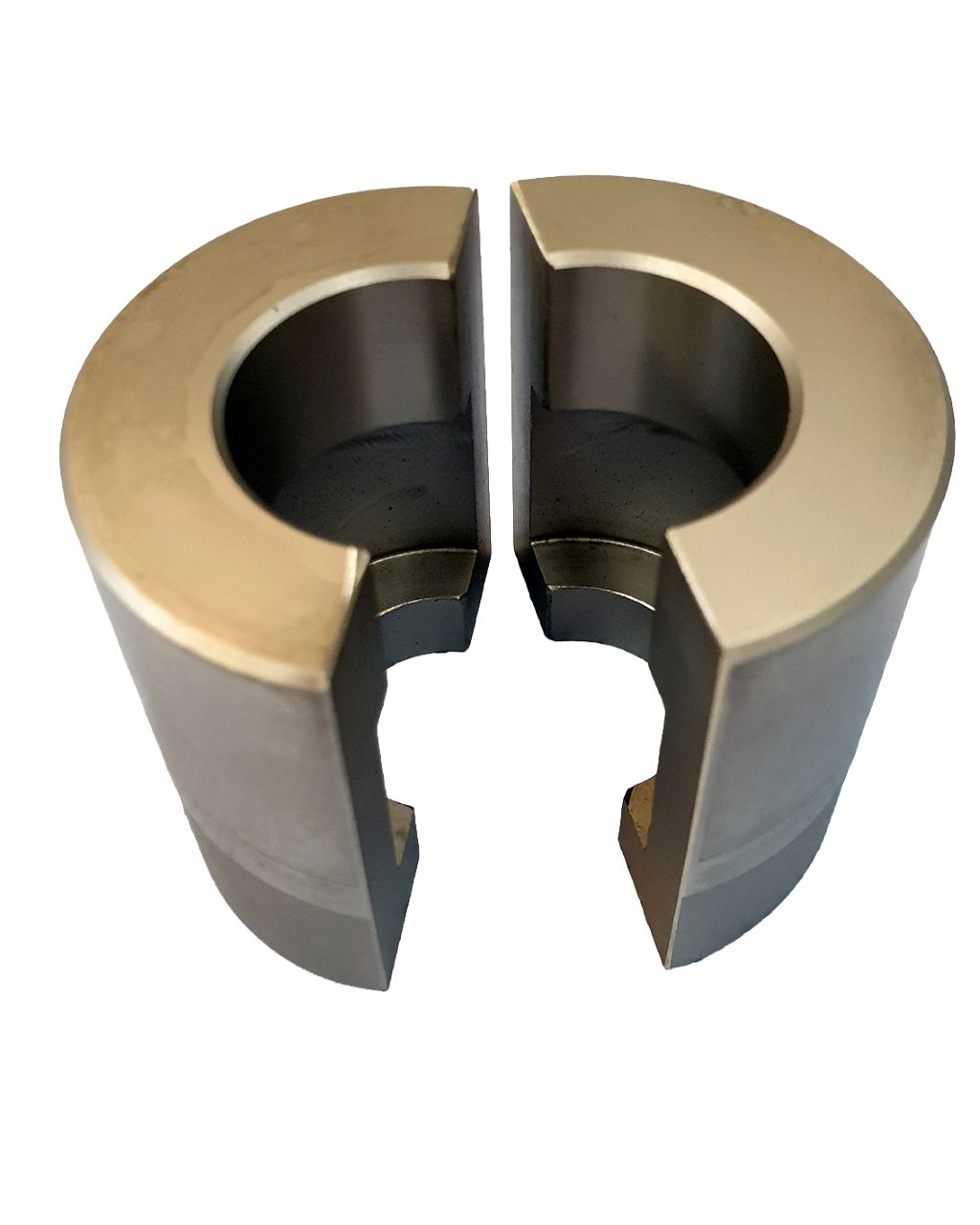
Such a solution was also required when Hellmich encountered problems with a component. This concerns a holder for punches used in stamping machines. In various designs, Hellmich produces several hundred pieces of this per year. The holder is not only a series part for machine equipment but also a wear part that must be regularly replaced. Like the punch, the holder wears out, as it is practically in continuous use. Since the holder moves in a cylinder, the outer diameter is particularly affected. Hardened material counteracts wear.
Vibrations Cause Problems
The machine manufacturer initially produced the components themselves but then outsourced them because there were often breakouts in the material, resulting in high scrap rates. Hellmich initially struggled with the same problem. Together with his hardening service, the manufacturer was able to make improvements and ultimately produce the parts in a process-safe manner. The attempt to reduce processing time and increase accuracy by machining in one, instead of two, clamping setups did not go well for long. What initially worked began to cause increasing problems due to vibrations during processing. The manufacturers attribute this to the fluctuating quality of the material used, which is said to be due to changes in steel production on the world market.
Sven Bendix inquired with Jochen Cramer, sales representative for INGERSOLL, about a possible solution. He immediately involved the application technology of the tool manufacturer. What superficially appears to be a simple turned part actually posed demands on the tool solution. 'A challenge is the workpiece material and the component-specific details with sharp-edged transitions from surfaces to diameters,' notes application technician Christopher Hees. The component made of tool steel is first turned to a small dimension, then hardened, and finally finished turned inside and outside. At the end, it is split into two halves on an erosion machine to accommodate the punch. For the holder to move smoothly in the outer cylinder, the tolerances must be adhered to precisely, and the surface finish must be flawless.
Efficient Tool Solution
Christopher Hees explains the philosophy of INGERSOLL application technology:
'Even with special applications, we strive to use the most efficient tools. Whenever possible, we use standard or semi-standard products to have the most economical solution ready for the customer.' The tool designed for Hellmich consists of three parts.
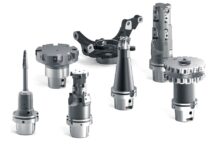
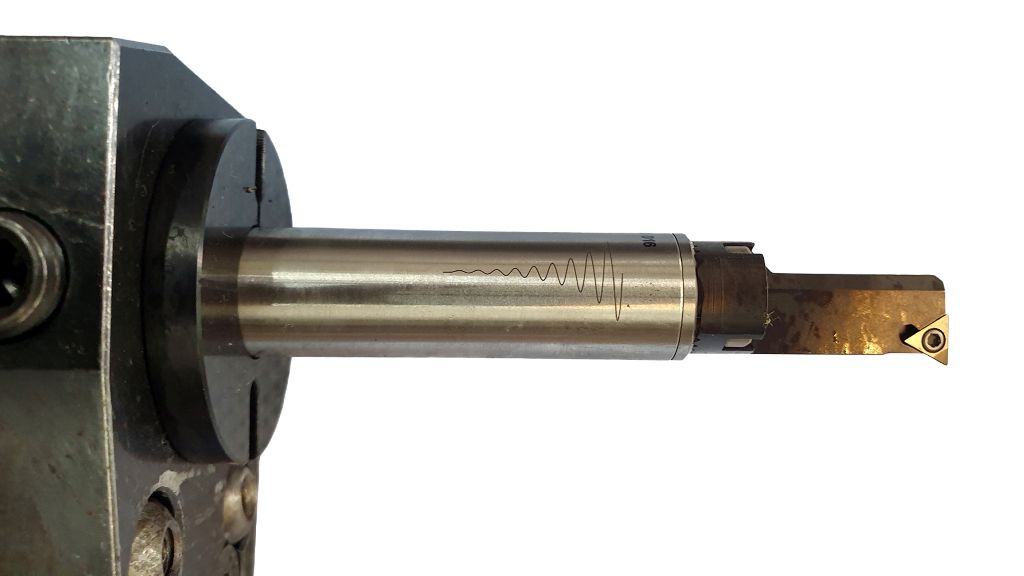
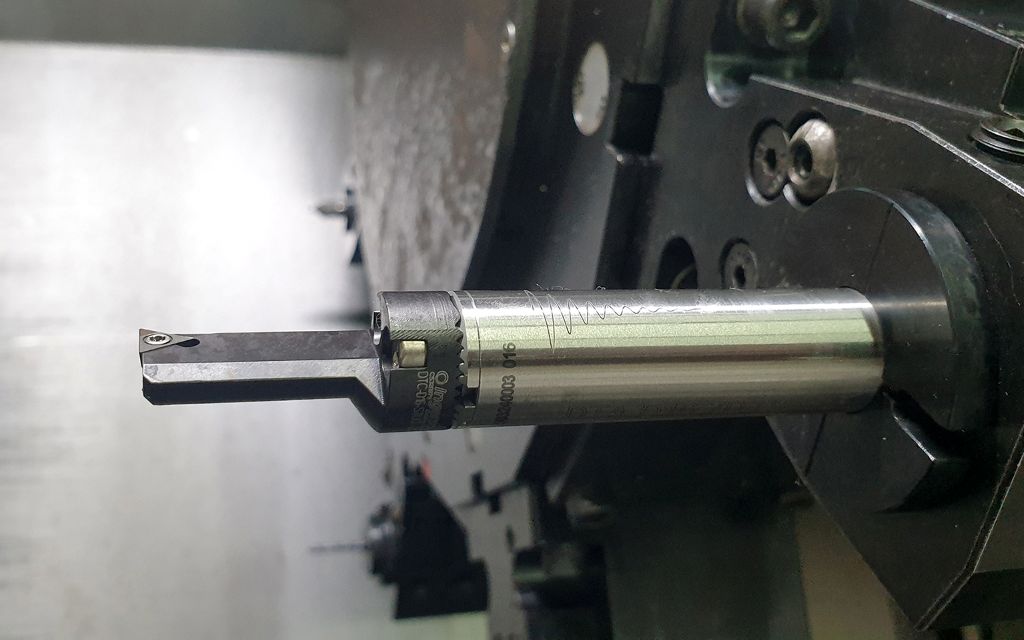
For the indexable insert, INGERSOLL opted for a three-edged insert. The tool head was custom-made at the INGERSOLL site in Süd in Horrheim. The head sits on a T-Absorber, which is a vibration-damped drill rod that is part of the standard portfolio of the tool manufacturer.
For the head, there was no way around a special solution. The base of the insert is rather small, and the head is very open to allow for the smallest diameter to be manufactured with the largest possible material removal. INGERSOLL designed it to be suitable for all common diameters. The tool manufacturer oriented itself to the smallest diameter to be machined and the largest possible length. Hellmich manufactures the component in diameters from 6 to 32 mm. Only the two smallest diameters, which the manufacturer rarely deals with anyway, are not possible with the tool.
Optimization in the Tech Center
Since it is a special application under difficult conditions, the optimization took place at the INGERSOLL Tech Center in Haiger. There, after trials on a machine comparable to the Spinner TC 600 used by Hellmich, the cutting material and the geometry of the indexable insert were modified. The TNGA was used in a different variant, which, with smaller edge rounding and smaller chamfer, builds less pressure and proved to be the more stable solution. Initially, it was assumed that high pressure was necessary for the vibration damper to work efficiently.
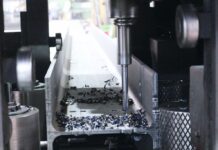
The adjustments were successful and led to a stable process, where higher tool life was also achieved. The inside of the workpiece is machined with CBN plates, while ceramic plates are used for the outside. During the trials in the Tech Center, the optimal cutting values were also determined and made available to the customer. The work is now done with a cutting speed Vc of 110 m/min and a feed rate fz of 0.05 mm per revolution to achieve the desired surface accuracy. The depth of both cuts is 0.15 mm each.
Instead of previously using two setups with two tools, Hellmich can now machine both the punch holder and the outer cylinder in a single setup with one tool. This increases the component quality and reduces processing time. "Every minute saved is money for us," says Thomas Hellmich with satisfaction. He is just as pleased with the new tool as he is with the prompt execution of the project.
Contact: