
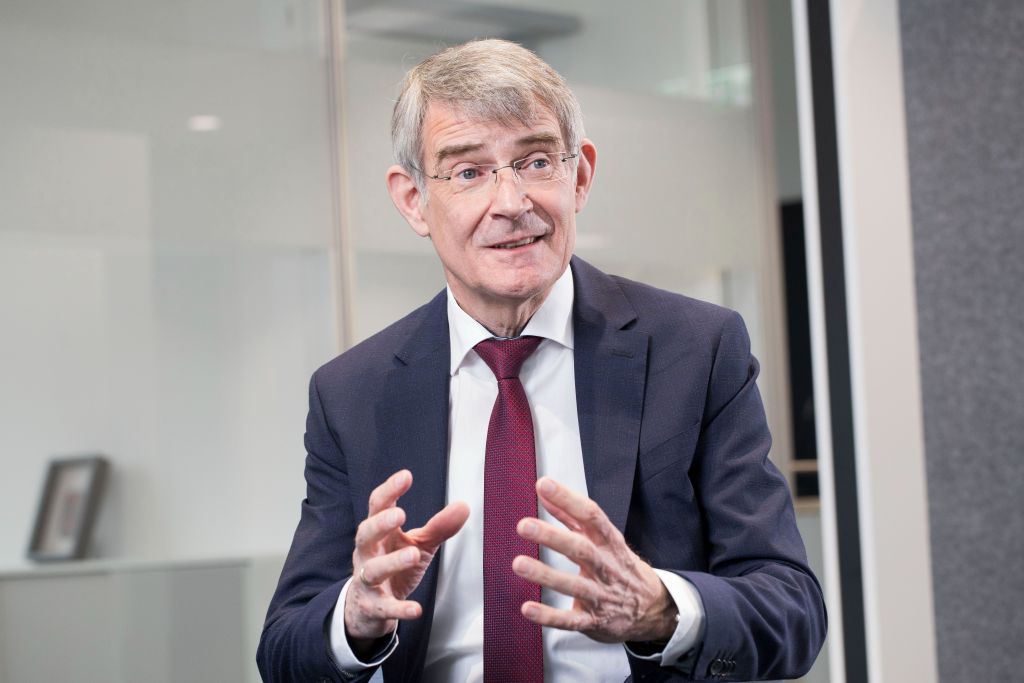
The German machine tool industry expects a 1 percent increase in production to 13.7 billion euros in 2026 after two years of decline. "A significant basis for this is the expected recovery of domestic demand," explains Franz-Xaver Bernhard, Chairman of the VDW, at the annual press conference regarding the forecast. High costs, lack of planning security, and the absence of economic reforms to strengthen the German production location had slowed investments in the previous year. Positive effects of the so-called special fund of the federal government are now expected, which is to be invested in infrastructure, defense, climate protection, digitalization, and mobility, and could at least provide a small impulse.
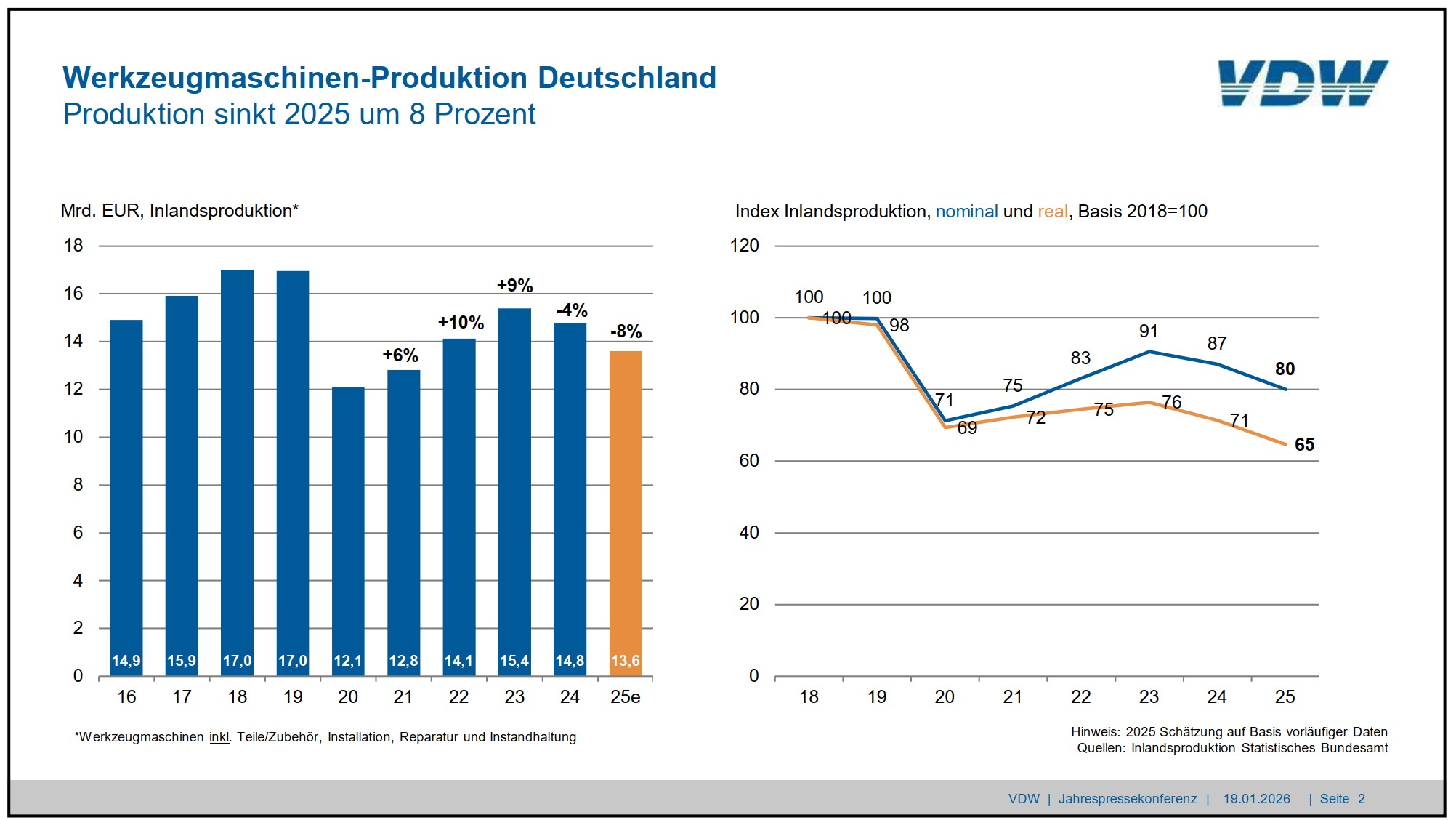
In 2025, production fell by 8 percent. Compared to the highest result in 2018, the gap is thus one-fifth. Adjusted for prices, there is even a gap of 35 percent. The decline affects both exports and, to a slightly lesser extent, domestic sales. Exports to all world regions were declining. Only a few of the top 15 foreign markets were able to grow.
China International on the Fast Track
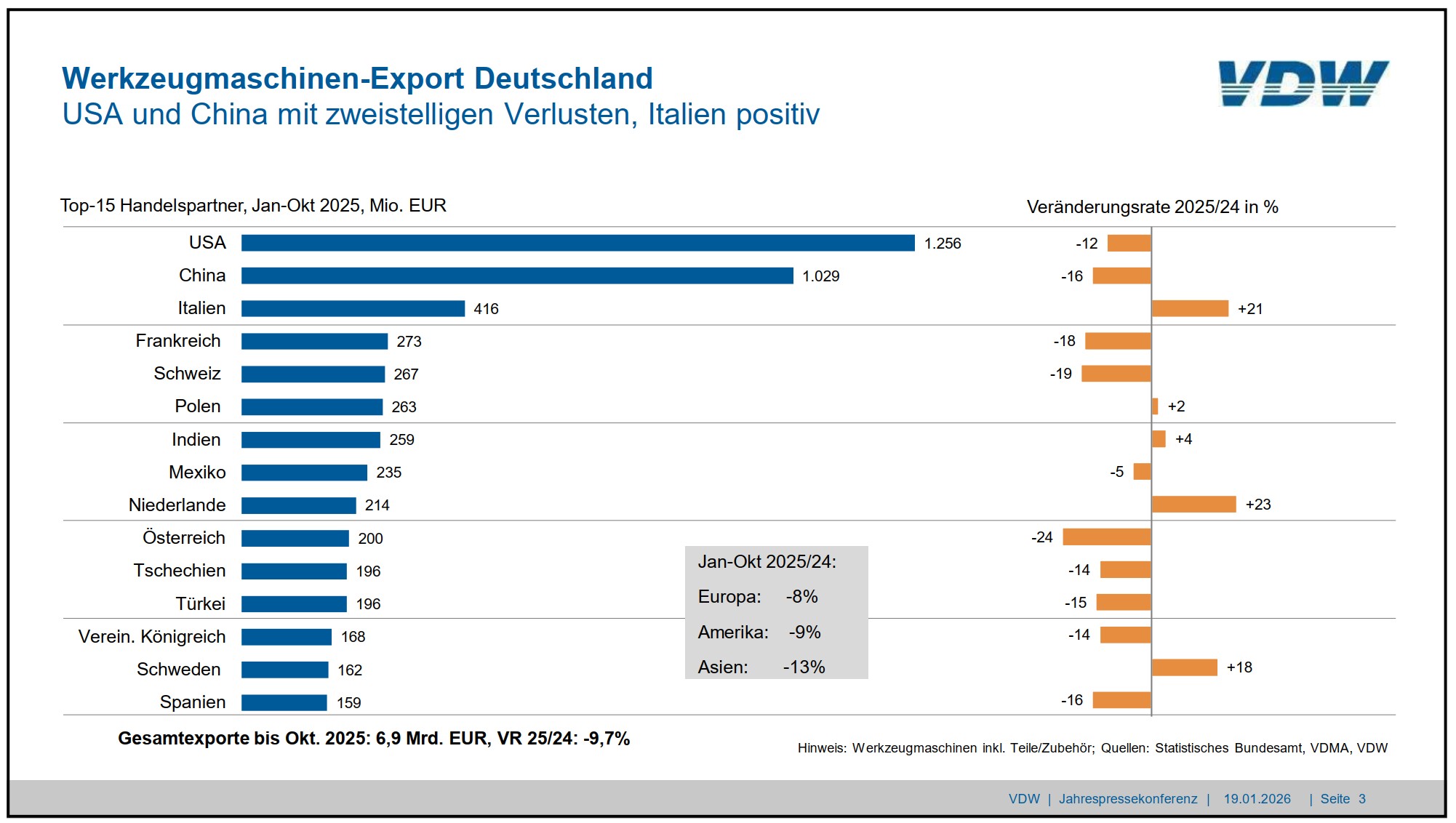
"We are very concerned about competition from China," says Bernhard. As expected, the Chinese have massively increased their machine tool exports by 18 percent according to the current government strategy. This development was intensified by weak domestic demand. Accordingly, German manufacturers had to relinquish their international leadership position in exports to China.
The country is further strengthening its position in the ASEAN region, as well as in Brazil, the Middle East, and North Africa. Exports to some EU countries are also continuing to rise, such as to Germany, Poland, and Italy, although the overall imports of these countries have been rather declining in recent years.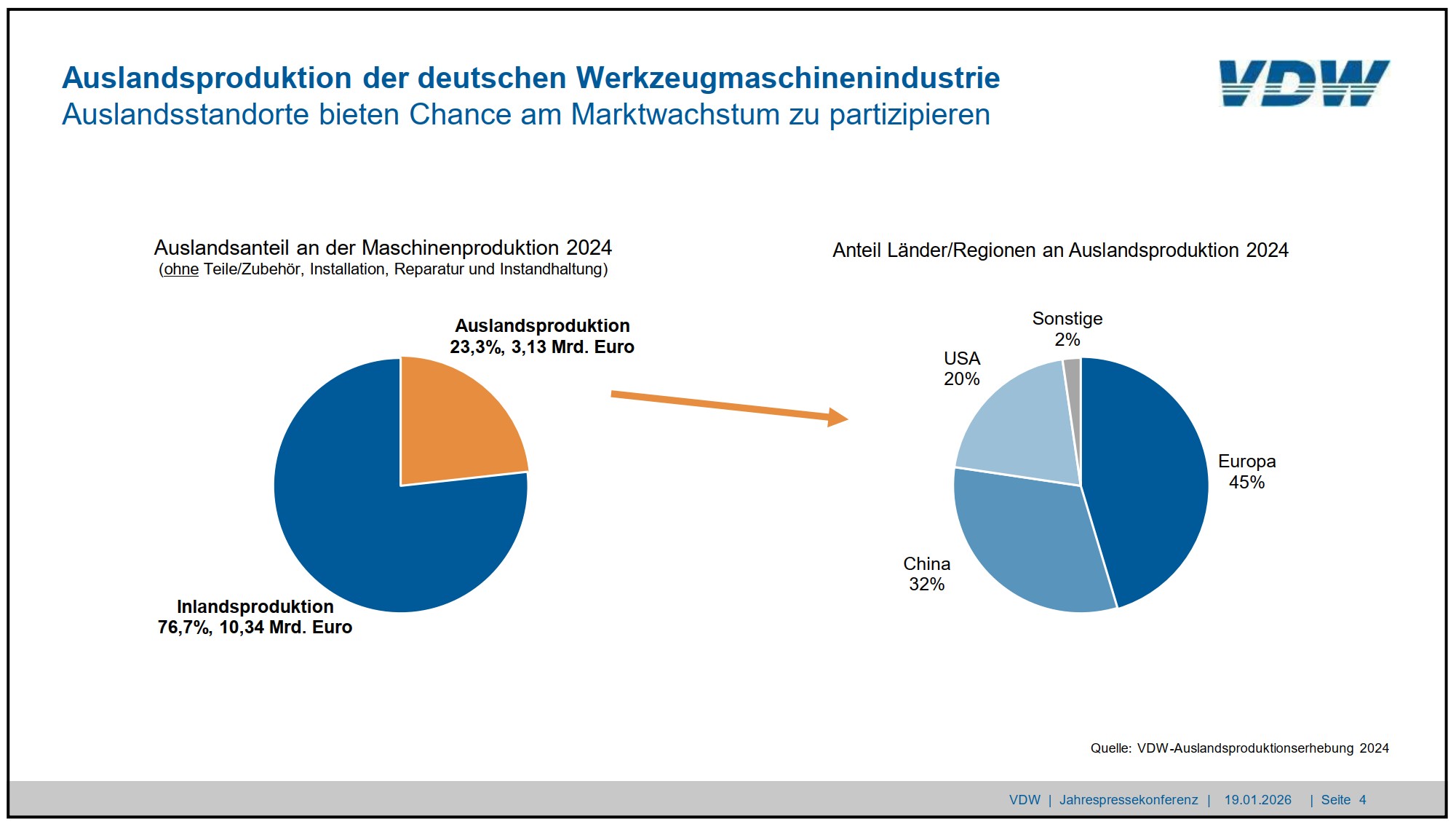
"No good news," Bernhard states. "However, we are intensively utilizing all options to adapt to the structural change," he says. This unfortunately also requires capacity adjustments in the end. In October 2025, the industry had already reduced the number of its employees in companies with more than 50 employees by 3.9 percent to 63,300 women and men compared to the previous year.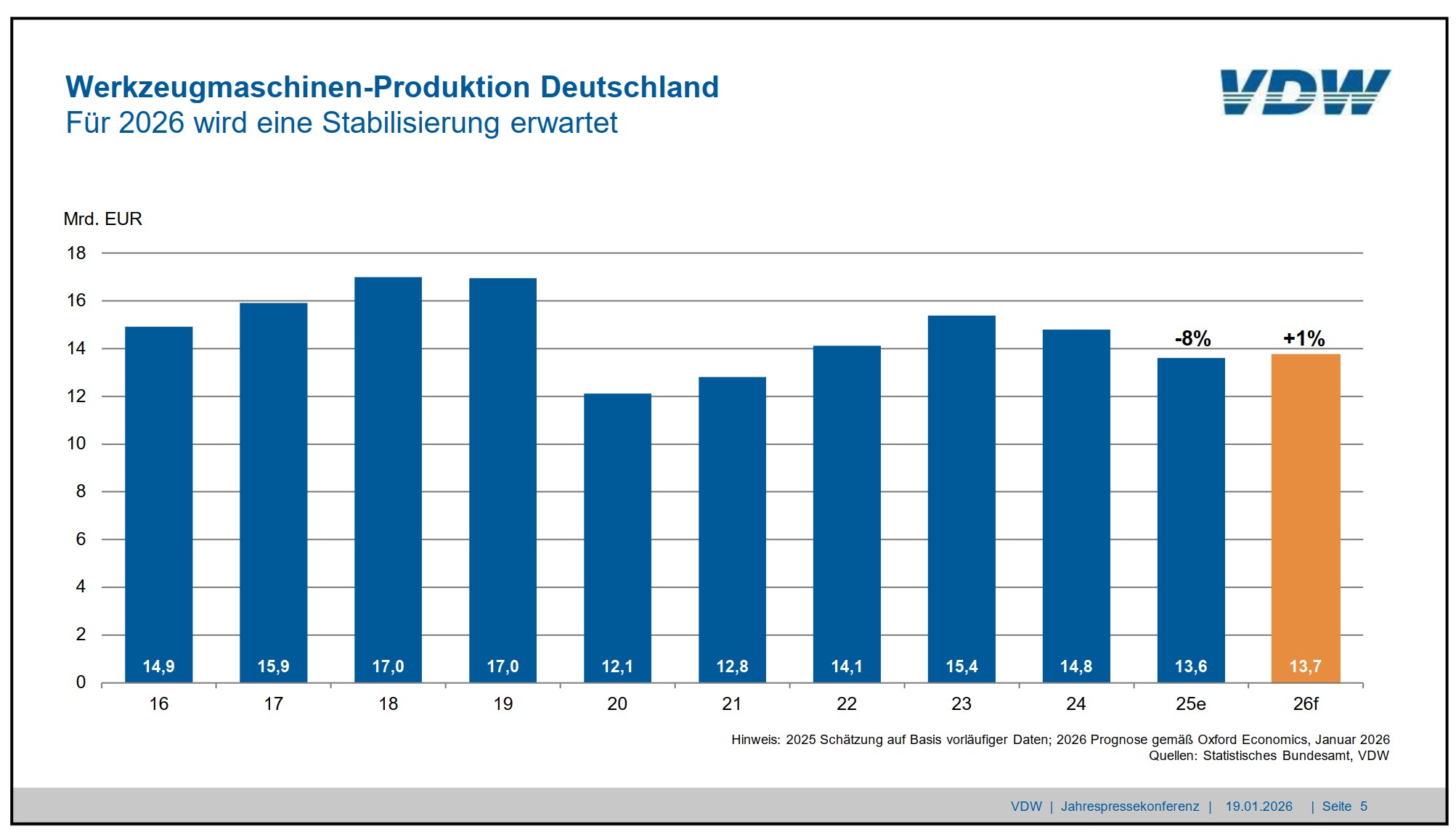
For the industry to gain momentum again, it must exhaust all available options. In addition to capacity adjustments, these include foreign production, market diversification, expansion of technological leadership, intensification of research activities, and recruitment of excellent employees.
Local for Local is becoming increasingly important
Twelve larger machine tool manufacturers are now producing abroad. Their foreign production accounts for about one-fifth of the total German machine tool production. 45 percent is achieved in Europe, 32 percent in China, and 20 percent in the USA.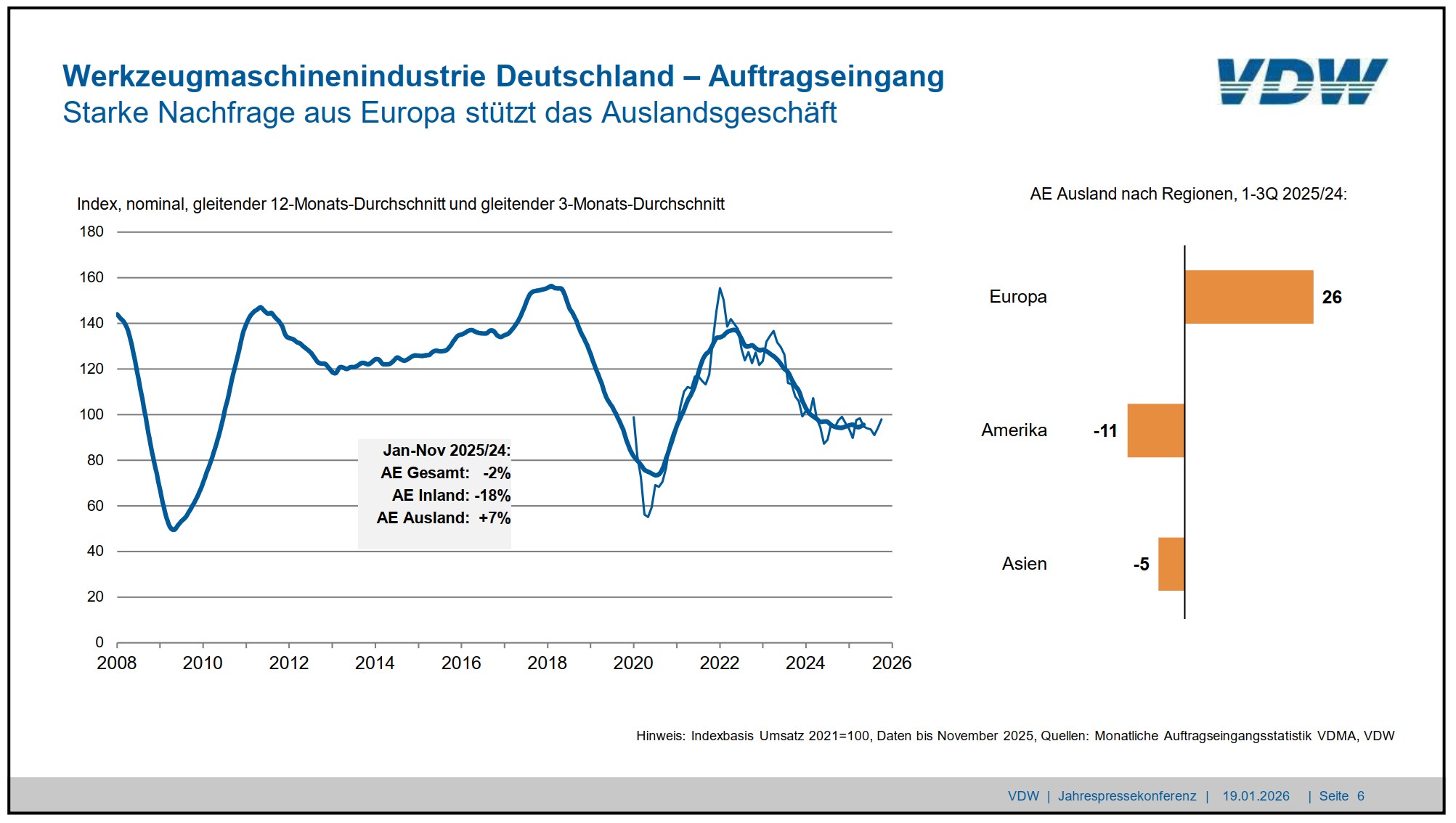
It compensates for declining exports to important markets and stabilizes the overall results of companies. "Companies that can take advantage of this have a better chance of participating more strongly in local market growth despite existing trade barriers and also realizing cost advantages," says Bernhard.
Diversifying Sales Markets - Focus on Europe
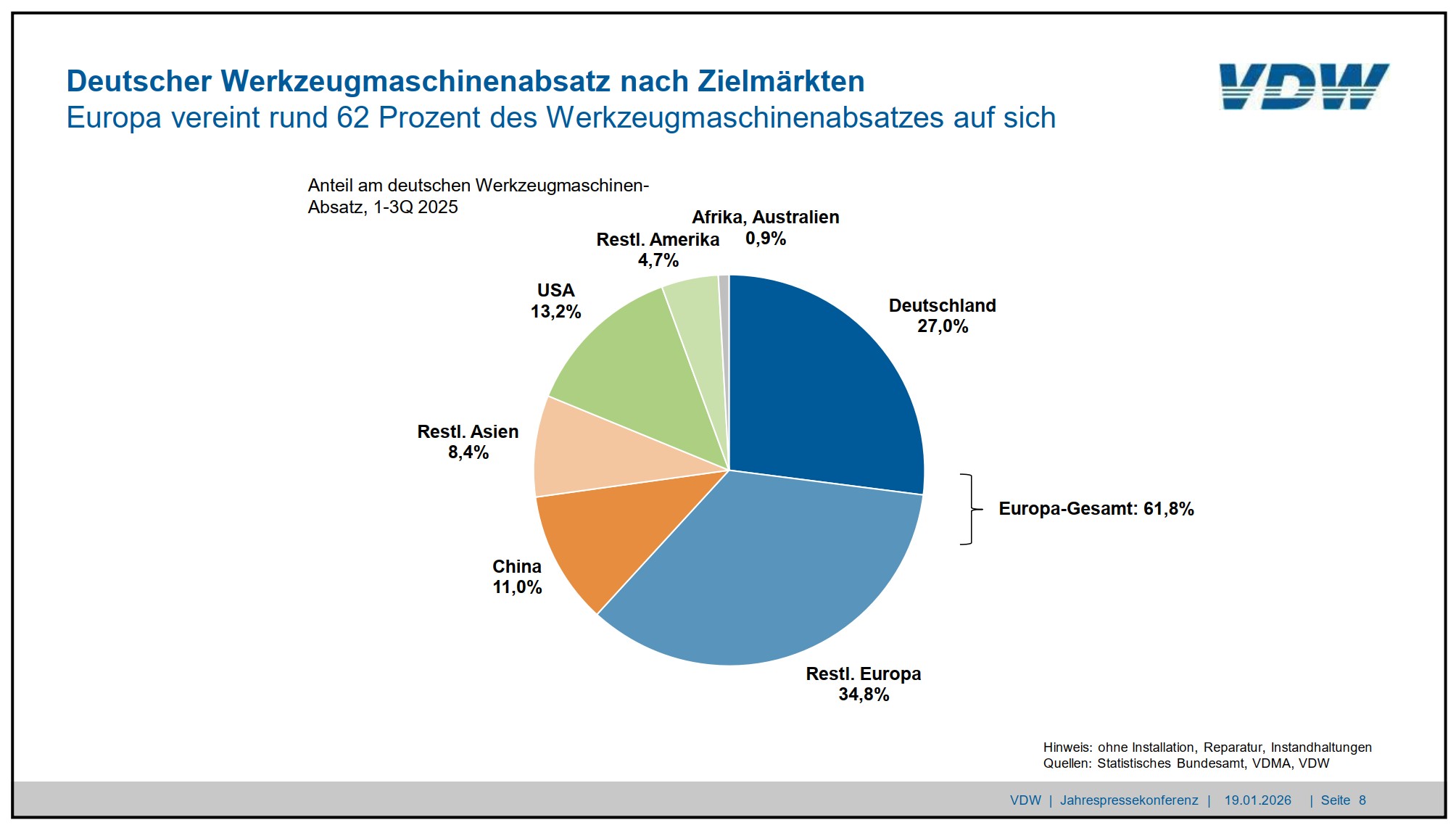
In 2025, German exports to the largest sales markets fell sharply due to US tariffs and declining Chinese imports. The top sales region for German manufacturers is the home market Europe, which accounts for about half of the exports.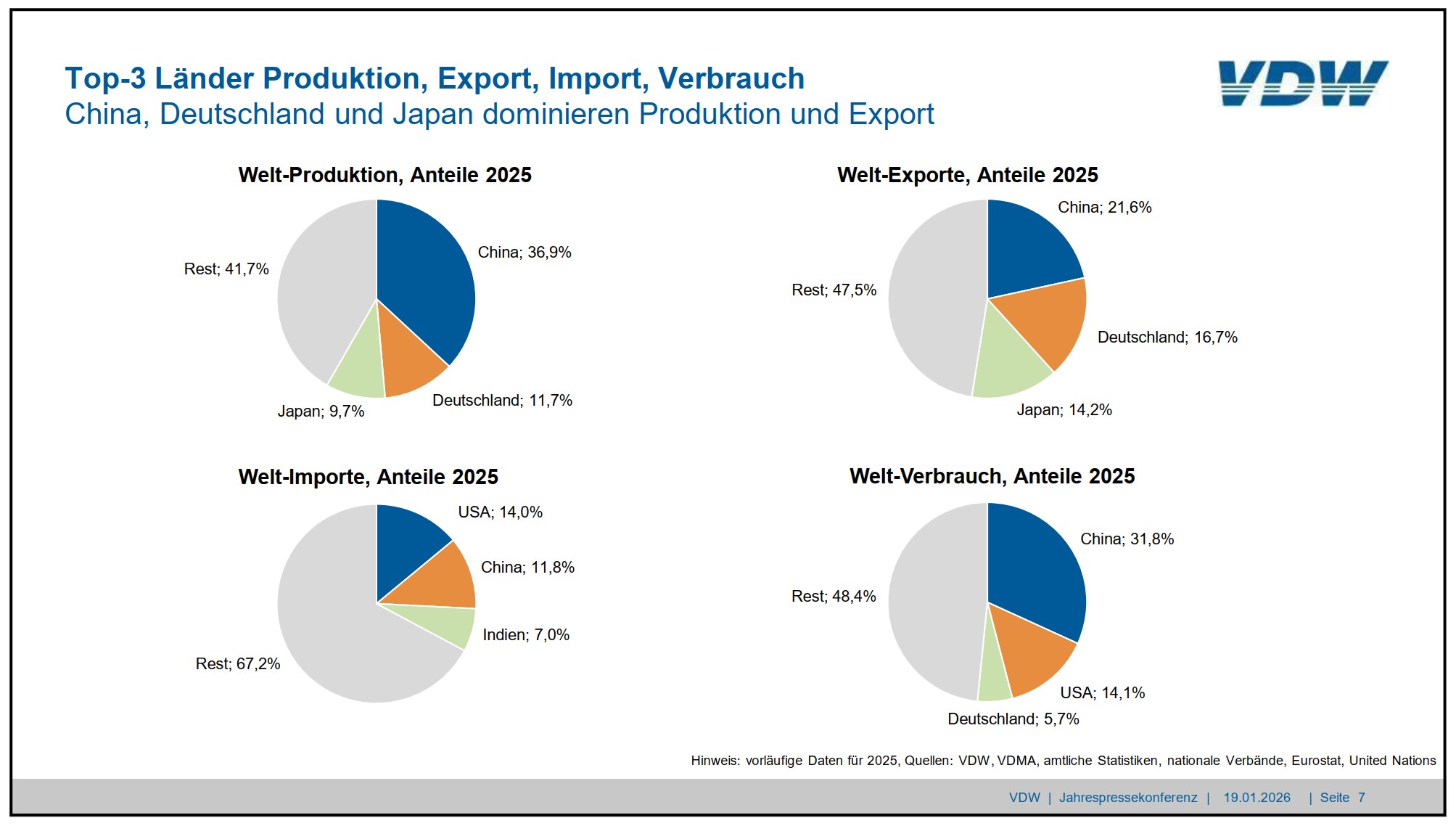
Adding the German market, the lion's share of machine tool sales of over 60 percent goes to the region. Customer sectors such as the defense industry, aircraft construction, electronics, energy, or medical technology are promising. The expansion and securing of critical infrastructure in batteries and chips, the establishment of hydrogen technology, digitalization, and the construction of data centers are releasing investments in Europe. While they cannot replace the automotive industry in their importance, they can mitigate the pressure of transformation.
Expanding Technological Leadership
With an international export share of 17 percent, Germany plays a significant role worldwide despite the decline in the previous year. "The position as the second most important supplier worldwide is due to the industry's technological leadership," says Bernhard. Companies repeatedly succeed in meeting changing customer requirements. This includes individual machines as well as complete systems.
Innovative products and many world firsts are being created. Innovations are currently being driven particularly by automation, productivity, and efficiency improvements in energy and material use, as well as digitalization and artificial intelligence in manufacturing. "Here we can score points because we have many years of experience, because we are high-tech capable, and because we have access to excellent scientific resources. Additionally, we offer mature service and retrofit. Both are gaining importance when less is invested in new machines," Bernhard is convinced. Topics such as e-mobility, digital transformation, and artificial intelligence offer opportunities.
Further Strengthening Research and Development
Germany's technological leadership is due to the high intensity of research and development in companies. The R&D quota in mechanical engineering is over 4 percent of sales. 15 percent of sales are generated from product innovations. Internationally, German patent applications rank fourth.
The research grant has provided a noticeable boost to research activities in mechanical and plant engineering.
It allows for tax deductions, especially for small and medium-sized enterprises, and is a very good example of what progress is possible through suitable framework conditions. "The research grant could be further improved by simplifying and making the access less bureaucratic and by faster disbursement of the approved funds," demands Bernhard. Currently, machine manufacturers conduct more than four-fifths of their research and development activities domestically. However, particularly larger companies are considering relocating parts of production abroad. "This must be absolutely prevented," says Bernhard.
Motivating Skilled Workforce - Flexibilizing Labor Market
The machine tool industry thrives on and works with highly qualified personnel. It is an important basis for technological leadership and remains a significant location advantage in this country. A permanent task for companies remains to communicate the attractiveness of the industry through all available channels and to offer high-quality jobs. Despite the current reduction in employees, the demand for skilled workers remains high in the medium term.
Labor market reforms would help preserve jobs and promote recovery. "I am thinking of capping social spending, extending and flexibilizing working hours, a higher retirement age, and the deregulation of labor law," describes Bernhard the necessary steps. For the collective bargaining partners, it is time to put aside the friend-enemy thinking and pull together to secure and expand employment. "This should be a priority interest of both collective bargaining partners," says Bernhard.
Qualifying engineers
In order to maintain technological leadership, especially small and medium-sized machine manufacturers will continue to rely on engineers. Over 60 percent of the surveyed companies in the current VDMA engineering survey state that they want to keep the number stable or even increase it. Artificial intelligence will not change this. 'Improving education and training has long been on the agenda of mechanical engineering,' says Bernhard. This includes the introduction of minimum standards and quality in education, the introduction of a mandatory subject in technology in schools, and the swift implementation of the Digital Pact.
Reforms with speed and clear priorities
'The German machine tool industry is an enabler for the domestic industry to remain internationally competitive. However, we have to fight on many fronts,' summarizes VDW Chairman Bernhard. The industry is intensively addressing the areas where it has influence. However, regarding the self-inflicted location problems, the government can and must finally counteract.
'As medium-sized companies, we stand by this location because we cannot simply relocate our activities abroad. Therefore, we expect economic policy reforms that promote growth and investment here. We expect clear priorities and, above all, we expect speed,' Bernhard concludes.
Contact: