
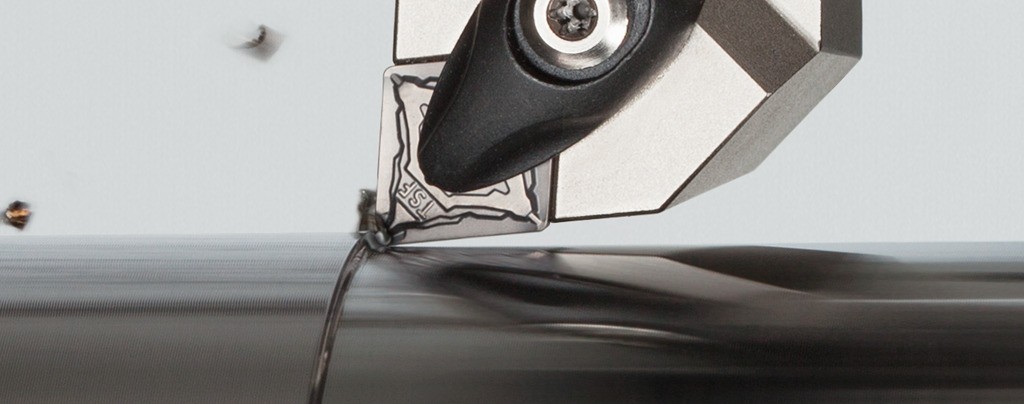
As access to critical raw materials becomes increasingly restricted, manufacturers are rethinking how cutting materials are used in the various phases of machining. Although carbide remains indispensable for many machining processes, its extensive use is not always technically necessary – especially in finishing operations.
In such applications, the focus shifts from durability to process stability, surface quality, and efficient material use. This is precisely where Cermet presents a rational and technically sensible alternative.
Less carbide through targeted use
Carbide is essential for rough machining and heavy machining processes. However, finishing operations are typically characterized by:
- low cutting depths
- high cutting speeds
- low cutting forces
- continuous or slightly interrupted cuts
Under these conditions, the high toughness and material volume of carbide are often not fully utilized.
Cermet – a material made from ceramic and metallic components – was specifically developed for this application window. By reducing dependence on carbide while maintaining stable machining performance, Cermet offers a practical response to the increasing scarcity of raw materials without compromising machining results.
Where Cermet Shows Its Strengths
Cermet is not a universal substitute material. Its advantage lies in the right application.
Typical areas of application include:
- finishing and light pre-finishing
- continuous or slightly interrupted cuts
- stable machining conditions
- applications with high demands on surface quality
When Cermet is used under these conditions and with suitable cutting parameters, productivity can be maintained while achieving better surface consistency and predictable tool wear.
Cermet Grades from Tungaloy for Finishing Operations
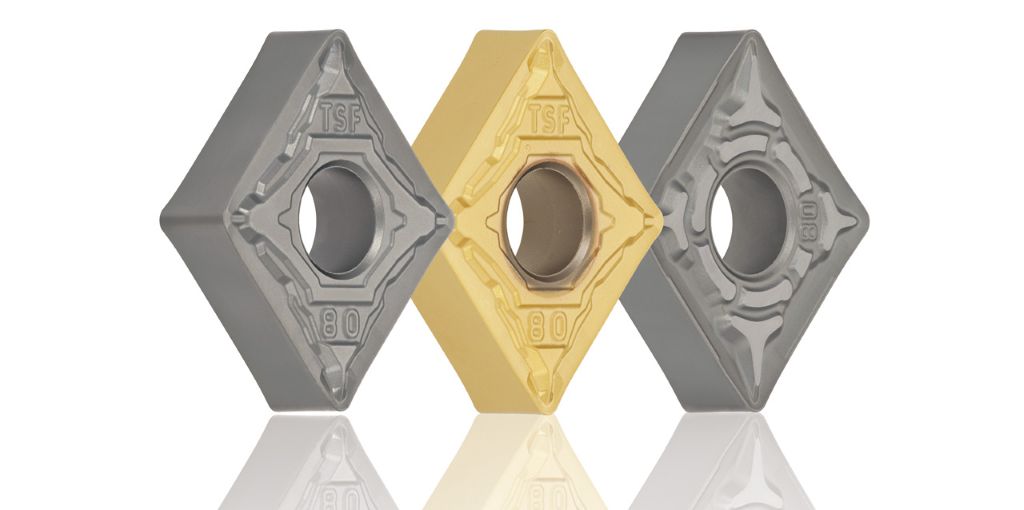
Tungaloy Corporation offers a focused Cermet program for finishing and light machining of steels and alloyed steels:
NS9530 – Balanced combination of toughness and wear resistance for stable finishing to medium machining.
GT9530 – Optimized for high surface quality and wear resistance in precise finishing operations.
AT9530 – Designed for machining alloyed steels with consistently high surface quality in continuous cuts.
Instead of a complex expansion of the range, this series is designed to clearly and reliably cover typical finishing operations.
Productivity through Engineering – Not Just Simple Replacement
The use of Cermet does not mean replacing carbide in all applications. It is more about specifically optimizing the machining process.
From a production engineering perspective, the use of Cermet under suitable conditions can:
- reduce dependence on carbide resources
- ensure stable productivity in finishing operations
- guarantee high and uniform surface quality
- improve the cost efficiency of the machining process
The key is to match cutting material, cutting geometry, and cutting parameters to the actual requirements of the application.
A Smarter Use of Materials
As the availability of raw materials increasingly becomes a long-term challenge, machining strategies must evolve from excessive material use to more efficient utilization. Cermet represents a targeted, application-oriented solution that enables finishing performance while simultaneously reducing the use of carbide.
In today's manufacturing environment, efficiency means not only faster machining. It means using the right material in the right place and for the right reason.
Contact: