
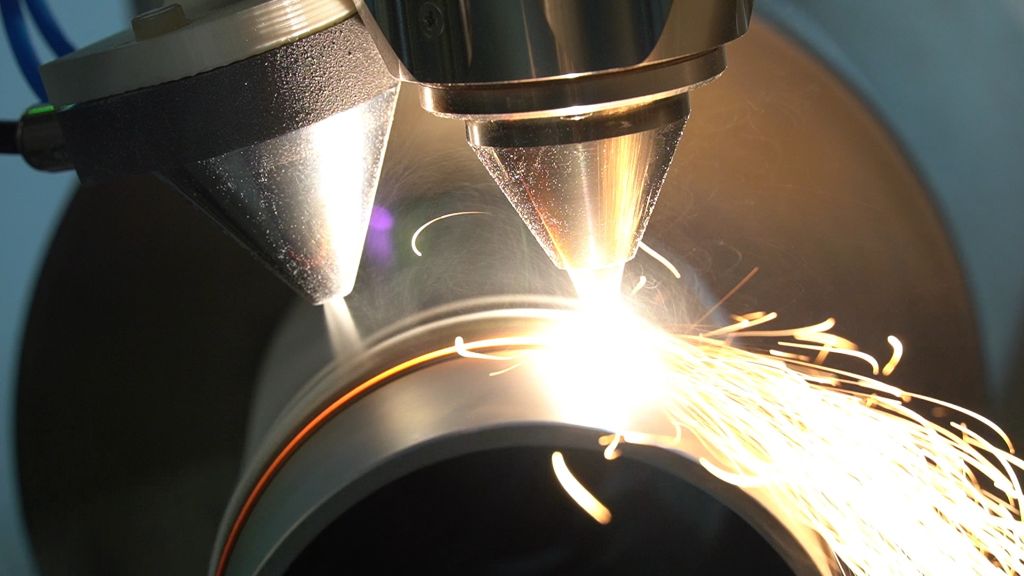
For more than 30 years, the Fraunhofer Institute for Laser Technology ILT has been shaping metallic additive manufacturing with pioneering system and process innovations. At Formnext from December 18 to January 1, 2000, the Laser Institute will present its comprehensive portfolio focused on central industry challenges at Hall 11, Stand D31, which reduces costs, saves rework, and makes components more robust: from high-strength tungsten components and multi-material approaches for extremely stressed components in fusion applications to highly productive simultaneous coating and finishing processes that save time and energy, as well as smart structures like printed sensors that make metal components smart.
"Regardless of whether it's a demonstrator or series production, the goal of the developments at Fraunhofer ILT is usually to design processes that are faster and more robust, and to ensure component quality," explains Dr. Tim Lantzsch, Head of the Laser Powder Bed Fusion (LPBF) department at Fraunhofer ILT.
The exhibits at Formnext 2025 illustrate the approach along the entire process chain: an Al-Sc distribution housing for fuel cells, an LPBF-manufactured optical carrier for satellites, a 2 kW LCoS test setup for freely formable beam profiles, and LPBF structures with adjustable porosity.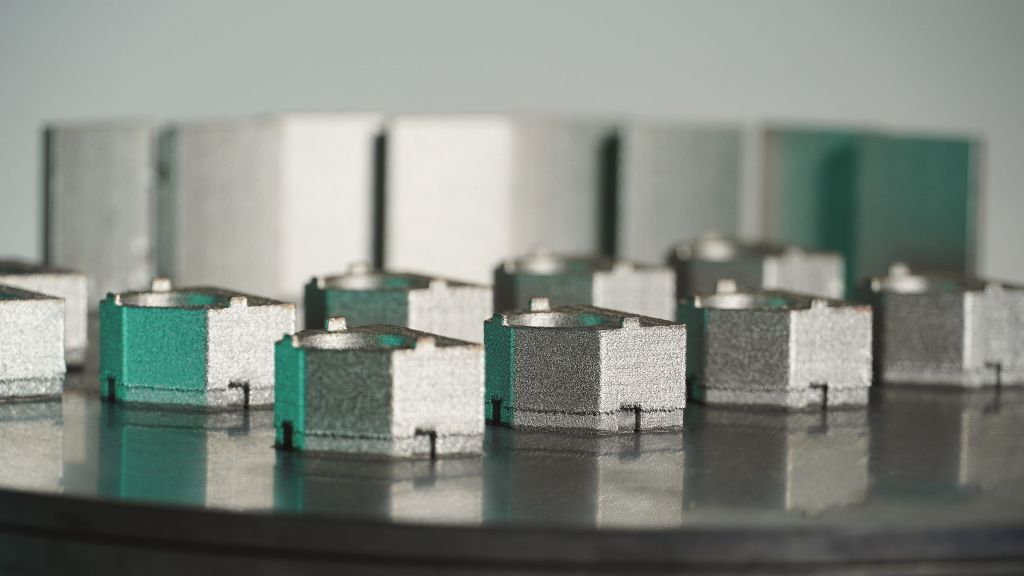
In Selective Laser Sintering (SLS), the focus is on process development for new materials. The flexible laboratory systems at Fraunhofer ILT can already process very small amounts of powder, for example, very soft thermoplastic polyurethanes (TPU) and shape memory polymers. The goal is to deliberately control properties and determine robust parameters for new applications as well as for series production.
"We think of additive manufacturing from the component function perspective, connecting material, process, and data, reducing costs per part, and increasing quality and availability. We see ourselves as problem solvers and process developers from the idea to stable production with the industrial partner," Lantzsch continued.
Tungsten components for fusion energy
Plasma-exposed components in fusion reactors, such as the reinforcement of the reactor wall, must withstand cyclic thermal loads of up to around 20 MW/m² and strong radiation. For these extreme conditions, only pure tungsten is practically suitable. However, the material currently necessitates simple geometries and complex joints. Different thermal expansions cause solder joints to fail under thermal cycles, affecting service life and plant availability.
The DURABLE project focuses precisely on this: Additive processes enable monolithic or multi-material components made of tungsten and copper alloy with a continuous heat path instead of a critical joining zone. The key factor is the process control: new system technology and parameter windows lead to nearly crack-free, high-density tungsten structures in PBF-LB/M. This makes complex geometry with conformal cooling possible.
"The benefits include longer component lifespan, less rework, and reduced risk at joining points, a prerequisite for extending maintenance intervals and lowering costs per operating hour," says Niklas Prätzsch, group leader of LPBF process and system technology at the Fraunhofer Institute for Laser Technology ILT.
Optimize surfaces in one step
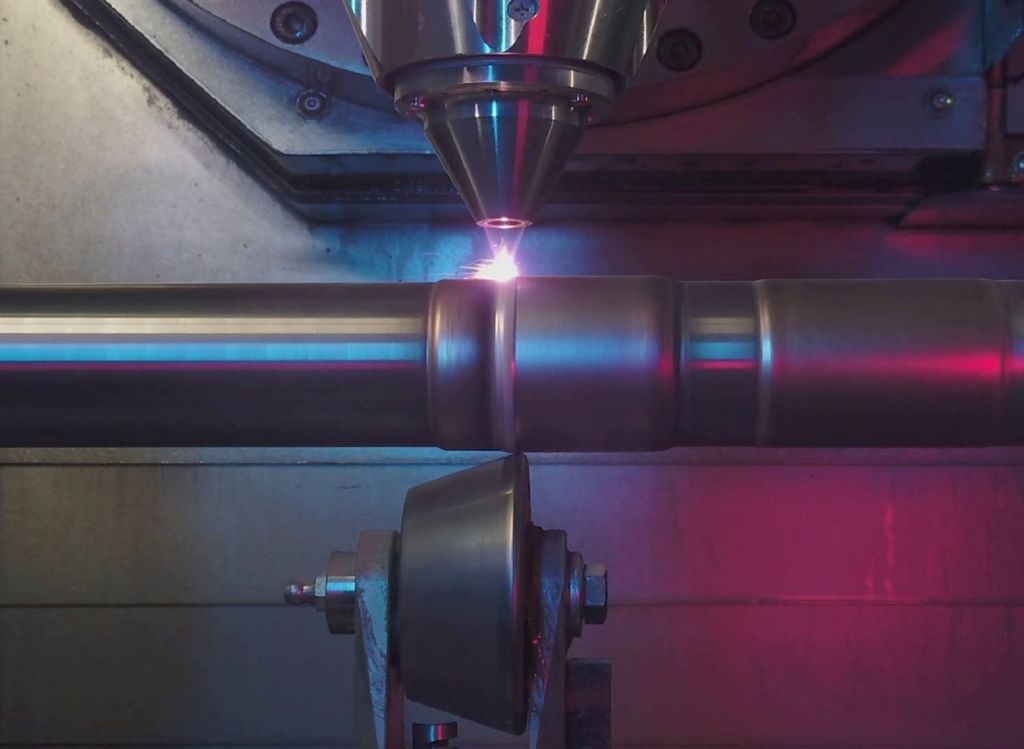
Viktor Glushych, group leader of coating LMD and heat treatment at Fraunhofer ILT, is pursuing a groundbreaking approach for Extreme High-Speed Laser Cladding (EHLA). The process coats quickly and resource-efficiently, but in most cases, machining post-processing is required. "Simultaneous Coating and Roller Burnishing" (SCaRB) combines EHLA with burnishing in a single process step. While the applied layer is still warm, a roller tool runs over the created surface, plastically densifying it and smoothing out rough peaks.
This creates a dense, pressure-resistant surface layer with high surface quality without material removal and without additional finishing.
"This saves time, tools, and materials," explains Glushych the advantages. "At the same time, SCaRB can specifically influence microstructure and residual stresses. This improves wear and corrosion resistance and increases the fatigue strength of coated components." At Formnext, Fraunhofer ILT will showcase an EHLA rolling demonstrator that makes the combined process management demonstrably live.
PFAS-free multi-material coatings
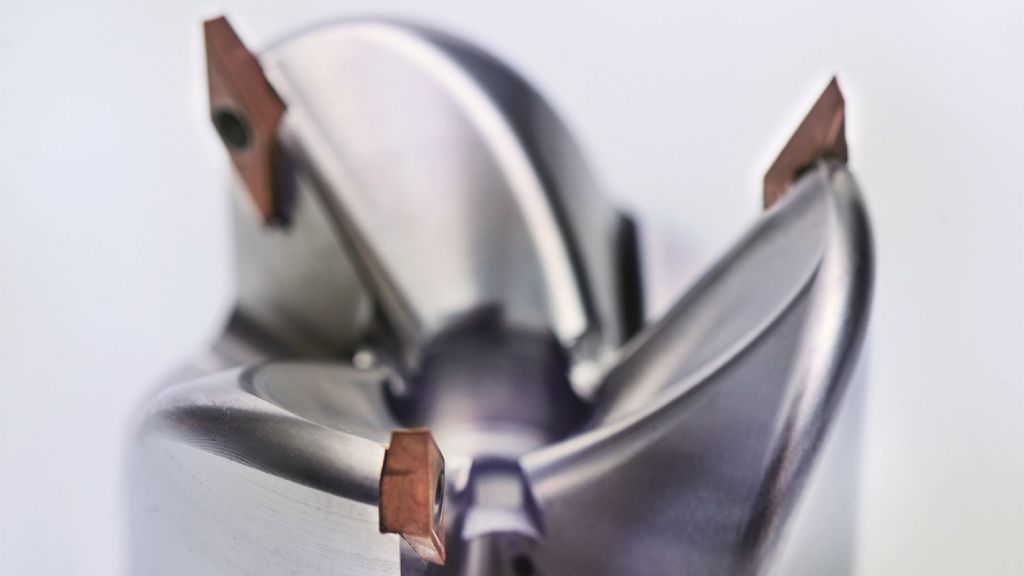
In addition to pure metal layers, multilayer coatings made of similar materials can also be applied. Here, the EHLA process for metal layers is combined with the application of a PEEK layer for the production of functional composite layers. PEEK is a fluorine-free high-performance polymer and an attractive alternative to PFAS coatings.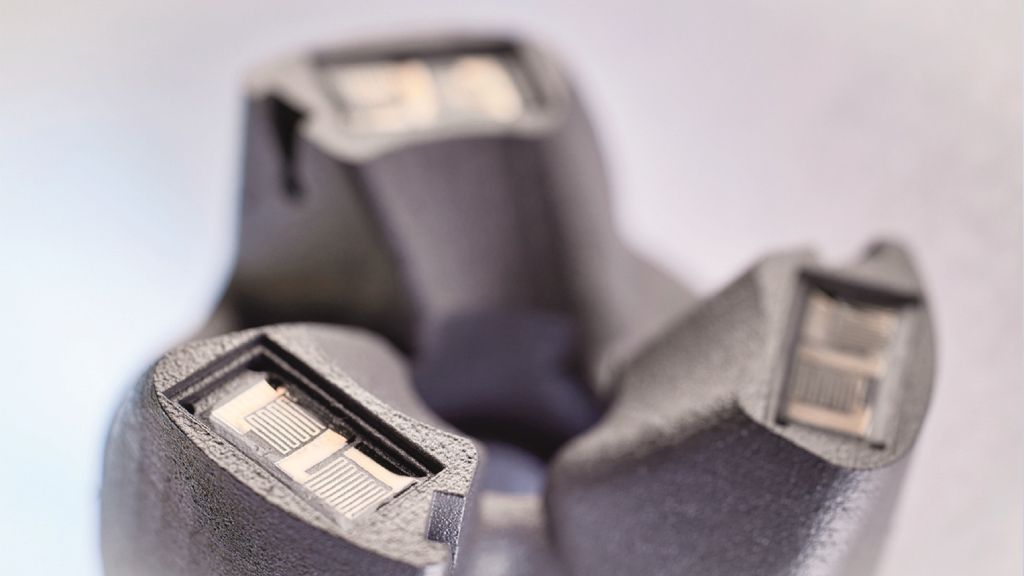
"The innovation lies in the use of residual heat from the EHLA process to melt a deposited PEEK layer in the immediately following step. For this purpose, a nozzle technology developed at Fraunhofer ILT is used, which enables a homogeneous application. This hybrid coating system combines the properties of two individually adjustable functional layers," explains Rebar Hama-Saleh Abdullah, a research associate at Fraunhofer ILT.
The metallic EHLA layer can be used as a corrosion protection layer (e.g., in pistons), as a running-in layer (e.g., in wind turbines), or as a thermally conductive intermediate layer. The applied PEEK layer serves, depending on the addition of additives, as an anti-adhesive layer, sliding layer, or as additional corrosion protection. "The adhesion strength between metal and polymer is achieved by interlocking the plastic with the intentionally introduced rough surface in the EHLA process," says Dr. Christian Vedder, Head of Surface Technology and Shape Removal at Fraunhofer ILT.
Printed sensors, intelligent components
In additive manufacturing, components are created layer by layer. This allows access to areas that are not reachable from the outside. The approach is based on integrating sensors directly into metal parts, such as printed strain gauges in LPBF components. The sensor layers are produced using inkjet, aerosol jet, or pad printing; they can be applied during or after the build process and precisely positioned. The smart components produced this way provide real-time data on load, deformation, or the onset of crack formation, for example.
"These sensors are located precisely where data is most beneficial, even in areas that would be inaccessible with conventional manufacturing," summarizes Dr. Samuel Moritz Fink, group leader of thin-film processes at Fraunhofer ILT. "This enables condition monitoring in operation, predictive maintenance, and increased operational safety. At the same time, system complexity decreases because separate setups, cables, or external measuring points can be eliminated. Target industries range from aerospace to energy to mechanical engineering."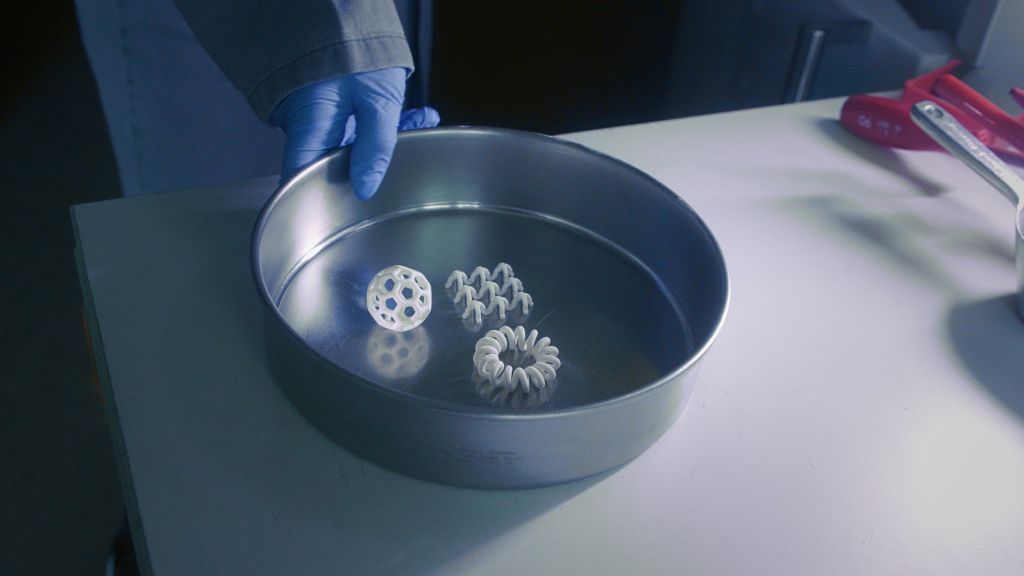
Problem solvers and process developers
Central challenges for companies in metal AM consist of high piece costs, complex application development, and qualification or certification of processes for series production. This is exactly where the portfolio of Fraunhofer ILT comes in. It identifies bottlenecks, develops stable processes, and quickly leads applications into production from the first functional prototype to robust manufacturing at the customer.
"New materials are the key to making the special strengths of SLS, namely maximum design freedom and support structure freedom, usable in more and more industries. With our modified machines, we can efficiently qualify these materials and thus overcome the chicken-and-egg problem of industrial plants," explains Vera Rothmund from the Application Development group at Fraunhofer ILT.
"At Fraunhofer ILT, we see ourselves as partners of the industry: We develop tailored processes and technologies to jointly solve central challenges in metal 3D printing – from productivity to quality assurance to cost-effectiveness," says Dr. Thomas Schopphoven, head of the Laser Cladding department at Fraunhofer ILT.
Fraunhofer ILT at Formnext 2025 at the Fraunhofer joint booth D31 in Hall 11.
Contact: