
Carbide is a valuable raw material and currently more expensive than ever before. In the tool and metal industry, resource efficiency and recycling are now in focus alongside energy efficiency and process stability. The quality of the cooling lubricants plays a central role. Clean grinding oils are the foundation of stable and economical processes. At the same time, the recovery of carbide from grinding sludge is becoming increasingly important. The fine filtration technology from Vomat demonstrates how both can be efficiently combined.
The carbide market is currently under massive pressure. Since the beginning of 2026, the price of ammonium parawolframate (APT), the most important precursor for tungsten carbide, has more than doubled from 920 USD/MTU at the beginning of January to over 2,090 USD/MTU at the beginning of March. This gives the raw material a new strategic dimension. The effects are immediately noticeable in practice. Weight surcharges on carbide rods have increased in the same period from around 32.90 Euro/kg to over 120 Euro/kg. With a tungsten content of 85 to 90 percent in carbide, the calculated material value alone is now around 175 Euro/kg. There is currently no end in sight for this trend.
At the same time, the market structure is noticeably changing. European stockpiles from Chinese suppliers are being reduced to control trade even more directly. For 2026, it is expected that global market demand will likely not be met. Some tool manufacturers are already responding with daily price calculations or securing carbide through material options. The market is increasingly moving away from stable supply chains towards short-term procurement strategies.
Against this backdrop, a previously often underestimated factor is gaining importance: the recovery of carbide from the manufacturing process. What was once disposed of as grinding waste is developing into a strategic secondary raw material and has a direct impact on cost structure and supply security.
Fine filtration as the basis for sustainable manufacturing
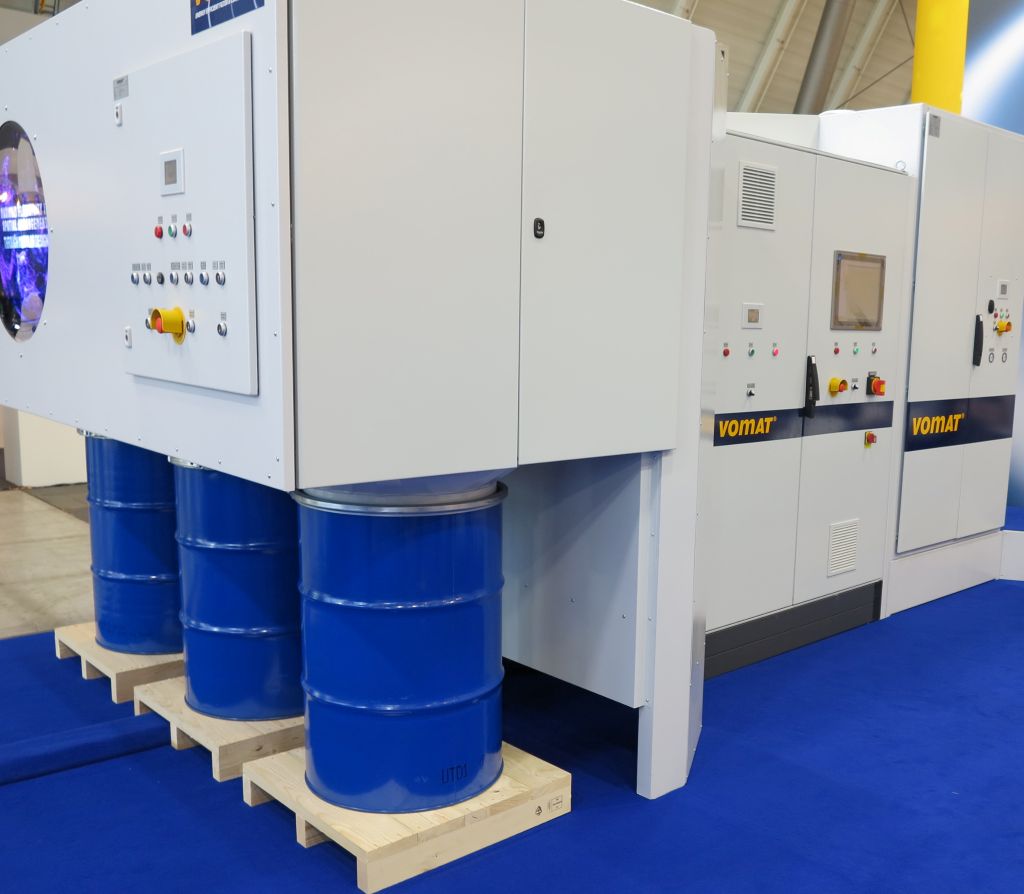
Vomat from Treuen has been one of the technological pioneers in cooling lubricant fine filtration for many years. The systems – both from the FA series and central filter systems – enable complete separation of dirty and clean oil in a full flow process. With a filtration quality of NAS 7, particle sizes from 1 to 3 µm are reliably separated.
High-performance filters, intelligent backwash cycles, and precisely controlled cooling systems ensure that cooling lubricants remain in circulation for a long time and retain their properties consistently. The result is stable processes and consistently high manufacturing quality.
Modern filtration technology allows for the clean separation of finest carbide particles directly from the process. The decision for a high-performance fine filtration has an immediate impact on production costs. Vomat technology combines efficiency, process quality, and resource conservation – a triad that is essential in modern metalworking.
Material recovery becomes a competitive factor
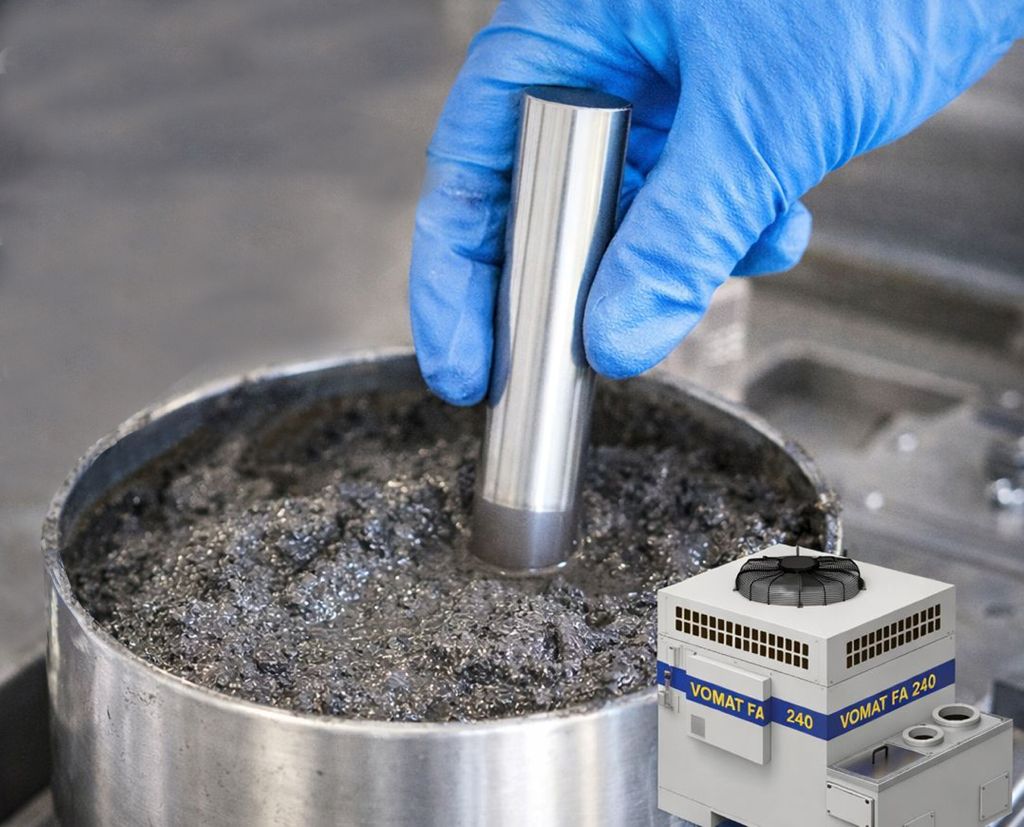
Filtration reaches its full potential when combined with a consistent material recovery. When grinding carbide tools, Vomat uses a specially developed sedimentation system. This separates the filtered grinding sludge almost completely from the oil. Thus, grinding sludge becomes a valuable raw material that can be marketed directly. Given the current price development, investing in modern filtration and recovery technology is a clear competitive advantage.
Due to its constructive design, the system achieves a residual oil content in the sedimented carbide sludge of less than six percent. These are ideal conditions for resale to recycling companies. At the same time, the filter system remains operational throughout the entire separation process, ensuring no production interruptions occur.
Another advantage: The separated sludge is directed into recycling containers without contaminating additives. Since the high-performance filters operate without aids such as cellulose or paper bands, the carbide remains free from foreign substances. This enables pure recovery and maximum returns.
Sustainability as an economic lever
The combination of efficient filtration and intelligent recovery not only reduces disposal costs but also improves process stability and makes a measurable contribution to sustainability. The core of the technology is to conserve resources and recover raw materials. This is both ecologically and economically sensible. Sustainability also means extracting the maximum from the entire process. Vomat systems save machine time, energy, space, and simultaneously ensure high manufacturing quality.
Contact: