
The requirements for machine automation vary depending on the workpiece, batch size, manufacturing process, and desired flexibility. Therefore, SCHUNK does not pursue a universal solution approach but offers a tiered portfolio of different types of automation: from simple entry-level to high-end solutions. Based on extensive application experience and a broad portfolio of clamping and automation components, SCHUNK enables tailored, process-oriented automation concepts. The new vise automation expands this spectrum with a particularly simple entry-level variant: it opens up an uncomplicated and low-risk way for companies to automate loading processes quickly, economically, and with minimal integration effort.
Positioning and clamping in one operation
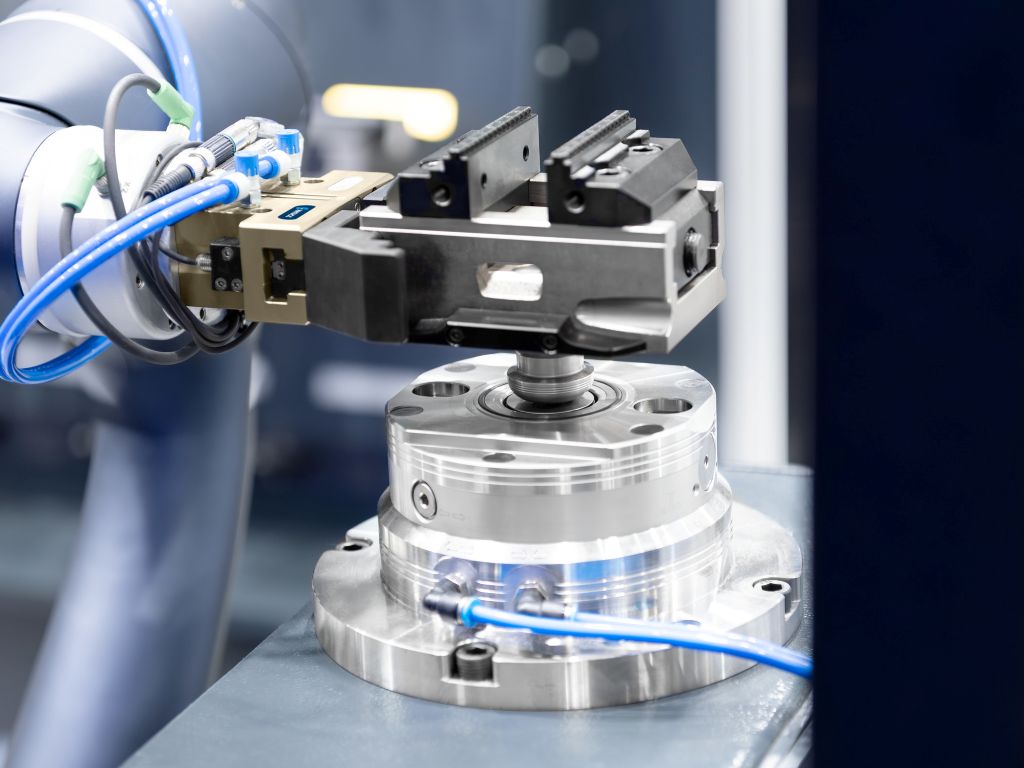
The vise automation is based on a deliberately simple concept: workpieces are manually clamped in specially prepared vises outside the machine and then made available in a magazine. A robot equipped with special gripping fingers picks up the clamped vises and positions them precisely on a raised VERO-S single-clamp station on the machine table of the machine tool. After processing, it places them back in the magazine along with the workpiece. The re-clamping for processing the underside of the workpiece can take place both outside and inside the magazine.
The centerpiece of the vise automation is the VERO-S clamping station in console design. It forms the interface between the robot and the machine tool and enables highly precise positioning and clamping of vises in just one operation. Thanks to the high clamping forces and the µ-precise zero-point interface, the robot takes the clamping devices with repeatable accuracy and changes them. The elevated console design creates optimal accessibility for processing five sides of the workpiece. At the same time, the zero-point clamping module is completely covered by the clamping device. This avoids chip nests and ensures consistently high process reliability. Depending on the machine type, the console design can be operated via the machine or the robot.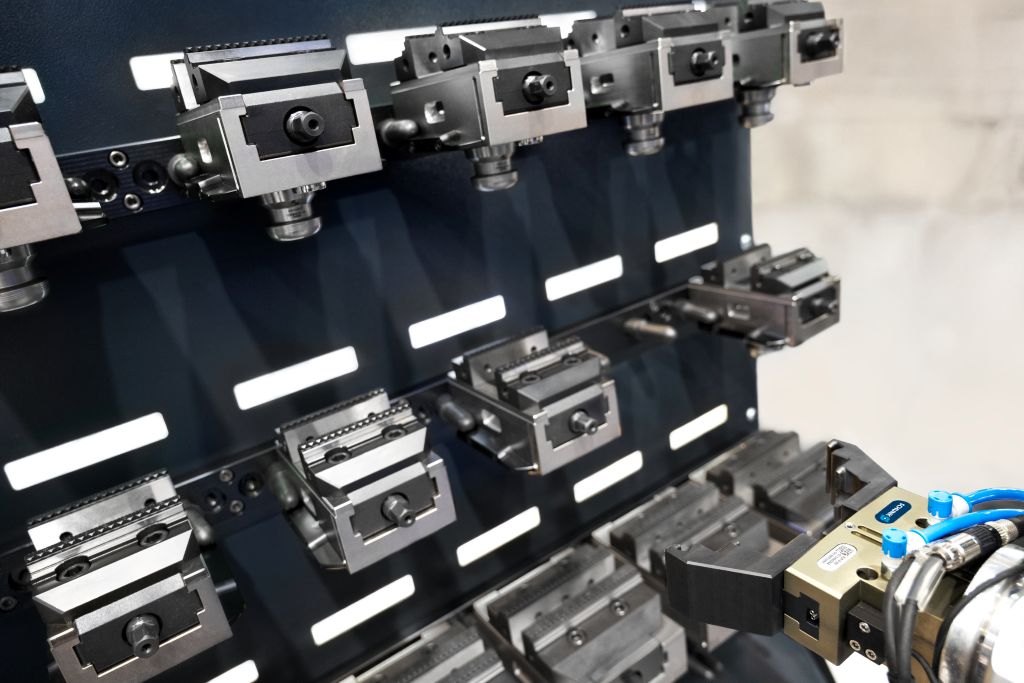
The critical clamping process remains in the hands of the operator. The robot exclusively takes over the reliable handling of the complete vise. Since it always grips the same defined interface and approaches fixed positions, the programming is reduced to simple point-to-point movements. This significantly reduces the complexity of automation and facilitates integration into existing manufacturing processes. Since no machine-side media supply is required, the automation can be flexibly used on almost any type of machine.
Longer machine runtime, low investment
With vise automation, machine runtimes can be significantly extended. Before the end of the shift, machine operators can prepare several clamped vises in the magazine. The machine then continues to operate autonomously even after hours. Companies thus increase their productivity without needing additional personnel.
At the same time, they benefit from a comparatively low investment cost. The overall system consists of standardized components and can be easily programmed and reliably operated due to clearly defined interfaces. The combination of low complexity, high process reliability, and economical implementation makes vise automation an attractive entry into automated machine loading.
Contact: