
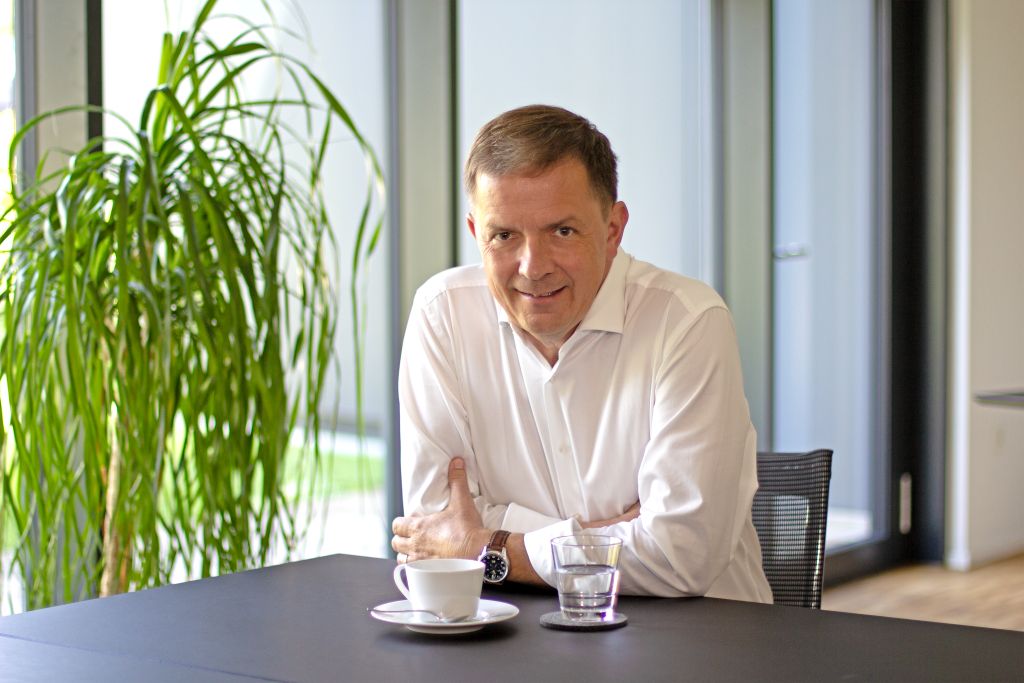
Mr. Blum, the economic situation in Germany is complicated, and the global situation is volatile and challenging. What do you see as the most important challenges?
Alexander Blum -When we first look at Germany, I believe there is a widespread misperception of the situation among the population. We are not in an economic crisis here, but in a structural change that has escalated into a structural crisis due to insufficient steering measures. This structural crisis affects industry, service sectors, and also our authorities with excessive bureaucracy and overstaffing in the public service. It will last longer and be more painful the less we do in politics and business to stimulate structural changes. We need real industrial policy and modern, future-oriented employment policy in Germany and Europe. Here, we are lagging behind global developments. It would be important, for example, to make workers from industries that are not future-proof available again for the job market.
What do you mean by that?
AB: At BLUM, we currently have almost 30 open positions. Especially in production, we receive very few applications despite the tense situation, including from many companies in the automotive industry. Fortunately, the situation in engineering is already somewhat better. In many struggling companies, employees often do not feel the urge to apply elsewhere and prefer to wait until they are offered a severance package.
As a result, they are not available to other companies that depend on these workers. This may be understandable from an individual perspective, but it exacerbates the shortage of skilled workers for companies that create future-proof products and services.
Let's move from the general situation to your company. How do you and Blum-Novotest address these challenges?
AB: Our success stands on two pillars: strong products and consistent internationalization. We are successful because we are present worldwide and offer solutions that meet our customers' requirements. For over 30 years, we have therefore continuously invested outside Germany – in all countries where significant production occurs.
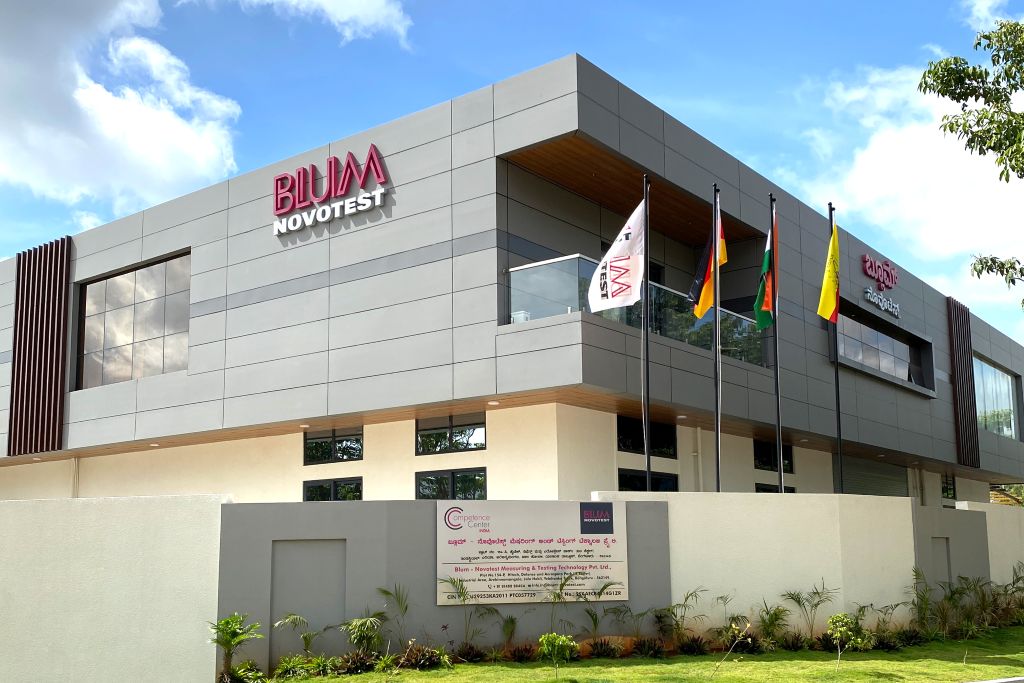
In the dominant economic regions outside Europe, we have established Blum-Novotest Competence Centers (BNCC) in recent years. East Asia is shaped by BLUM through the BNCC in China and the R&D hub in Japan, South Asia by our BNCC in Bangalore, whose new building with 2,200 square meters of usable space we have just moved into. In North America, we present a local face to our customers with the BNCC in Cincinnati and our subsidiary in Mexico. Our BNCC distribute our products and services in their home markets, like all subsidiaries. But beyond that, our BNCC also perform repairs, develop software for locally prevalent controls, handle local procurement, have extensive technical areas, and can produce selected products for their home market. Our BNCC are an integral part of their regional markets, build trust, and are simultaneously part of the multinational organization of Blum-Novotest.
Why is this internationalization so important?
AB: With this, we address the increasing importance of our solutions for processes in companies worldwide. On the other hand, the disruptions in supply chains and the customs conflicts of recent years have led customers in Asia and America to want us on-site. For years, we have no longer advertised with the term "Made in Germany," but with "Made by Blum-Novotest." We define ourselves in the Blum-Novotest group as a new generation of medium-sized companies that operates grounded in all economic regions of this world while simultaneously offering the advantages of an international organization to their local and international customers.
A truly international company that does not only see international markets as consumers of products but as independent territories with their own requirements and expectations. We want – also through the BNCC – to better absorb the experiences present in different countries and adapt the products to the markets. A lot of experience flows back to us.
The global market has been changing massively for several years. What was once a clear division between large industrial nations and low-wage countries has transformed. On one hand, we have the geopolitical centers of larger economic areas, such as China, striving to be independent in areas like Aerospace & Defence, Semiconductors/Electronics, Energy, and Medical Technology from other geopolitical centers and their associated economic areas. This means that such sales markets can be lost for companies from other economic areas if they do not create sufficient value creation and thus reliability. Similar trends are evident in the USA, which are also striving to strengthen their own industry in the country and in the economic region for more independence. A strong domestic machine tool industry has emerged in India. This will also push into the world market in the future, just like the large Chinese manufacturers. Otherwise, the same development trends apply to India and increasingly to Europe as described for China and the USA.
Let's talk about the products. How do you see the market from a technological perspective, and how does BLUM position itself within it?
AB: Manufacturing measurement technology, as we produce it, is today much more than a means of quality assurance in the process. It is increasingly understood as a tool that drives automation – and makes it possible in many places.
Our products are now seamlessly integrated into the process with innovative, simple interfaces, up to plug-and-play software components. It benefits us that more and more machining technologies are being integrated directly into the CNC machine. A good example is grinding, which is moving from specialized grinding machines into machining centers – which in many cases increases quality because re-clamping is eliminated.
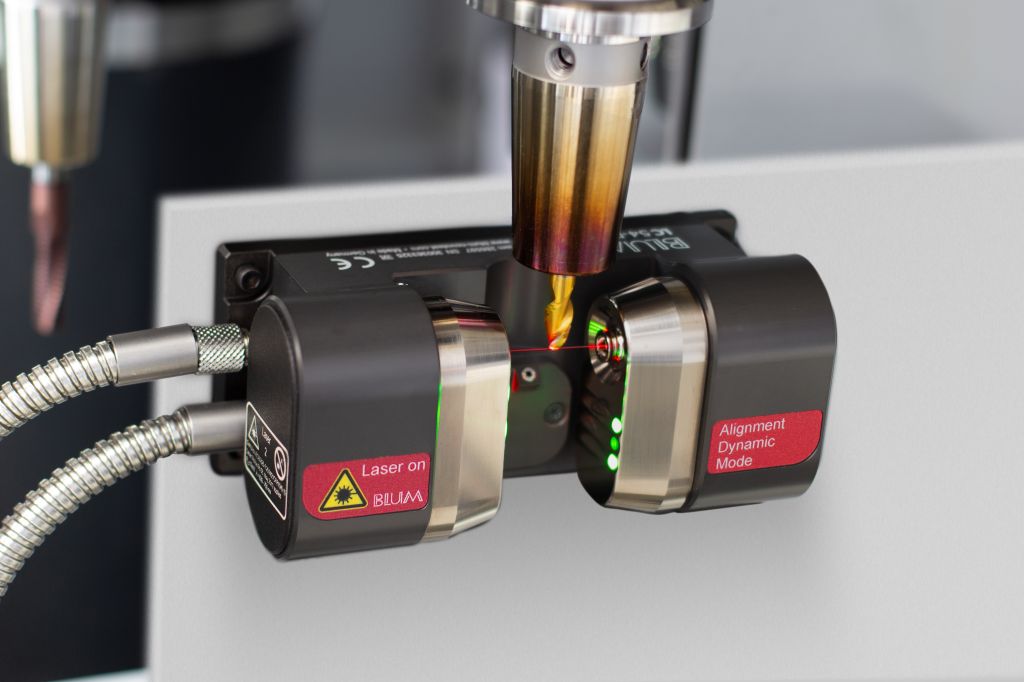
To meet this trend, we have developed the GrindingControl function for our laser measurement systems. It enables the precise determination of the actual geometry of grinding tools. Based on the captured measurement data, the software determines an optimized processing measure using intelligent algorithms and automatically transfers this to the tool table. This function of the measurement and automation software LC-VISION brings the dynamic measurement of grinding wheels to an unprecedented level.
What other technologies will you showcase at the AMB?

AB: We are not only represented at our booth but also at Wohlhaupter and Schunk. With AutoBore from Wohlhaupter and the battery-operated clamping tools from SCHUNK, we are showcasing two new applications based on our BRC radio technology. For users with already installed BLUM measurement systems, there is a special advantage: Integration is simple, the additional installation effort remains minimal, and costs are reduced. Our products can also be seen in many machines from well-known manufacturers.
We are showing solutions that enable true measurement automation – moving away from mere logging and towards process integration and automation using collected measurement data. On one hand, there is our software FormControl X, which allows workpieces to be measured not only directly after each processing step but also enables the results to serve as correction values and the basis for optimization for the next component.
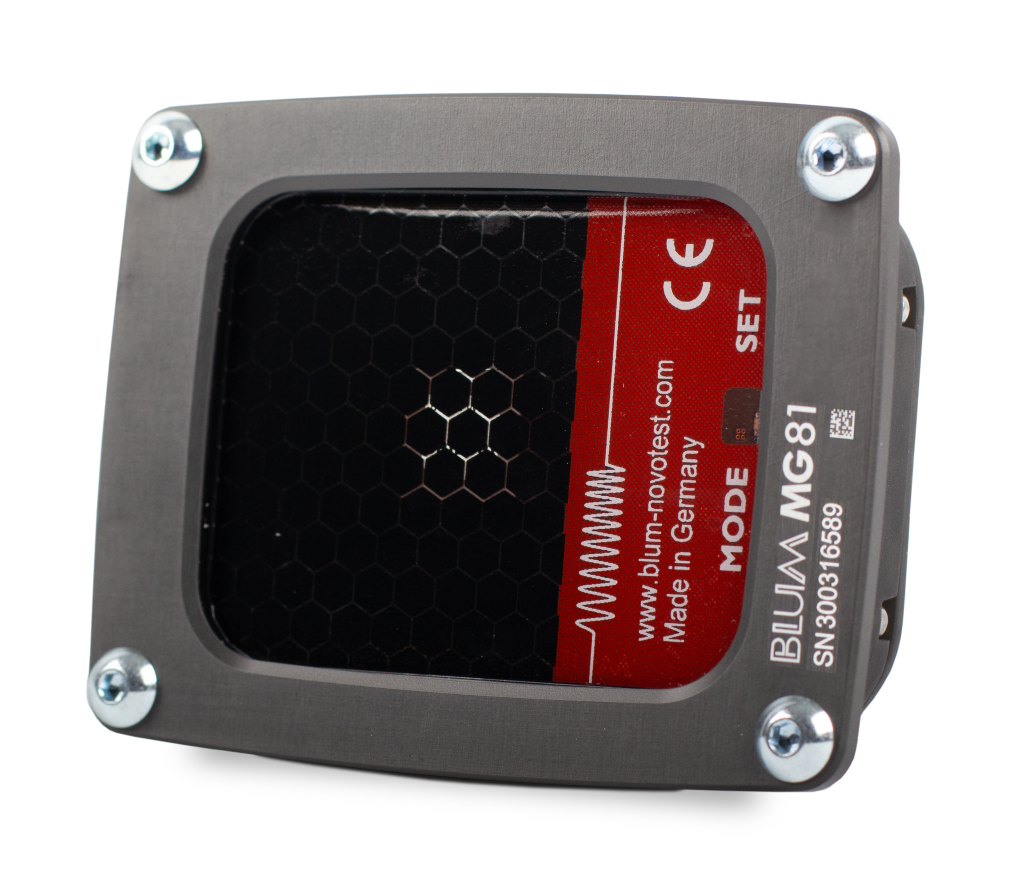
The new multifunction measuring device MG81 is also directly integrated into the manufacturing process. The compact system in credit card format was specifically developed for sensor-based condition assessment of clamping systems. The captured data is wirelessly transmitted in real-time to the machine control and used for process corrections. Typical applications include temperature measurement on workpieces with fluctuating input temperatures, monitoring of clamping forces, and automatic pre-positioning of clamping jaws using integrated path measuring sensors. This ensures maximum process reliability and short cycle times.
With the LC54-DIGILOG, we present the successor to the LaserControl Nano NT. Thanks to the innovative DIGILOG technology, the extremely compact system processes several thousand measurement values per second and achieves a repeatability of 0.2 µm (2σ). Circular errors, for example due to contamination at the tool holder, are automatically detected. For the precise measurement of micro tools, the automatically activated MicroTool mode ensures even greater measurement accuracy.
What trends do you see internationally regarding your products?
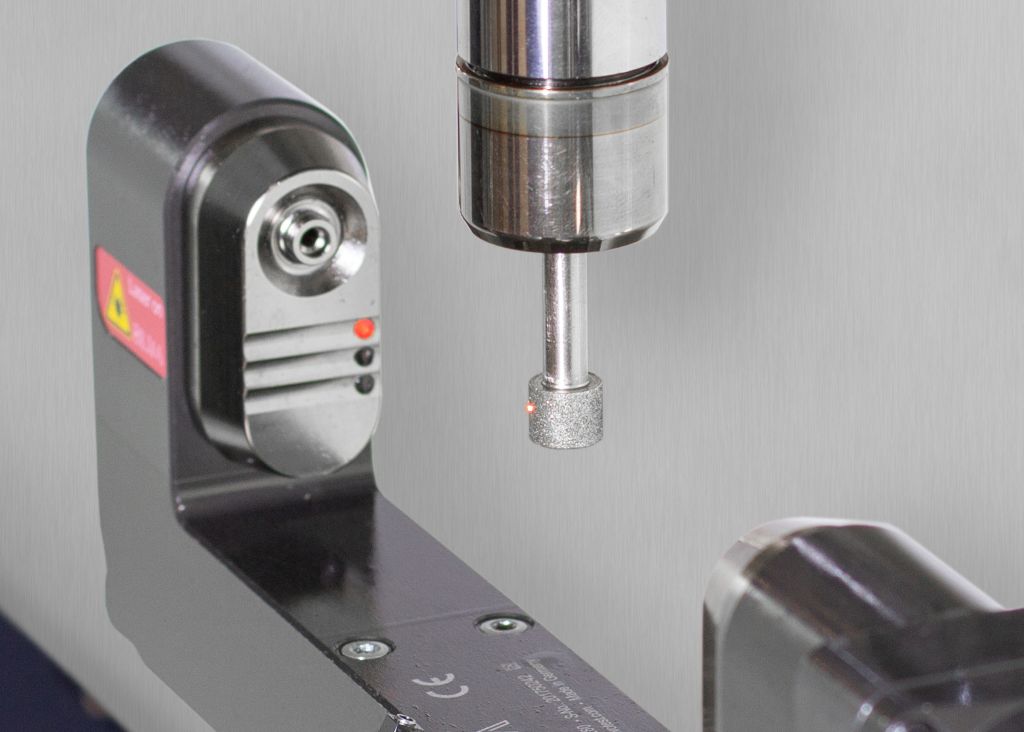
AB: Even in entry markets with still attractive cost situations, costs are rising over time, which also drives automation efforts there. However, these are usually not comprehensive solutions but rather individual, cost-effective automation components. Measurement technology is also included here, which can be easily integrated into the process and has a significant impact. This will not always be a high-end laser measurement system on every machine, but simpler measuring instruments like our Z-Nano LT+ or laser systems with basic functionalities, which we will then also produce regionally adapted for the target markets. This way, these customers get to know precise, stable, and reliable measurement technology from Blum-Novotest at attractive conditions.
These are unusual tones from a German company, aren't they?
AB: Central European companies need to complement their traditional, pure innovation thinking. What were the traditional strengths of these companies in the 1960s to 2000s? Innovative technologies at the highest level and a fascination for perfect solutions that also cover the most specific potential requirements. Today, however, economically viable solutions that reliably fulfill the respective task are primarily in demand.
It's not about simply throwing cheap products into a hopeless competition on the cost side with Asian manufacturers, but rather offering precisely what the customer needs in their process configuration. It is crucial to weigh the various aspects of quality correctly: Precision and haptics must match the task and cost expectations of the target customer without overdoing it. Equally important are maximum simplicity in integration and operation, manageable complexity in the product, as well as competent application support and proactive service in the respective target markets.
So adaptation to changing markets and internationalization – what other topics are important to you for the future direction of the company?
AB: Anyone who wants to survive in the future must arrive as a key player in the automation of the 21st century. This also concerns the speed with which we develop the aforementioned aspects of the term quality – China speed is not just a buzzword.
The high-wage countries of Central Europe will only be able to keep up with the new providers from China and India in terms of price in the coming five to eight years to a limited extent. Therefore, we must maintain our other virtues: making innovative technologies easy to use and providing the highest process reliability, availability, and long-term reliability.
Our products are deeply integrated into machining processes, even on simply automated machines. If a product fails, the entire process often comes to a standstill. Therefore, our solutions must function consistently over many years. For example, in our probing systems, the optoelectronic signal transmission ensures consistently high availability and stable precision. This way, the customer can trust that they will still have a reliable Blum product in use even after many years.
Do you see specific industries or areas that will play a larger role for BLUM in the future?
AB: I am sure that we will see rapidly increasing production numbers in the field of humanoid robots. After all, humanoids are interesting not only in industry but also in human-centric application scenarios. Once a certain price threshold is crossed – and this happens through increasing production numbers – humanoids will quickly spread in many areas. The industry benefits from the private sector and vice versa.
We at Blum-Novotest are also dealing with this topic. And when you look beyond the horizon, interesting questions regarding the factory automation of the future quickly arise: Do I, as a medium-sized company, still need a highly integrated storage system if I can have humanoids handle the loading and unloading? These can be scaled much more easily by adding another robot or using it for other tasks.
At the machine itself, I still see articulated robots as advantageous due to their even higher payloads and the more cost-effective reduction to a few required axes. But these articulated robots are also becoming mobile and, for example, are being transported by an AMR to be deployed wherever they are needed. We are already using such mobile cobots with 'transport service' in our own production today. With this flexibility provided by humanoid and mobile robots, automation will pay off faster, and the number of robots deployed will increase massively.
This development inevitably also presents an opportunity for the machining industry and specifically for us, as corresponding robots consist of many components. Together with investments in AI, enormous production resources will be needed, and new production concepts will continue to be required to automate the manufacturing of these parts. I see Blum-Novotest well-equipped to benefit from this development, especially considering that it is politically desired for such important technologies to be produced as independently as possible in Europe and all major economic regions. Our products help reduce unit costs and make production economically attractive and competitive.
What important technical trend do you see overarching for BLUM in the coming years?
AB: One topic that concerns us is 'scrap'. Because today, in modern processes with closed process chains, there is actually no reason to produce defective parts. Changes in the machining process – such as temperature drift, vibrations, or tool wear – can now be easily detected in the micrometer range and compensated for in real-time. And this happens long before any tolerance limit is reached. With our measurement systems and software solutions, we can monitor the process in real-time at the machining point and bring the machining process to a level where there is practically no scrap. Scrap can then occur due to errors and sudden events, such as a tool breakage, but no longer due to the unavoidable fluctuations within the process. We have the products for this in our portfolio.
How do you implement this?
AB: We are even more consistently addressing the processes of our customers and positioning ourselves – among other things at the AMB – as a complete provider for sensor technology. We not only offer a piece of hardware but complete process integrations at different technology levels that can be used sensibly and value-creating.
We make these technologies available worldwide – tailored to the respective requirements of customers in the regions. We have a high technical level above the standard, which can be efficiently scaled for cost-effective use in the various markets. Thus, we support industrialization worldwide.
Contact: