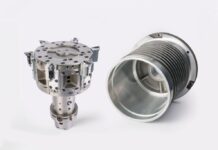

In hardly any other industry are the effects of component errors as direct and severe as in medical technology. Accordingly, a zero defect tolerance applies with extreme quality demands. As the demand for such components increases, so does the desire for reliable mass production in the five- and six-digit range. Kern's contract manufacturing is capable of this – with a lot of know-how and fully automated manufacturing processes, in which the precision centers Kern Micro HD play a crucial role.
The machining of components for medical technology as well as for similarly demanding industries such as analytics and endoscopy has two central constants: technical complexity and highest quality. The specific requirements can vary greatly. Sometimes it is about micrometer-accurate positioning of numerous features relative to each other, sometimes the reproducible, scratch-free surface quality is in the foreground.
Alexander Stauder, head of contract manufacturing at Kern Microtechnik GmbH, explains with an example: 'We manufacture, among other things, a component in mass production that is used in a pacemaker. Here, any scratch, any irregularity would be a potential danger to functionality and thus to a person's life. Accordingly, the demands on our manufacturing processes are very high. Our customers expect one hundred percent reliability and transparency.'
The materials to be processed for the mentioned industries are diverse and range from titanium to stainless steels and aluminum to technical ceramics and special materials such as Vespel (polyimide plastic) or Macor (glass-ceramic). All are subject to strict regulations. When components come into contact with the human body, only approved, biocompatible materials are allowed. Any potential cross-contamination must also be one hundred percent
excluded.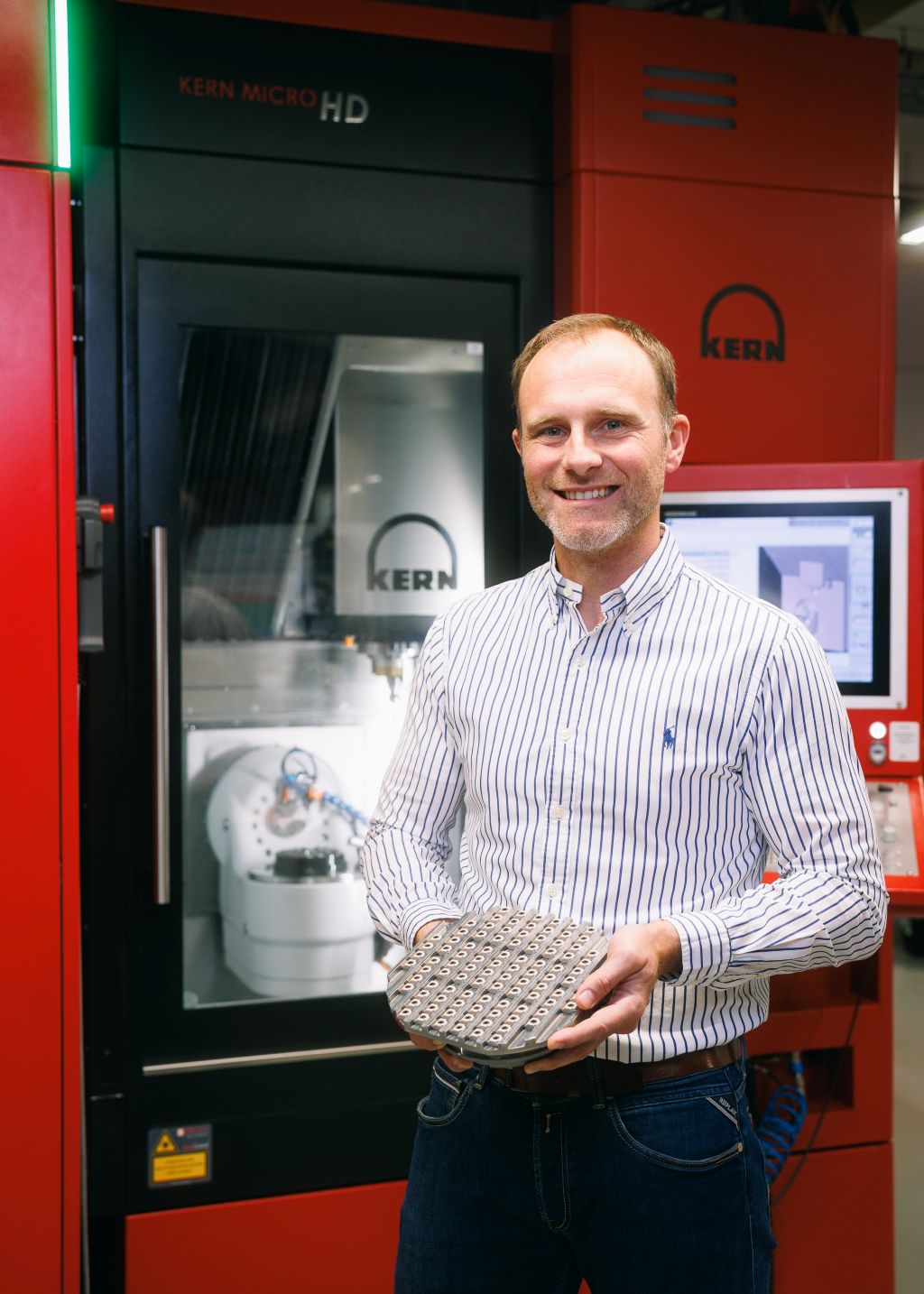
Stable processes as a success factor
Every material brings its own challenges – in terms of expansion coefficients, machinability, and surface properties, they differ significantly.
The path to successful mass production of such highly precise components begins with process development. In close collaboration with customers, machining strategies are developed, optimized, and validated. As a result, coordinated and documented manufacturing processes guarantee reproducible quality in high quantities. 'We are talking about 'frozen processes' that we can then produce in almost any quantity 24/7,' explains Stauder: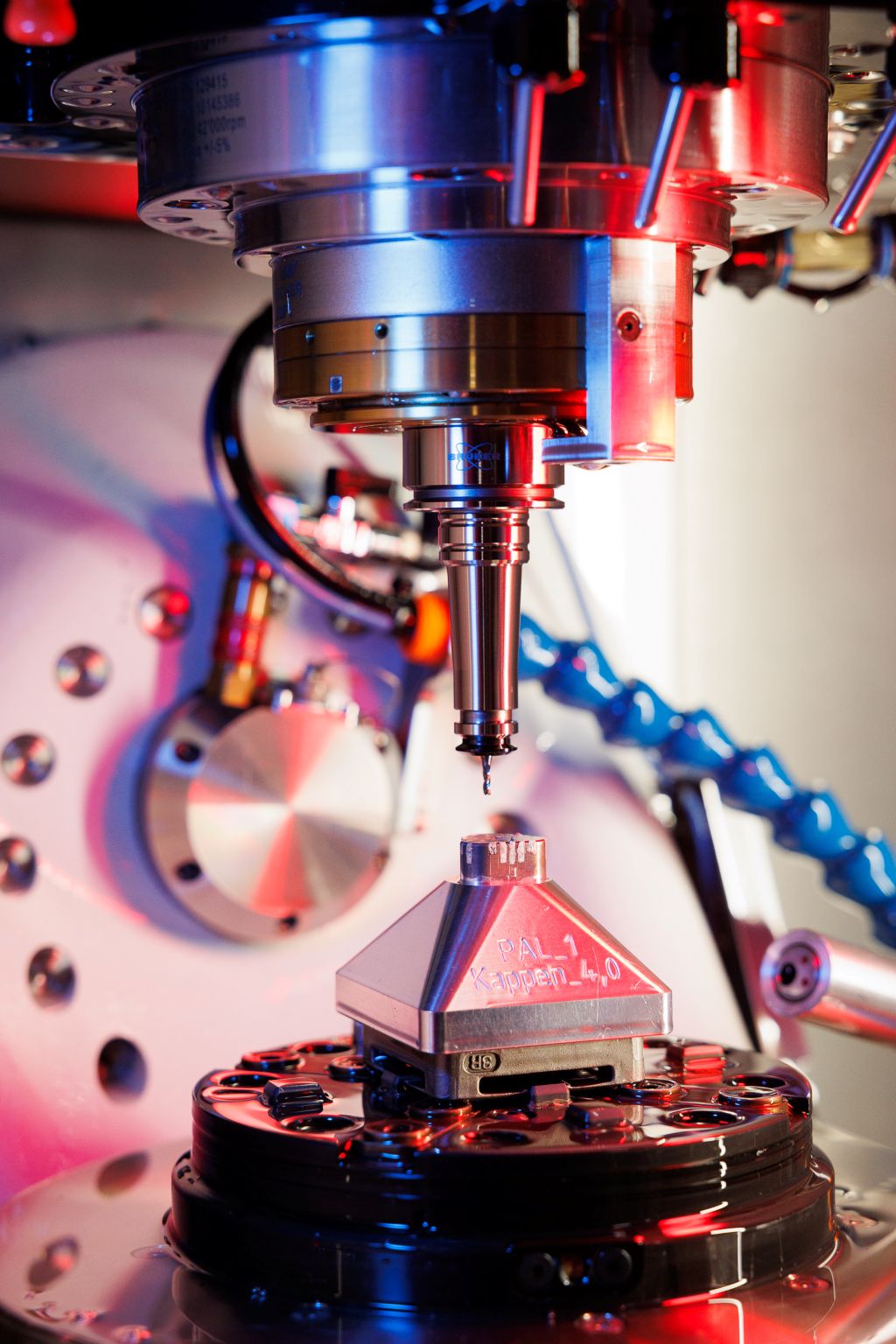
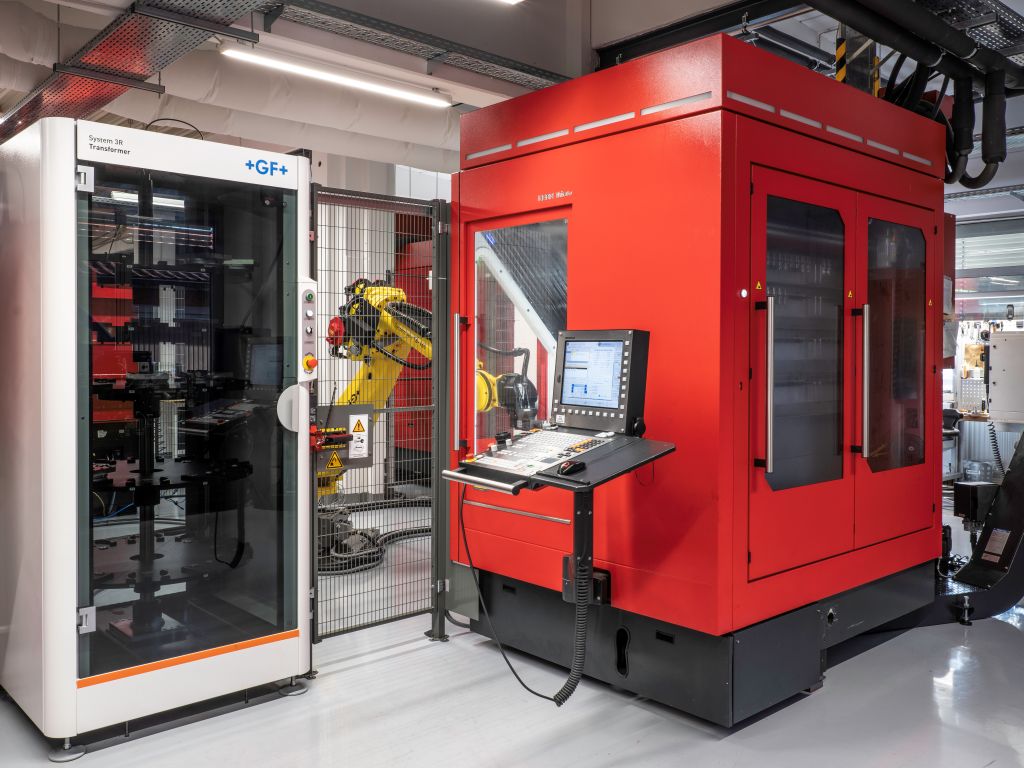
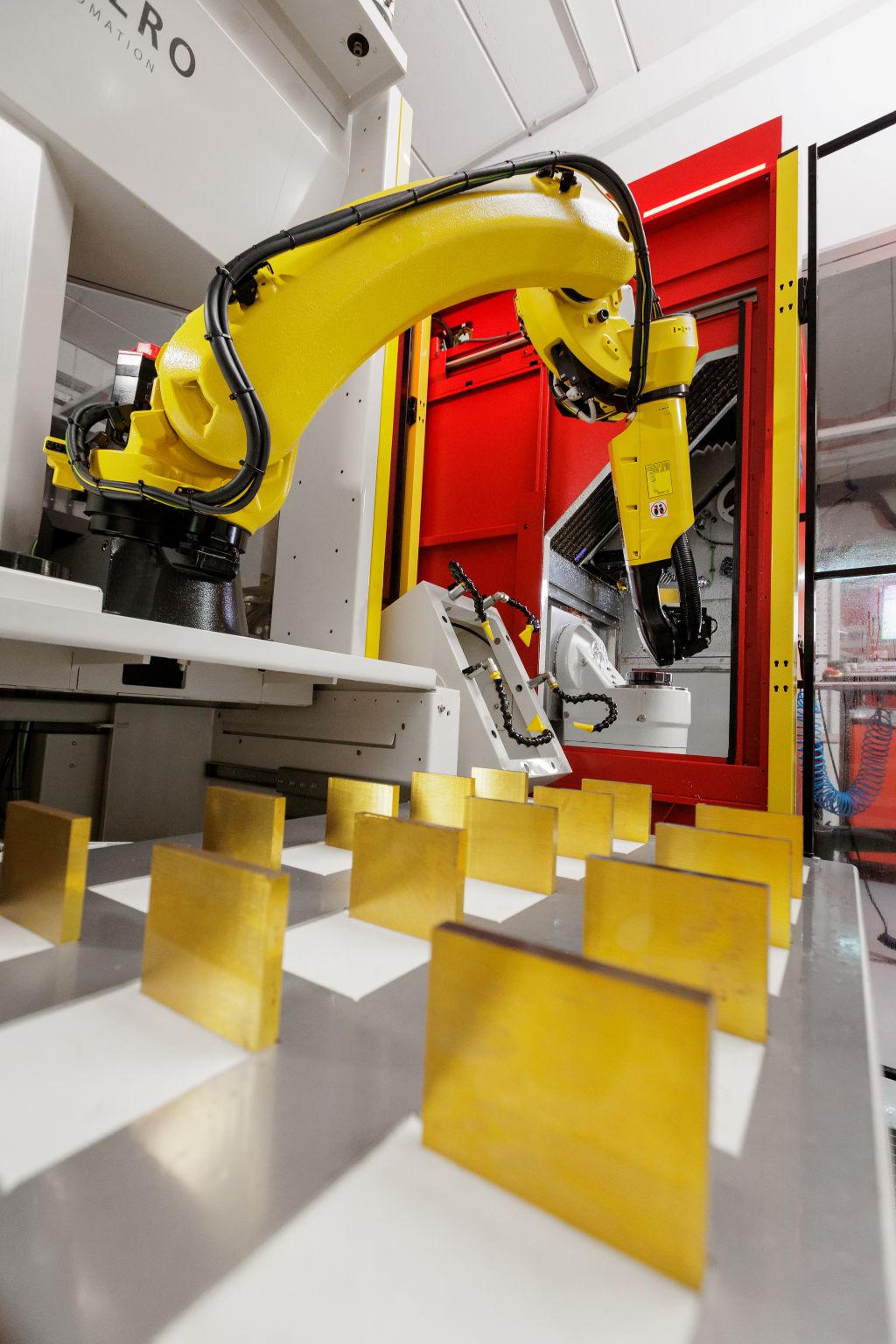
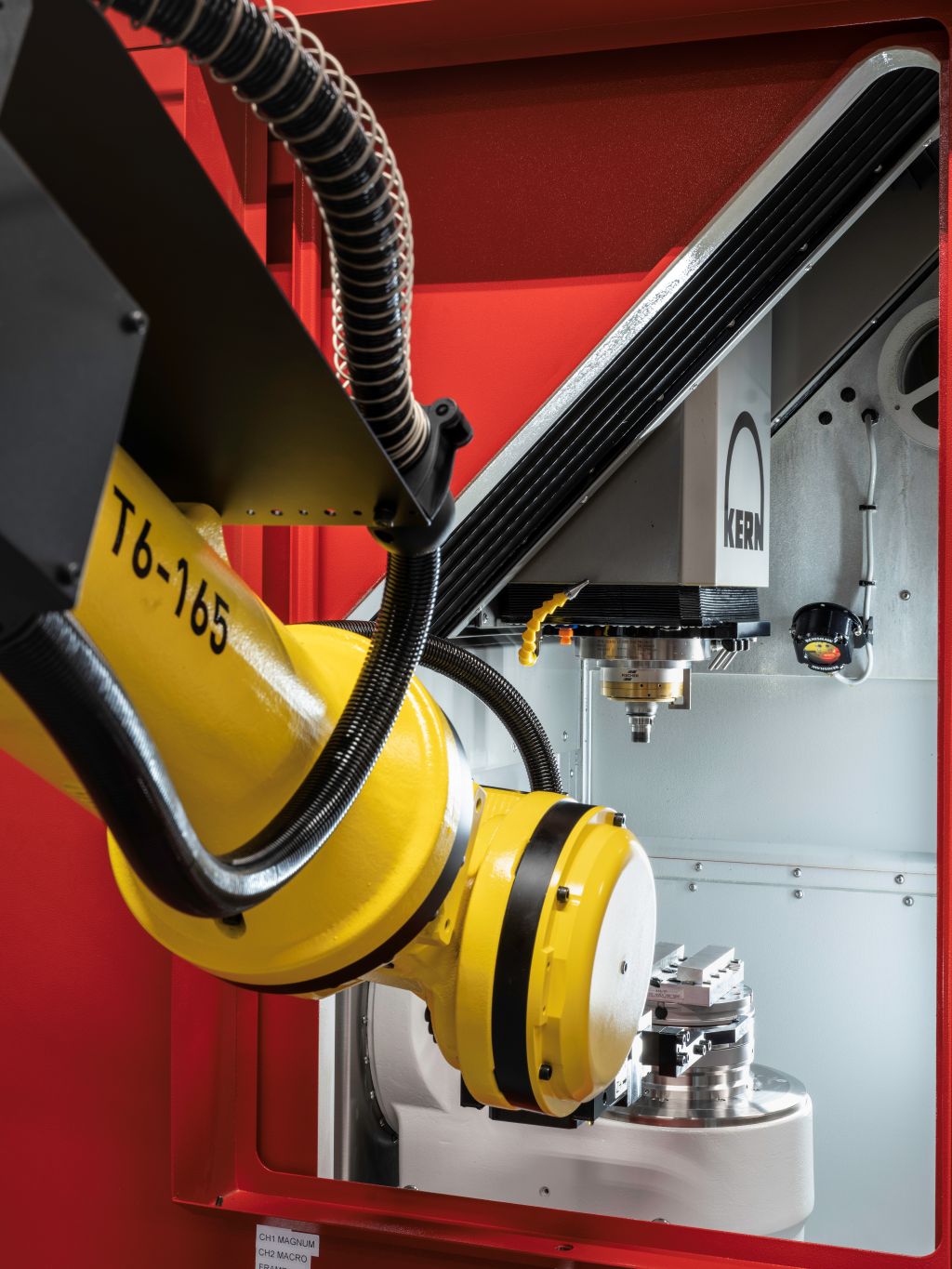
A practical example illustrates the dimension: For a pacemaker manufacturer, 200,000 titanium components are produced annually. The production runs fully automated in a manufacturing cell, where a robot operates four interconnected Kern Micro HD machining centers.
Only a single, highly qualified specialist oversees this production line, which currently also runs other, up to 20 different components in any order. The manufacturing cell operates on the principle of maximum flexibility with the highest process reliability. According to Alexander Stauder, each of the four machines can produce any of the 20 components. The system controls production according to demand: If the demand for a specific product increases, several or even all machines can be switched over in parallel. If a machine, for example, temporarily goes down for maintenance, the load is distributed to the others – supply bottlenecks are reliably avoided in this way.
Good part rate of nearly 100 percent
Back to the practical example of the pacemaker component: Here, machining occurs in two setups on multiple clamping systems. After the second setup, the finished component leaves the machine, passes through a modern cleaning system to ensure the required cleanliness and particle-free condition, and then goes to quality control. That the good part rate is nearly 100 percent is no surprise for contract manufacturing chief Stauder: 'This result is based on our highly precise machining centers Kern Micro HD, the years of experience of our employees in process optimization, and the close cooperation with our customers.'
The development from the first prototype to mass production typically spans several years.
In the case of the pacemaker component, collaboration began a few years ago and initially settled at quantities of around 10,000 units. Demand increased, and through continuous process optimization and capacity expansion, the volume gradually grew to the current size of 200,000 pieces per year.
Thanks to extensive experience, faster into mass production
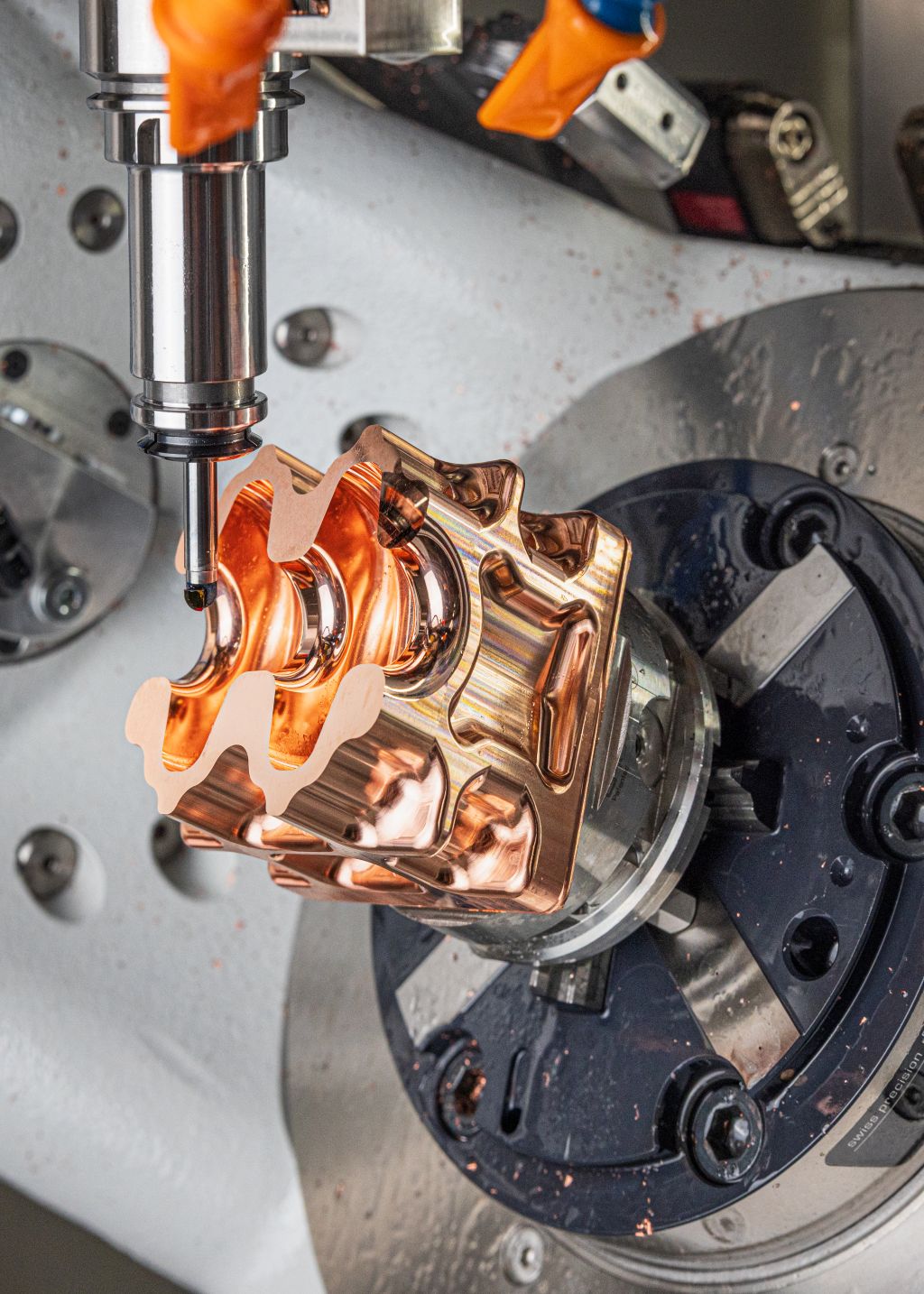
Various product revisions and further developments are always implemented together with customers. Changes to component geometry are analyzed, and the processes are adjusted accordingly. The know-how built up over many years on both sides can, according to Alexander Stauder, be transferred to similar components: 'Thus, we also benefit from a new variant of the pacemaker component, for which we are currently developing a manufacturing strategy together with our customer. Thanks to our experience and established processes, we will surely reach mass production very quickly.'
Contact: