
At the Nuremberg plant of the commercial vehicle manufacturer MAN Truck & Bus, the production of a highly efficient new 13-liter diesel engine has started. As a common engine platform, it is to be used company-wide. Fine drilling tools from MAPAL are used for the cylinder heads, processing the valve guide and valve seat base drilling.
Almost simultaneously, MAN has launched two important future projects at the Nuremberg site. Alongside the production start of the new diesel, a battery series production for the manufacturer's electrically powered vehicles is being initiated. More than 50 assembly stations are expected to produce up to 50,000 batteries annually – with the option to increase this capacity to 100,000 high-voltage batteries by 2030. With over 35 meters in height, the new building is the tallest production facility on site.
Directly opposite is the production of diesel engines on an area of 23,000 square meters. As process planner, Marco Singer is responsible for the manufacturing of the cylinder heads of the newly developed D30 engine. Opposite Hall M17 is the newly established battery production. Marco Singer categorizes the transformation to electric drive as follows: 'For various applications such as urban transport, the electric motor is the ideal drive. However, in other areas, diesel will remain relevant for a long time.' He cites applications in agriculture, marine, or military as examples. Therefore, a mix of different drive technologies will be needed in the future.
One engine for all brands
The Traton Group, which includes MAN, Scania, Volkswagen Truck & Bus, and International Motors, relies on a modular system, the Traton Modular System (TMS), whose components are used across brands. In line with the motto 'One does not need to reinvent the wheel,' the group efficiently bundles its resources. The D30 engine is the common engine platform for the entire group. From development to mechanical manufacturing and engine assembly to delivery to various vehicle manufacturers, everything takes place at MAN in Nuremberg. Until three years ago, there was also a dedicated foundry here.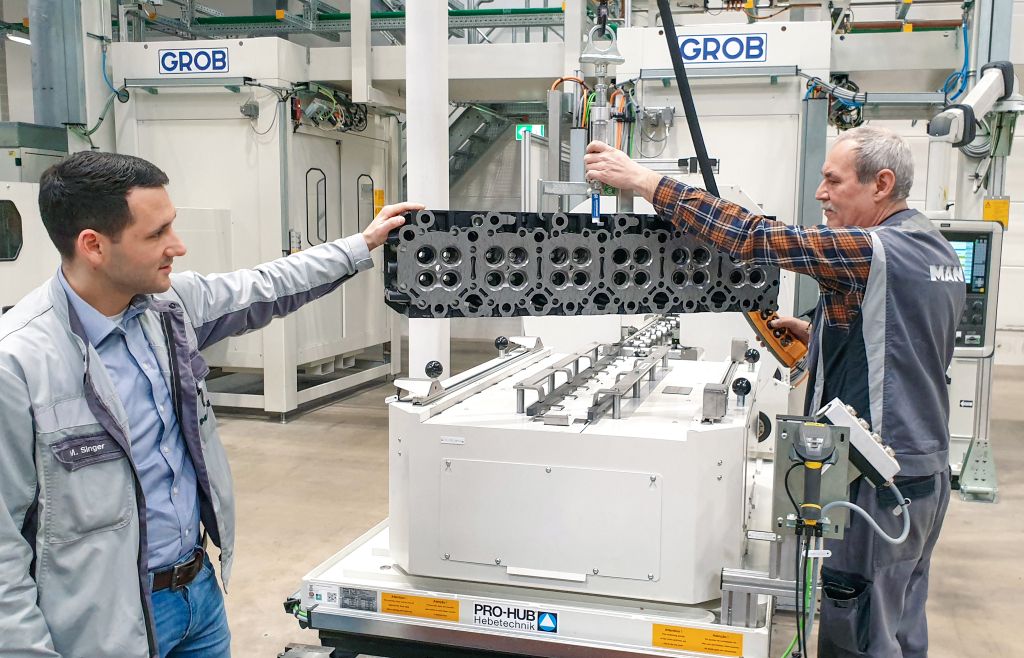
The D30 engine is based on a platform but is produced in six different power levels from 360 to 560 HP. It is the largest standard engine in the portfolio and is intended for use in various vehicles, with a focus on 40-ton trucks in the truck sector. The D30 replaces the previous engine series D26 and D15. The innovative engine achieves a maximum efficiency of 50 percent and requires five percent less fuel than its predecessors, which equally reduces CO2 emissions.
In the production of the new engine, which will employ up to 160 highly qualified workers in a three-shift operation, MAN has invested around 220 million euros. The technical capacity allows for the production of around 50,000 engines per year. 'The actual production volume is based on demand. Whether this will actually be utilized is ultimately decided by the customers,' explains Marco Singer. In recent years, customers have been somewhat hesitant. As in the passenger car sector, discussions about the transformation to electric drive have also caused uncertainty in commercial vehicles. Initially, production will operate in a single shift.
Decades of collaboration
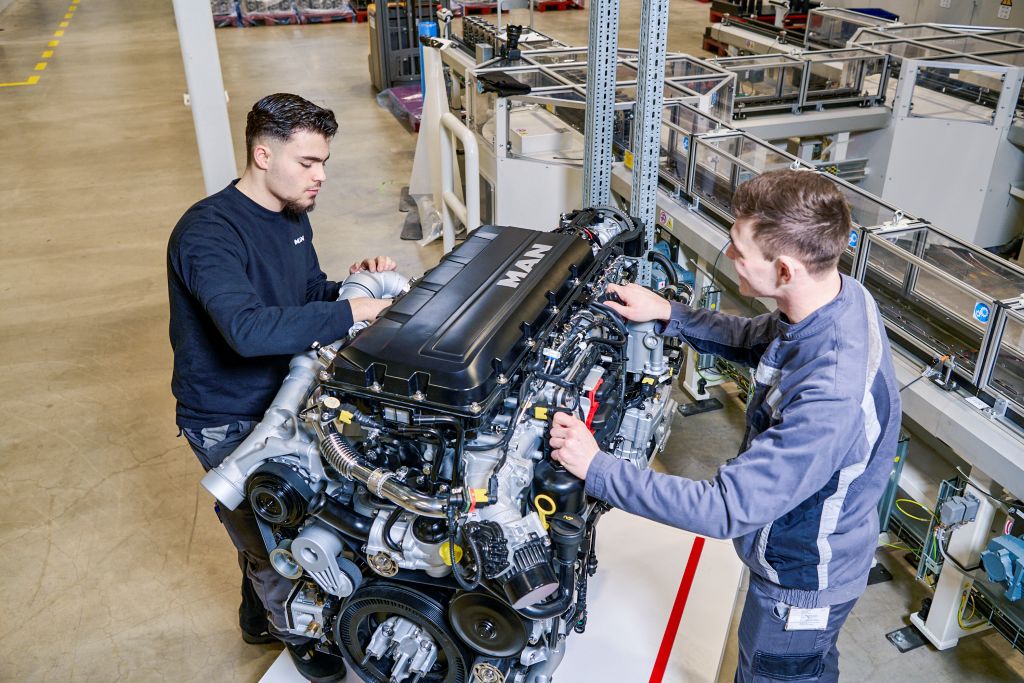
MAN has been collaborating with MAPAL for decades. When tenders were issued in 2019 for the D30 project start, the tool manufacturer from Aalen was awarded the contract again for the fine machining of the valve guide and valve seat base drilling. Years of joint experience contributed to this, as did a recommendation from the machine manufacturer Grob, who is responsible for the entire process and thus also for the tool design.
The six cylinders of the engine each have two intake and exhaust valves, so 24 holes must be drilled into the cylinder head bank. Since the diameters of the intake and exhaust vary, tools of different sizes are required for their processing. The machining takes place on a twin-spindle machine. It is embedded in a linked system with individual machines from Grob, which are loaded by linear portals.
Stable process through proven technology
In the initial phase of the project, another tool manufacturer was also entrusted with the fine machining. However, since a stable and economical process could not be achieved with their tools, MAN ultimately refocused on collaboration with MAPAL. The Aalen team initially entered the race with the fine machining system that has been running at MAN for years in two production halls on many machines. However, in close consultation with the customer, the partners further developed the system and were able to achieve significant progress.
Singer praises the achievements: 'The machining had fundamentally changed. For example, we eliminated a semi-cut and were able to forgo a pilot reaming. Instead, we only used the indexable insert tool on our pre-machined diameters, ensured a good entry for the reamer, and then ultimately reamed once. From these experiences, the process could be optimally designed.' The manufacturing concept achieved both good machining quality and the specified cycle time of around five minutes for the finishing of the valve seat and valve guide, resulting in a stable and economical process. 'And this, even though the quality requirements in production have increased with the new engine,' emphasizes Markus Meyer, who works closely with MAN as a technical consultant from MAPAL. For the valve and the two valve seat base drillings, the tolerances are less than 20 µm. For the run from the seat to the guide, around 50 µm must be maintained. There must be no offset between the valve seat and valve guide that could lead to undesirable shear forces. The required surface qualities are at an Rz of less than 20 µm. The cylinder head bank is made of GJV 450 cast iron, into which wear-resistant materials for the valves are pressed in the form of a ring and a guide.
Modern technology further reduces unit costs
A series of joint workshops focused on further optimizations, particularly regarding piece costs. They were to be further reduced before the start of series production, and in a collaborative, professional partnership, MAPAL and MAN were able to achieve significant improvements.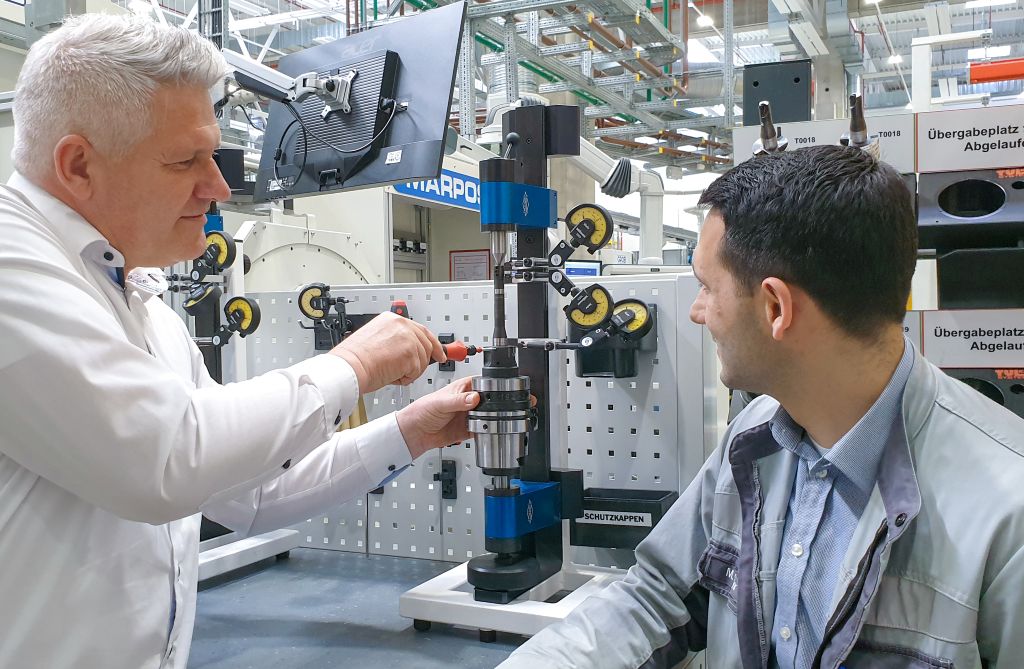
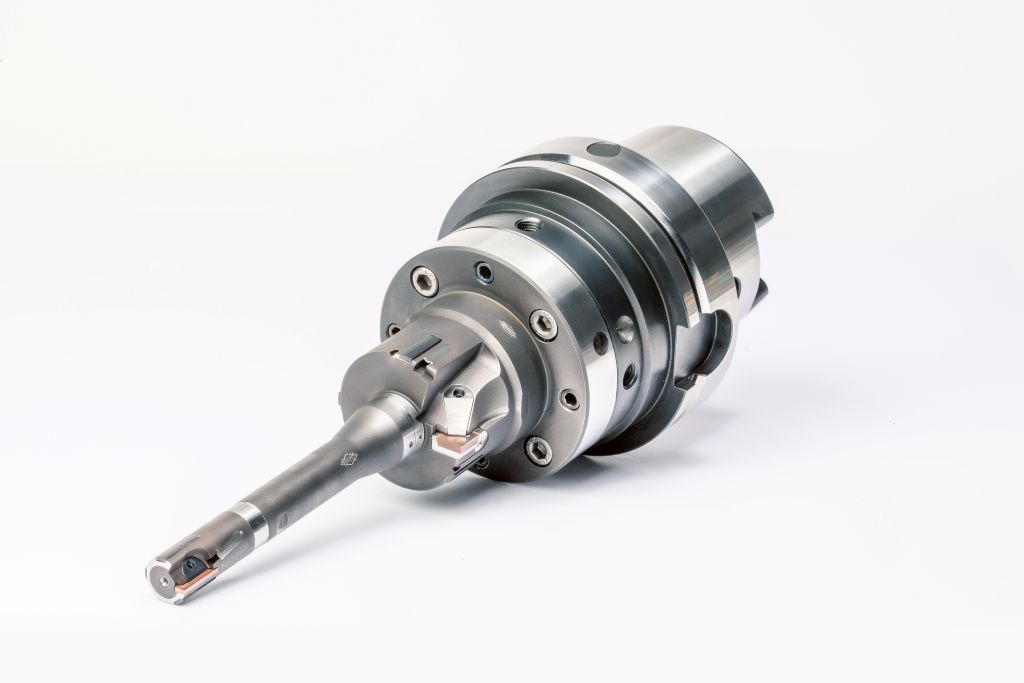
The simplification of tool handling proved to be a lever for lower cost per part – specifically, the reduction of setup time and thus a simplification for the operator. For this purpose, MAPAL introduced its EA system (EasyAdjust), which was installed for the valve seat tool. In this system, the rejuvenation of the cutting edge is already integrated into the cassette, which serves as a holder for the cutting edge. This completely eliminates the adjustment process for the rejuvenation of the secondary cutting edge; only the diameter needs to be adjusted. Thomas Teuber, Head of Product and Application Management Fine Drilling at MAPAL, sums up the practical benefits:
"The operator no longer has to keep an eye on two dial gauges. He focuses on just one dial gauge, with which he sets the projection of the cutting edge to the guide rails. This is much faster." The EA system also brings an improvement in the cutting edges: The TEC indexable cutting inserts used in the EA system have four, and thus twice as many, cutting edges as a conventional MAPAL reaming cutting edge. An optimized cutting material and an innovative coating increase the tool life and thus ensure an even more stable process.
The modifications showed results: Compared to the original machining concept, the costs for machining the valve seat and valve guide could be reduced by around 40 percent. "I am very satisfied with the milestone achieved," says Marco Singer, explicitly praising the competent collaboration with MAPAL. The ambitious process planner intends to continue driving the continuous improvement process forward.
At MAN, it is assumed that the D30 will be the last completely newly developed diesel commercial vehicle engine of the company – after more than 100 years of diesel engine manufacturing at the Nuremberg site. By 2030, every second vehicle delivered to customers is expected to have an emission-free drive.
Contact:
www.mapal.com