
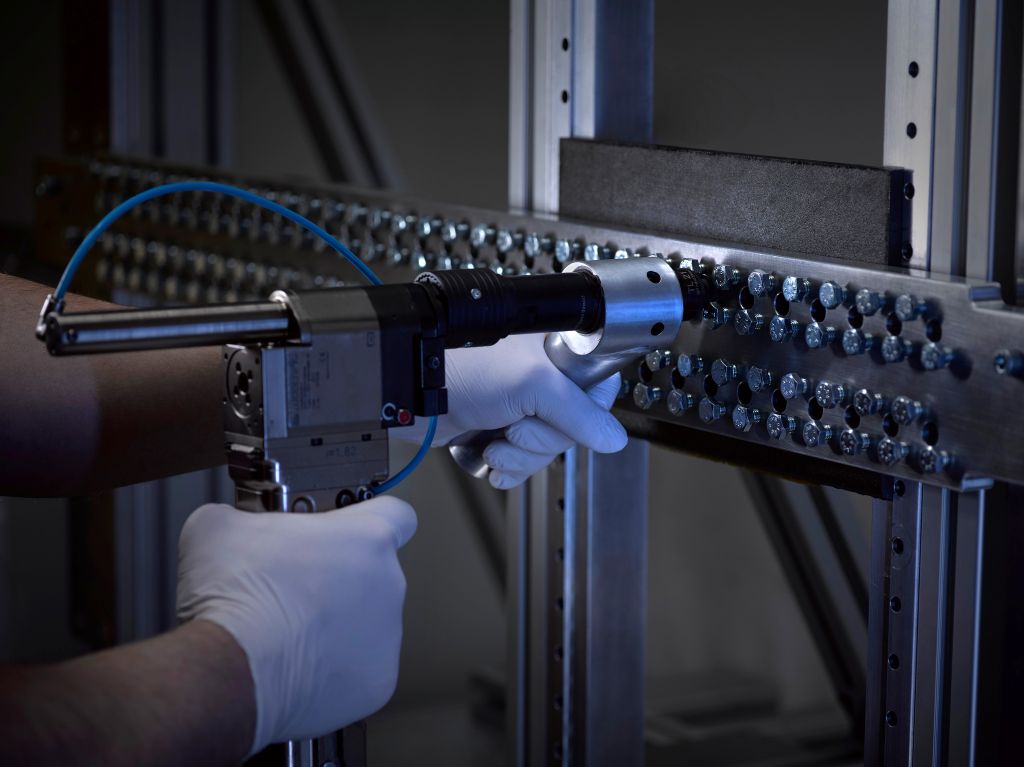
Inserting thousands of rivet holes with constant precision in CFRP-Aluminum composites for aircraft parts requires perfectly designed solid carbide drills from the highest quality tier. Scheinecker, a leading name in precision tools 'made in Austria' and now exactly 50 years in business, constructs these in the shortest time – and increased tool life in the latest project by 130 percent and more compared to customer specifications. Key success factors of the tool: the CVD diamond coating BALDIA COMPOSITE DC and its manufacturer Oerlikon Balzers.
Carbon fiber reinforced plastics (CFRP) fascinate designers in aircraft lightweight construction but make machining experts break a sweat. On its way through a composite, a drill encounters super-strong carbon fibers and softer epoxy resin, and in layered composite materials, it may also meet layers of titanium or ductile aluminum with completely different machining properties. The main challenge is to prevent delamination, i.e., fiber tearing during the entry and exit of the drill. Because these ultimately lead to deviations in tolerances regarding diameter, shape, and surface quality of the many thousands of holes that are to accommodate rivets for the stable assembly of components.
An extremely tricky task, for which the Austrian precision tool manufacturer Scheinecker, celebrating its 50th anniversary in 2025, brings 35 years of know-how in the aerospace field. 'We scrutinize every application case down to the smallest detail on-site with the customer before the design comes into play,' explains Dino Lirk, Technical Director at Scheinecker.
This was also the case when a renowned aircraft manufacturer approached and asked for a drill that could handle the machining better than the previous tool after a material change. It was about stack material made of several layers of carbon fiber and aluminum for components in the wing area of a passenger aircraft. To machine such heterogeneous materials reliably and cleanly over a long service life, the substrate, geometry, micro-cutting structure, and coating of the tool must harmonize perfectly. The Austrians pay attention to chip flow, controlled chip breakage, and tool stability when designing the geometry. The focus is also on surface quality, roundness accuracy, and rigidity of the drill.
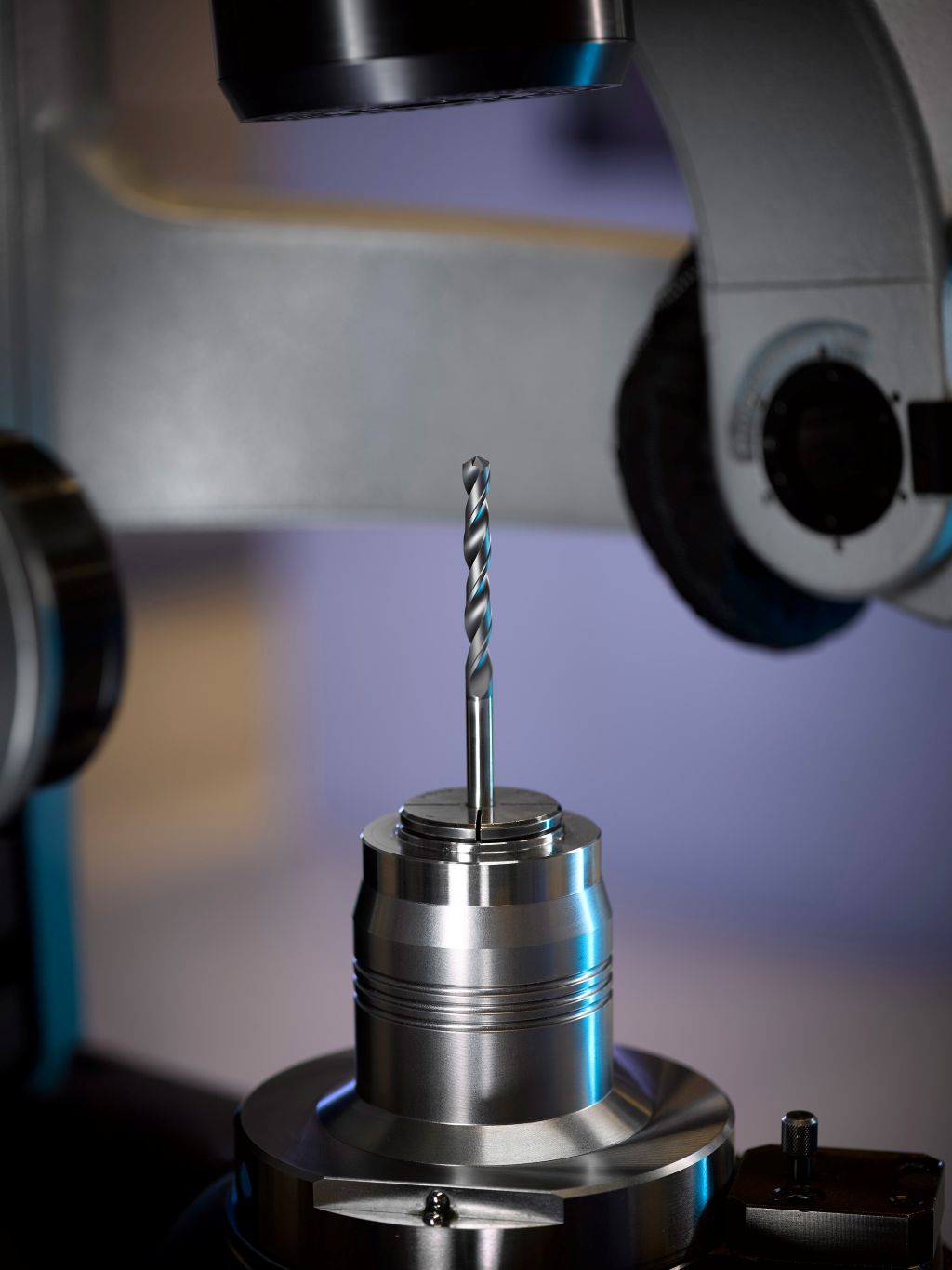
Since the coating plays a crucial role in achieving the best performance, Scheinecker opted for BALDIA COMPOSITE DC, a diamond coating from the long-standing partner Oerlikon Balzers. Specifically developed for the machining of composite materials, the nanocrystalline CVD (Chemical Vapor Deposition) layer protects against wear from highly abrasive CFRP and thermal stress as well as against adhesion and burr formation from aluminum. Oerlikon Balzers produces the surface protection with micrometer precision and controls the layer thickness to ensure precise adherence to tolerance values that lie in the middle of the applicable upper and lower limits. Thus, BALDIA COMPOSITE DC enables the tightest tolerances for tool diameter and holes. A special pre-treatment further supports the important preservation of very sharp cutting edges, high process reliability, and consistent hole quality.
Scheinecker designed the solid carbide (VHM) tool for use in a semi-automatic drilling feed unit (ADU/Advanced Drilling Unit) – a novelty, as the aforementioned components were previously only drilled manually. Geometry and drill were measured and produced with very high effort and the latest machines. Tests were conducted at their own stations as well as at the customer’s.
Over 130 percent more tool life in just four weeks
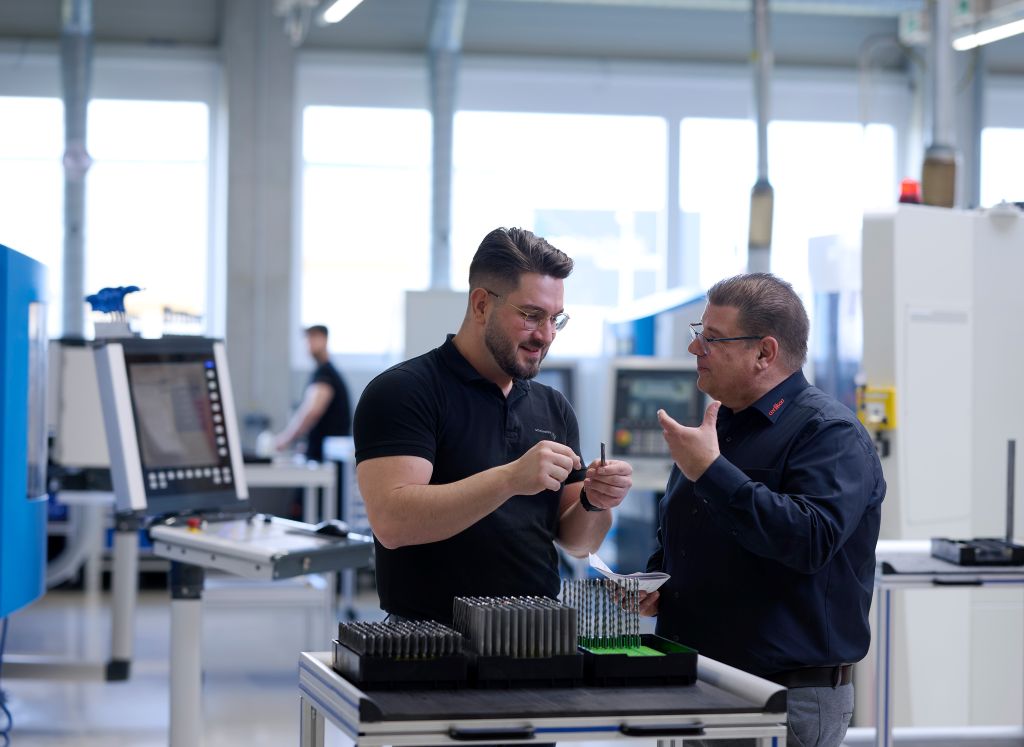
Already in the first attempt, 600 holes were achieved, and now there are well over 1,000. 'With 1,000 holes, we are already 130 percent above customer requirements. Through further adjustments of the layer thickness and geometries, even up to 30 percent higher tool lives are expected,' summarizes Dino Lirk. From the first inspection of the component to the finished, delivered tool, only about four weeks passed – not an exception, but the average lead time at Scheinecker. The market standard is more than ten weeks, according to Lirk.
Tool life as well as implementation speed were not least the result of the very good collaboration with Oerlikon Balzers. 'In such projects, we immediately ask for all relevant factors and then decide quickly based on our experience which coating in what thickness is suitable. Scheinecker provides us with all the necessary information early on, so we can coat and deliver test tools quickly,' explains Dirk Schmidt, Product & Key Account Manager Diamond at Oerlikon Balzers.
'For these reasons, we exclusively work with Oerlikon Balzers as our coating partner,' says Ulrike Scheinecker-Graul. The managing director of Scheinecker received a kind of confirmation for the good teamwork directly from the customer: They referred to the costs per hole achieved with the highly efficient drilling tool as the best result they have ever achieved in such a project.
Contact: