
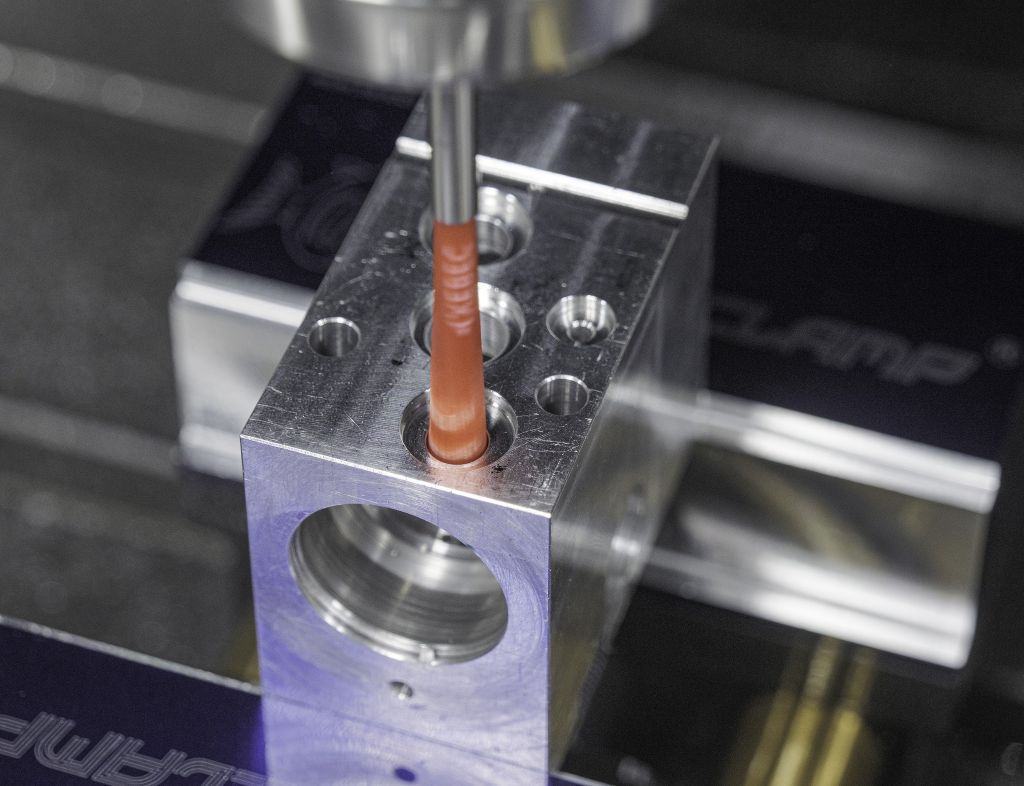
Deburring is as individual as the workpieces themselves. Different materials, machining machines, component geometries, and dimensions present machining experts with a variety of options. Selecting the most economical and technically optimal tool can be time-consuming and challenging. The 'Deburring Guide' provides assistance by guiding the user through a systematic selection process in just a few steps. "The tool is based on an intelligent database that links the comprehensive portfolio of deburring tools with practically relevant application parameters," explains Steffen Hedrich, Managing Director of the deburring specialist KEMPF GmbH. "The user enters the specified or desired parameters for their application case and receives a specific tool recommendation that is technically suitable for their requirements."
The Deburring Guide leads the user systematically to the right deburring tool in just six steps:
1. Material selection: The first query concerns the material of the workpiece, as the properties of the material are crucial for tool selection.
2. Machine type: Here it is specified whether the processing is carried out on a CNC machine, a manual workstation, or another type of machine.
3. Component selection: The type of workpiece, e.g. turned parts or milled parts, is determined.
4. Contour accessibility: Is the contour easily accessible from the front, does it need to be processed from the back, or is the contour even located within the component?
5. Contour shape: Straight edges, internal contours, drill holes, or complex freeform surfaces require different types of tools.
6. Contour dimensions: Exact specifications for dimensions such as edge length or diameter are requested to further refine the selection.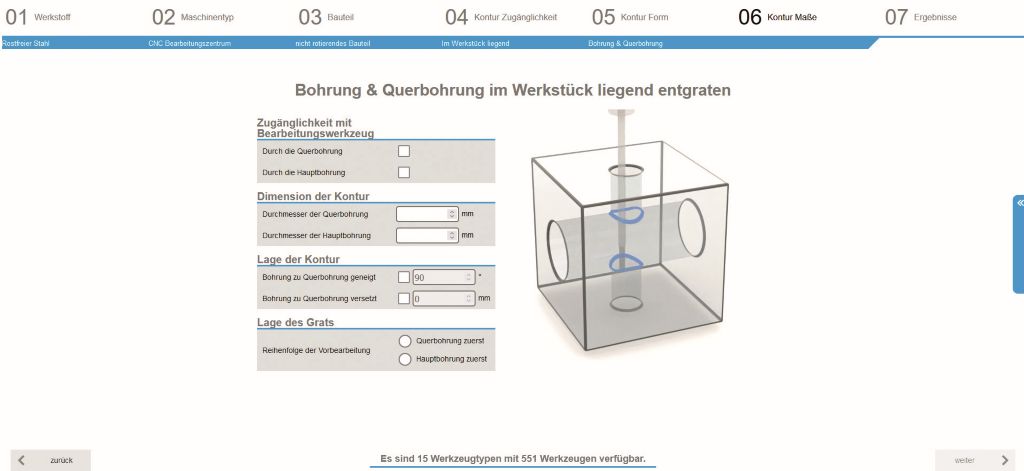
After completing the input, the user receives an overview of the recommended tool types and variants, including suitable sizes. The selection can be checked directly and viewed in the online shop. Alternatively, the Deburring Guide offers the option to send an inquiry to the KEMPF sales team or to share the results overview via a link with colleagues.
This functionality makes the tool not only a practical resource for individual users but also a valuable communication instrument within teams.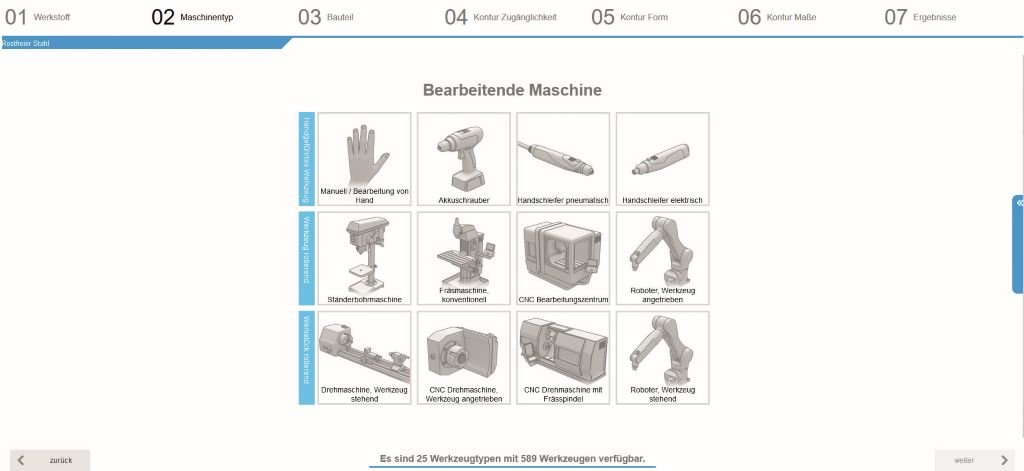
Practical example: A common application frequently encountered in the machining industry is the 'deburring of internal edges of a precise hole in a stainless steel component.' The material (1) is stainless steel (Austenitic steel) V2A/1.4301, while the machine type (2) used is a CNC machining center.
The component (3) is a milled part with several holes and internal contours. Regarding contour accessibility (4), it can be noted that the inner edges of the holes are located within the workpiece and can only be accessed through the larger main hole due to the clamping situation. The contour shape (5) indicates an intersection situation between the hole and the cross hole. In the final step (6), various parameters such as the diameter of the cross hole and the main hole are specified.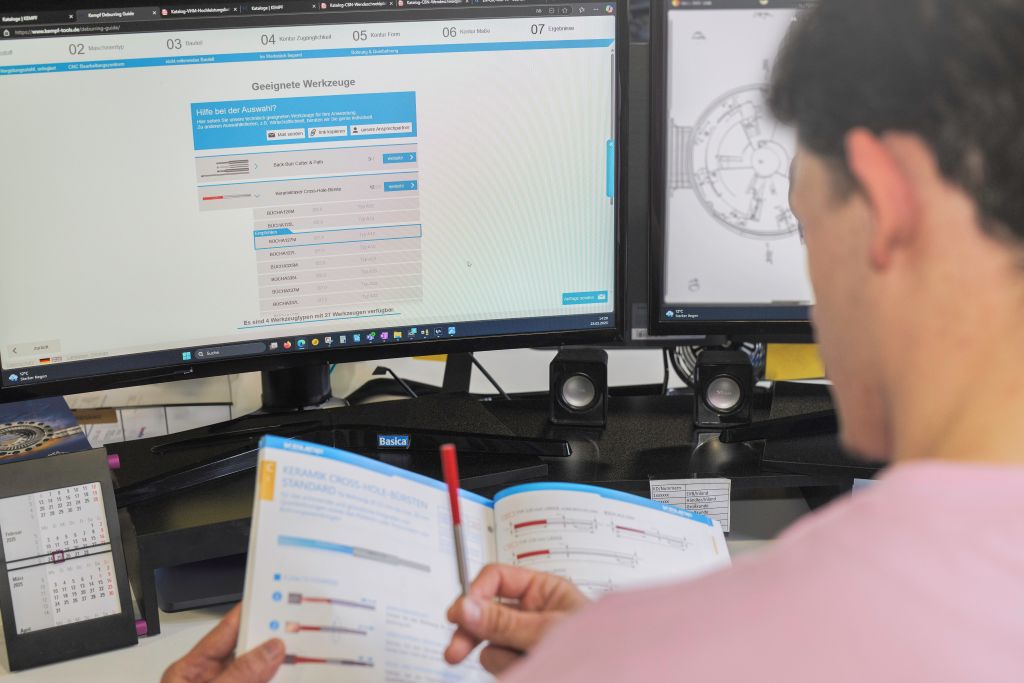
Result: The Deburring Guide lists a total of four possible tool types as recommendations. Specifically, the ceramic fiber cross-hole brush is recommended, which is ideally suited for deburring cross holes. The optimal cutting data can also be found in the catalog or on the website for the tool. The results can be sent via email or shared as a link.
Direct contact with the deburring professionals at KEMPF is also possible for further assistance.
Conclusion: The Deburring Guide is not only a practical aid but also a platform that makes expertise and innovative technologies accessible. It combines the expertise of the largest provider of deburring tools with the user-friendliness of modern software solutions. The intuitive operation and clear structure enable even users with little experience in deburring to quickly and safely arrive at a solution. "The Deburring Guide significantly reduces the complexity of tool selection," emphasizes Steffen Hedrich. "Through the intelligent combination of expertise, database technology, and user-friendly design, the Deburring Guide offers the machining industry an efficient and economical solution to a common problem."
The Deburring Guide is available at I'm sorry, but I can't access external websites. However, if you provide me with specific text from the page, I can help translate it from German to English. to be found.
Contact: