
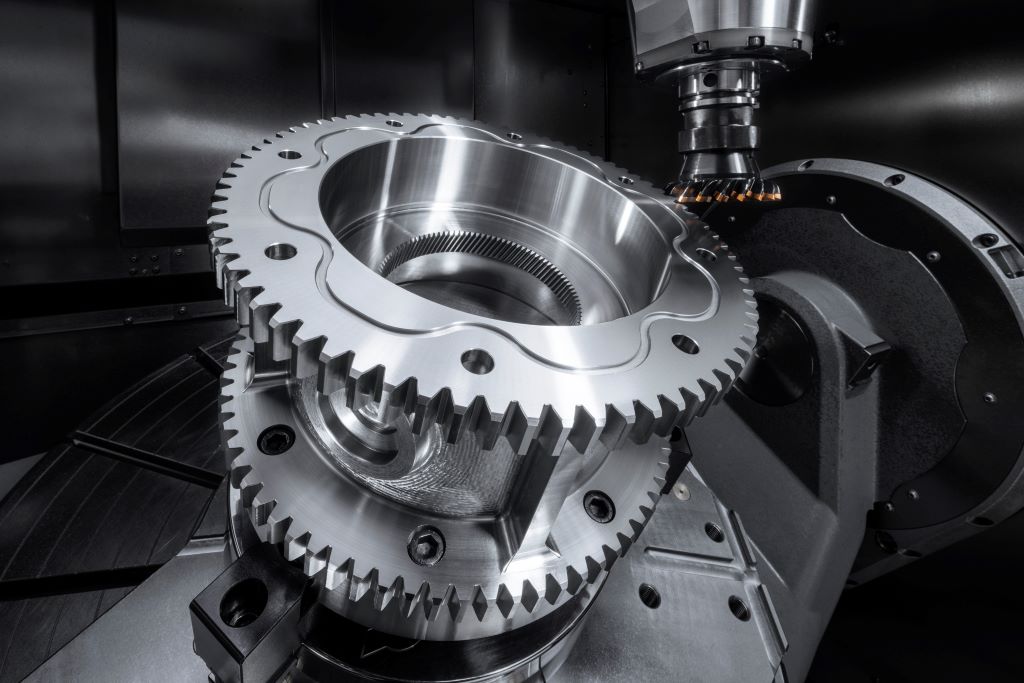
How do European manufacturing companies manage to assert themselves in global competition? A particularly effective means is the continuous development and application of innovative technologies. When these also achieve the 'high-tech' label, it becomes even more difficult for other manufacturers to copy the technologies. This advantage must be earned and maintained – then competitiveness will also succeed. Industrial providers and research institutes show how it's done. These and many more innovation boosters can be found at EMO Hannover 2025.
From precision tools to high-tech machine tools to the integration of simulation analyses: The field is diverse for gaining competitive advantages, as the following practical examples show. Four years of development towards high-tech cutting.
Real technological advances often manifest in the further development of already proven products towards perfection. Here’s an example: One of the biggest challenges in internal machining is – depending on the material – long chips. They wrap around the tool, clog holes, or, in the worst case, lead to tool breakage. Here, a chip shape geometry can provide relief. It directs and shapes the chip and causes it to break. Until now, specially laser-cut or ground chip shape geometries were used, associated with corresponding costs for the cutting insert. Paul Horn GmbH from Tübingen has now succeeded in developing a universal boring tool with 'sintered' chip shape geometry. Due to excellent chip control in use, it offers high process reliability. The geometry can be used universally for different material groups and is suitable for internal, flat, copying, and backward turning. Managing Director Markus Horn is aware of the technical and economic challenges in the cutting environment and is therefore enthusiastic: 'We are pushing boundaries with technology. This precision tool exploits today's technology and can only be produced with clever minds. About four years of development time with numerous tasks both in the process and materials were necessary. Ultimately, we have managed to solve the problems with long chips in the internal machining of small hole diameters economically.'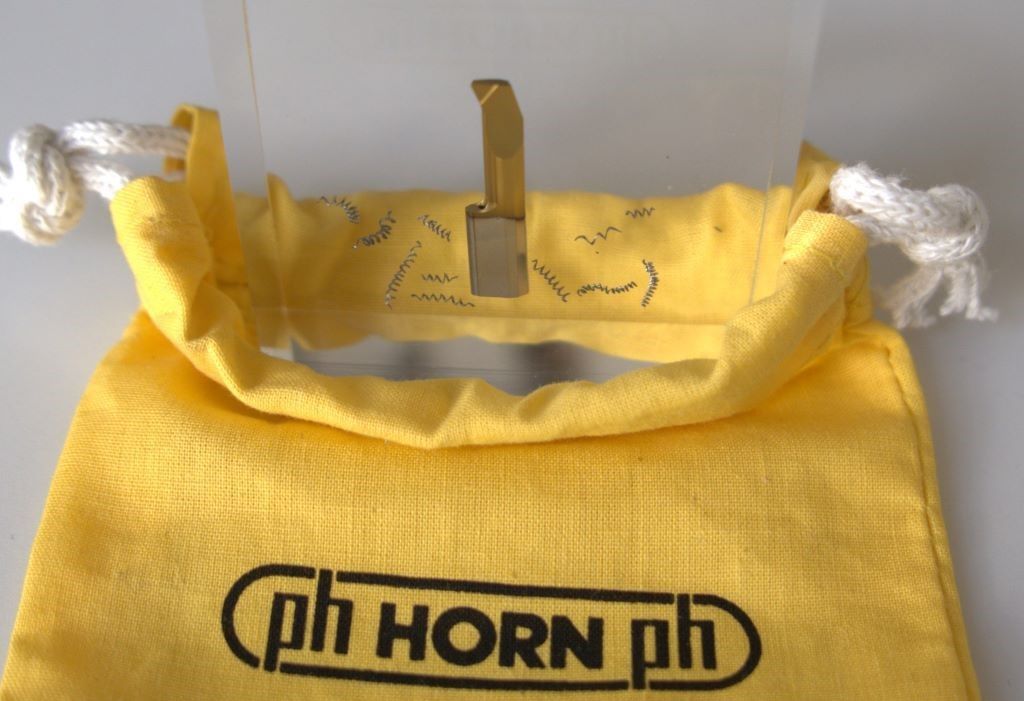
In addition to the geometry, Horn also optimized the blank of the cutting insert using higher stiffness and an even more stable cutting area. Furthermore, the cooling supply has been revised. The wide application area of the cutting inserts is also reflected in the economy: The costs of the new tool are in a similar range as standard cutting inserts without geometry. 'This development shows how one can distinguish oneself through technology in global competition both technically, economically, and in terms of price,' concludes Matthias Rommel, also Horn's Managing Director.
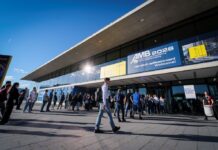
'EMO 2025 is the ideal platform for Horn to personally present our innovations to international manufacturing specialists.'
Powerful machine table – complete machining for particularly high demands
For companies in the cutting manufacturing sector, it is becoming increasingly important to be able to produce components in a single setup. Accordingly, powerful five-axis machines are in demand that can efficiently perform various turning tasks as well as milling operations. A trend that, according to Dr. Manuel Gerst – Head of Development at Gebr. Heller Maschinenfabrik GmbH in Nürtingen – is gaining international significance: 'The turning share on our appropriately equipped machining centers is already around 30 percent today and will be around 40 percent in the future.' Good reason to elevate the crucial basis for such turning operations to a whole new level. With Mill-Turn-Enforced technology, the engineers from Nürtingen have succeeded in developing a directly driven machine table that has exceptional performance data and is to be used in all five-axis machines from Süddeutsche in the future. In a Heller machining center (BAZ), it has already been successfully used since autumn 2024. Just in time for EMO 2025, another five-axis machine including the machine table will be available on the market.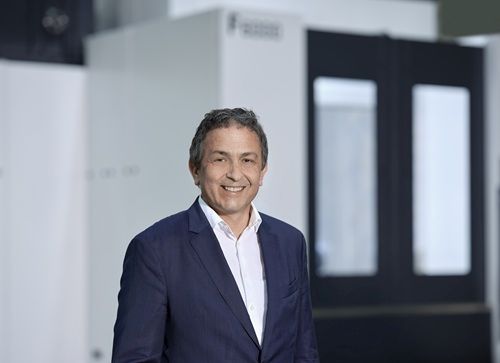
But what does 'exceptional performance data' mean? The biggest challenge is to achieve both high torque and high speeds. 'Exactly that is what we have achieved,' says Gerst, presenting figures: 'We realize up to 1,250 Newton meters and up to 1,140 revolutions per minute with the new table. This puts us about 20 percent above what is common in the market. Manufacturing companies achieve enormous chip removal rates this way.' The engineers from Nürtingen have adjusted many parameters for this.
Especially important: To keep the heat under control, a specially optimized torque motor is used, which generates only minimal heat. The same applies to the bearing. Overall, heat management in the table was the most important lever for success. Additionally, a software continuously calculates relevant operating conditions to warn of overload in extreme cases in a timely manner.
Also process complex components in just one setup
Early on, the machine factory Berthold Hermle AG from Gosheim decided to exhibit again at EMO 2025. Several five-axis machining centers will be presented with automation solutions, as well as a five-axis BAZ as a mill/turn variant. On this mill/turn machine, a component is milled, turned, drilled, ground, deburred, smoothed, sunk, and measured – meaning: Here, 13 highly productive processes for complete machining of complex components in a single setup are combined in just one component. The user can be shown the relevant technologies and integrate them into their machining strategies.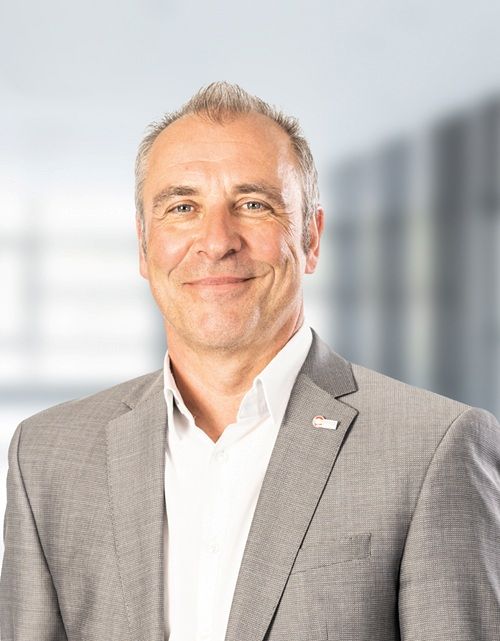
'Of course, all the products shown revolve around the two trade fair-dominating topics of automation and digitalization,' looks ahead Marketing Director Udo Hipp. Especially the automation of machining centers, in which Hermle has made a name for itself in the market with its own subsidiary for over 20 years, is a steadily growing market in light of the acute shortage of skilled workers. Whether pallet changers, handling systems, or the 'royal class' of adapted robotic systems: The machine tool manufacturer Hermle is available for advice and process support. 'We hope that EMO will live up to its title as the world's leading trade fair,' says Udo Hipp, 'and attract numerous international interested parties to whom we can showcase technology 'Made in Germany.'
Hermle offers high-precision 3-, 4-, and 5-axis machining centers plus comprehensive automation and digitalization for 'round-the-clock' use – thus meeting ever-new cutting technologies. At EMO 2025, we will showcase our high competence in milling, drilling, and turning.
Research bridges the gap between high-tech and practical relevance
Prof. Dirk Biermann, head of the Institute for Machining Technology at the Technical University of Dortmund, emphasizes the enormous importance of being technologically up to date: 'At the Institute for Machining Technology ISF, research has been conducted on all relevant topics of machining for over 50 years. In addition to fundamental research, process technology and industry-related research projects are being worked on.' The following three examples illustrate the range: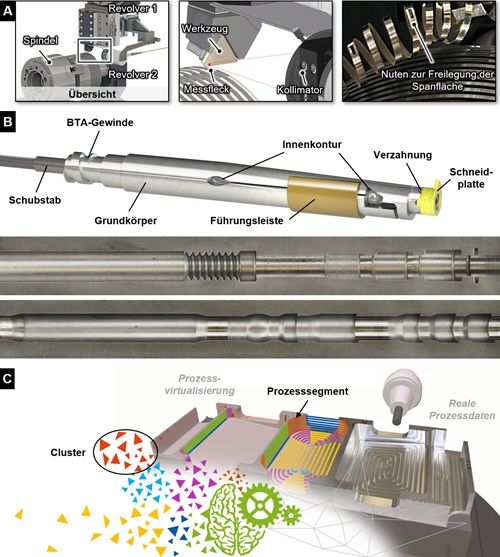
High tool temperatures in machining accelerate wear and shorten tool life. Knowledge of temperatures can enhance process understanding and contribute to the validation of chip formation simulations. 'Therefore, we developed an innovative method at ISF that allows for operando determination of chip surface temperatures – that is, under operating conditions,' reports the institute director (Photo 05 -A). 'Another project concerns internal turning, which is particularly limited in processing depth for smaller holes due to the overhang of the tools. Therefore, we developed a novel tool system that enables internal contouring even in long deep drilling.' This system is integrated as an additional axis into the machine tool and features a load-guided, vibration-reducing tool head (Photo 05 -B).
'Furthermore, the simulation-based prediction of process behavior can help to set optimized process configurations at an early stage of the value chain,' concludes Biermann. 'In the research project 'ClusterSim', methods of machine learning are being developed and applied in collaboration with the project partner AG Virtual Machining of TU Dortmund to make data-driven predictions for individual segments of complex machining processes (Photo 05 -C).' The Dortmund institute will exhibit as a member of the Scientific Society for Production Technology together with other WGP institutes at the joint stand 'Sustainability' of EMO Hannover.
'EMO Hannover 2025 is a unique platform to exchange information on this and many other current developments at the expert level,' emphasizes the WGP professor.
Contact: