
Whether Holmes and Watson or Batman and Robin: These duos complement each other through their
different skills and character traits and are therefore particularly successful and popular. "Similarly, the two materials ceramic and steel for mold making behave, only that this dynamic duo is still rather a hidden gem compared to its popular counterparts!", smiles Stephen Rapp, product manager at ZECHA Hartmetall-Werkzeugfabrikation GmbH. "And we – BCE Special Ceramics GmbH, KRAMSKI GmbH, and ZECHA – want to change that in a joint project, as we see the potential for the injection mold making and the entire industry to benefit from more ceramics!"
KRAMSKI GmbH – High-tech from the Gold City
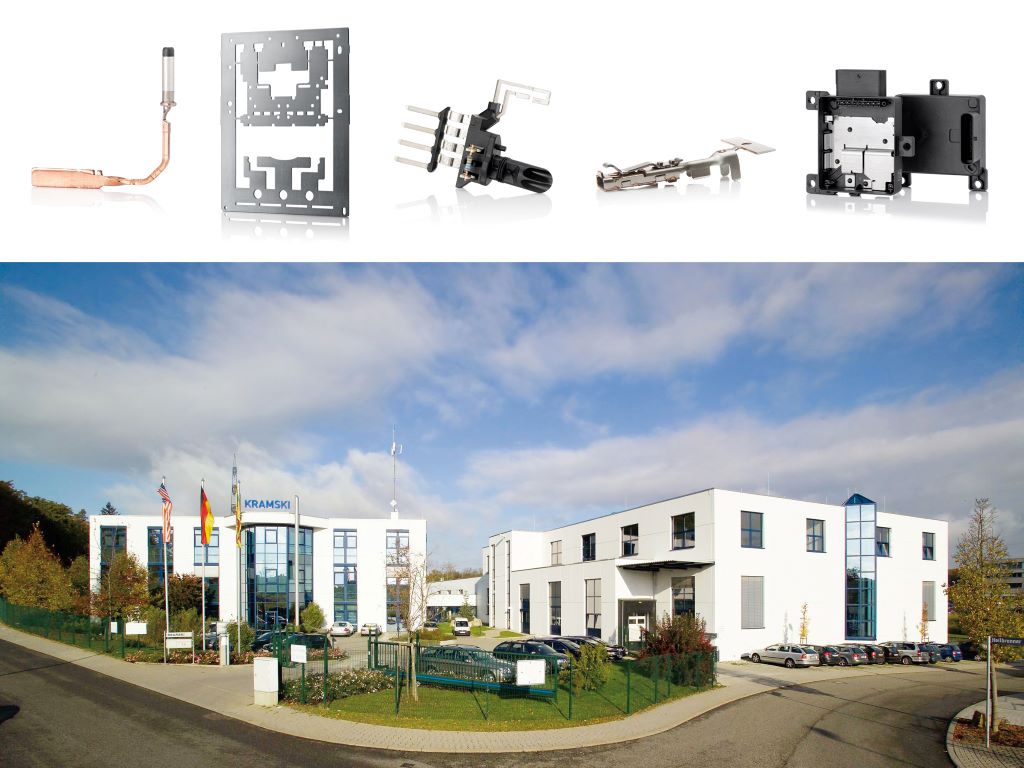
KRAMSKI GmbH in Pforzheim is a global solution provider for technologically demanding stamping and injection molding technology with approximately 700 employees worldwide. The company makes an essential contribution to the economic efficiency of its customers by focusing on precision and personal consulting. With the continuous development of products and tool technology, KRAMSKI meets the challenges of tomorrow with its highly modern tool manufacturing.
Areas of activity include the mobility sector, power electronics, medical technology, telecommunications, energy and environmental technology, as well as various industrial applications. Jörg Carle, Technical Managing Director of KRAMSKI GmbH: "We produce around three billion parts a year with the highest precision, mostly plug contacts for the automotive industry, but also very small, delicate parts for hearing aids or blood glucose meters and similar items in medical technology."
Ceramics is not an unknown material at KRAMSKI, on the contrary. "Among other things, in injection molding tools, where material adhesion can become a problem, we rely on ceramic coatings. Therefore, we hope that in the joint trials with BCE and ZECHA, we can rely directly on ceramic inserts in the long term and thus save the coating process," reveals Jörg Carle.
Of course, wear is also a major topic in mold making – not least when using glass fiber reinforced plastics. "Even if we are dealing with steels in the range of > 54 HRC, there is often significant wear, especially in the area of the injection points. This leads to burrs on the component that must be avoided, as they ultimately lead to excessive maintenance of the operating resources. For the 16-fold tool that we want to optimize in the current project, we plan to execute a cavity in ceramic and conduct trials with it," explains Jörg Carle. And a ceramic-experienced expert like BCE Special Ceramics GmbH is the ideal partner.
BCE, the experts for technical ceramics
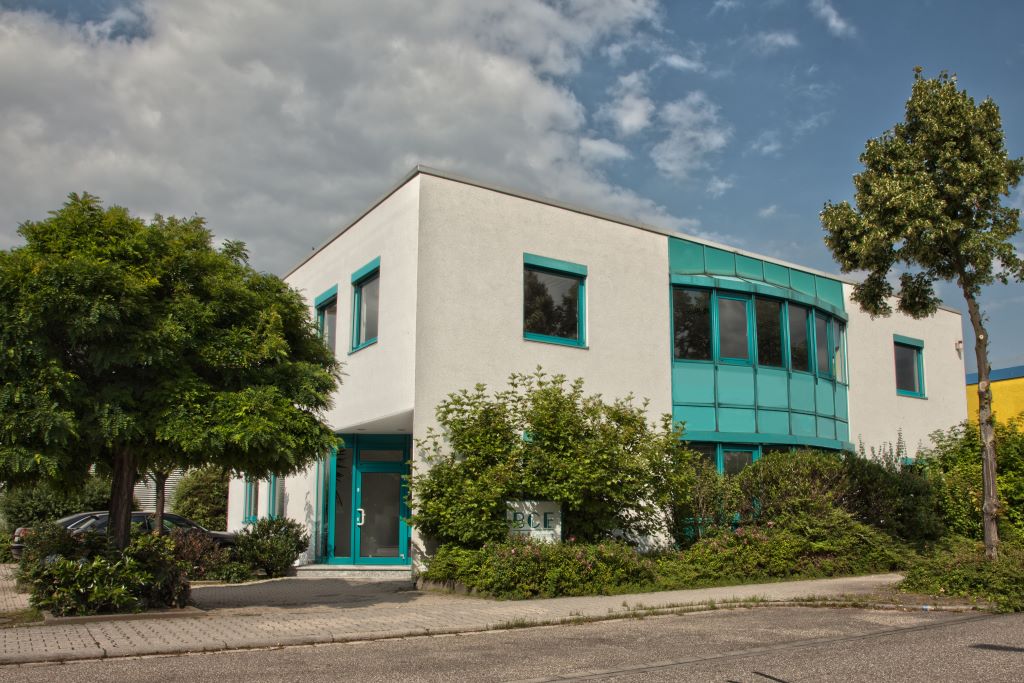
BCE Special Ceramics GmbH is based in Mannheim and specializes in the production of technical ceramics. Only custom-made, mostly very complex components made from high-performance ceramics are manufactured – even in small quantities. The company was founded in 1986 by Hermann Bertsch, so it has been successfully active in the market for almost four decades and has developed into a solid medium-sized company with around 30 employees today. BCE has modern manufacturing and measurement technologies and has been certified according to the currently applicable standard DIN ISO 9001:2015 since 2001.
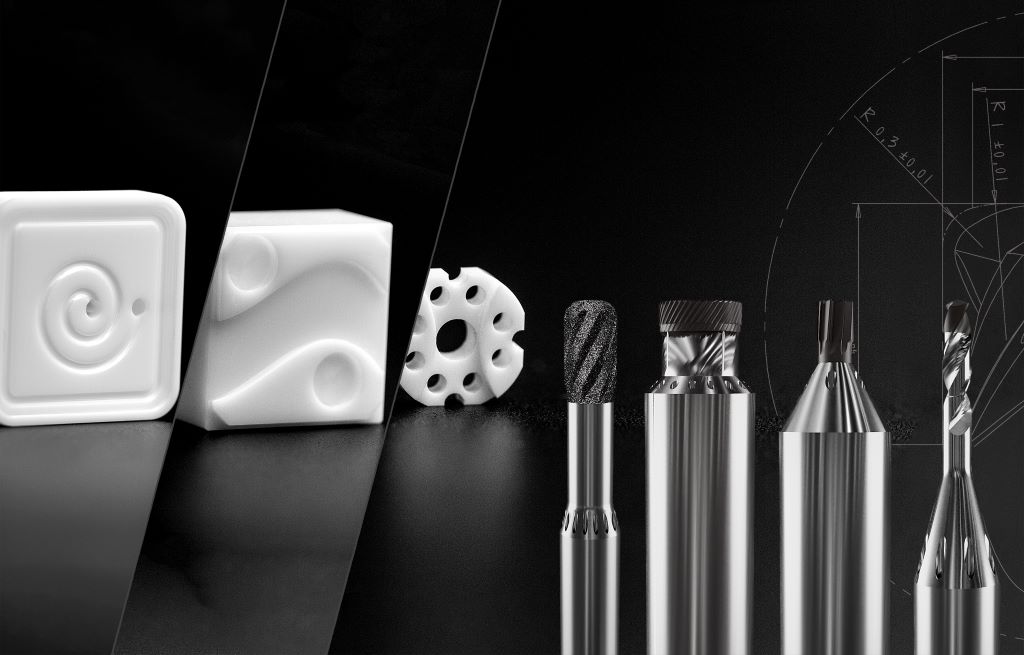
Both oxide ceramics aluminum oxide (Al2O3) and zirconium oxide (ZrO2), as well as their mixed oxides ATZ (Alumina Toughened Zirconia) and ZTA (Zirconia Toughened Alumina) are processed. The right material choice regarding the customer-specific application and manufacturing possibilities is an essential part of the consulting. "We do not blindly manufacture according to customer drawings, but we question what the part should and must be able to do at the customer's site, and above all, what conditions prevail there. In this regard, the geometry from the inquiry is first checked and evaluated to see if it makes sense to manufacture the component in ceramic. If necessary, we revise the geometry with the customer and finally suggest the suitable ceramic. Because the material group 'ceramics' is just as diverse as plastics or metals. We at BCE alone can choose from about 20 types or qualities of ceramics," explains Torsten Prescher, application technician at BCE Special Ceramics GmbH. In addition, the company has established full ceramic expertise at the management level with a total of three graduated materials scientists, all from the fields of ceramics or metallurgy, for over 10 years.
MARLIN 3D Laser Series – Processing ultra-hard materials
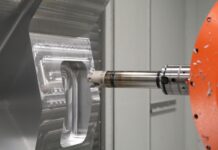
Specifically for demanding applications in the processing of sintered ceramics and hard metals, ZECHA Hartmetall-Werkzeugfabrikation GmbH has developed the MARLIN 3D. Thanks to state-of-the-art laser technology, highly hard cutting materials such as PKD and CVD are equipped with previously unattainable tool geometries. By using lasers, these geometries can be designed even more delicately, precisely, and complexly. By precisely tuning the geometry, higher efficiency is achieved, which is reflected in excellent edge formation, accurate dimensions and shapes, and outstanding surface quality of the component. For example, torus mills with a diameter of 6 mm and 42 cutting edges can be implemented within the MARLIN 3D Laser Series and are just one example of the nearly endless possibilities that arise from laser technology.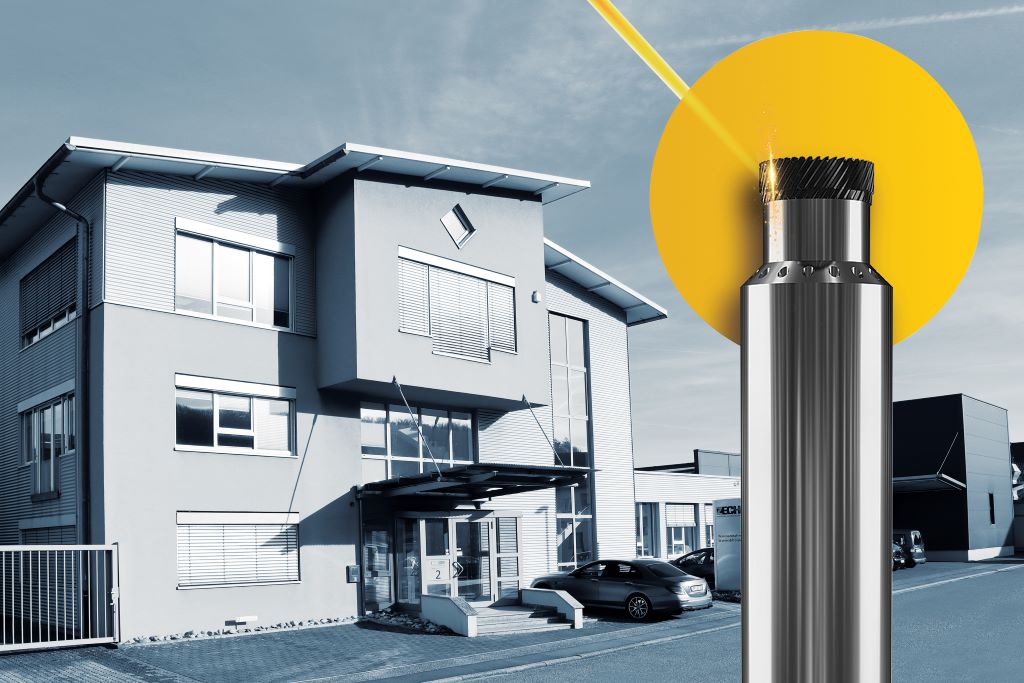
"With our MARLIN 3D mills, certain advantages also arise for the ceramics industry: Processing is no longer limited to grinding. Rather, we can now achieve mirror-like surfaces or delicate contours in the micrometer range through milling processing," says Stephen Rapp. Particularly interesting in such a project is that one sees the tools in the specific application case and thus enables things that bring significant advantages to the customer – such as longer service lives but possibly also reduced cycle times through faster cooling of the injection mold.
"What I have seen so far from the MARLIN 3D milling machines is impressive and takes ceramic processing to a new level. Since the majority of ceramic types are non-conductive and therefore cannot be processed by sink erosion, milling in the sintered state is an enormous advancement and opens up new markets such as applications in mold making. We do need to completely rethink, moving from grinding with diamond-coated discs to milling technology with defined cutting edges, and especially regarding cutting parameters, we still need to delve into that – but I have great hopes for the performance of ZECHA's MARLIN 3D tools," says Torsten Prescher. Jörg Carle also sees the use of ZECHA tools as a great advantage: "When we process with the highest surface quality at μm precision on the milling machine, we can already save a considerable amount of time and ultimately money during the production of the mold inserts!"
Exploit more potential in mold making
The three project partners are convinced: Mold making offers significantly more potential than the sole use of steels would suggest. By strategically using ceramic elements, tool life and process reliability can be elevated to a new level, leading to a clear knowledge advantage and increased efficiency. "We are excited about the development of this project and are sure that it will show us a new way to bring modern mold making to the next evolutionary stage," the partners declare in unison. They hope to successfully complete the project by early 2025 and then provide detailed reports on the details and progress. "As soon as we have completed the project, we will of course share our results with the public – because we are more than a little proud of our idea and its implementation," Stephen Rapp gives an enthusiastic outlook.
Contact: