
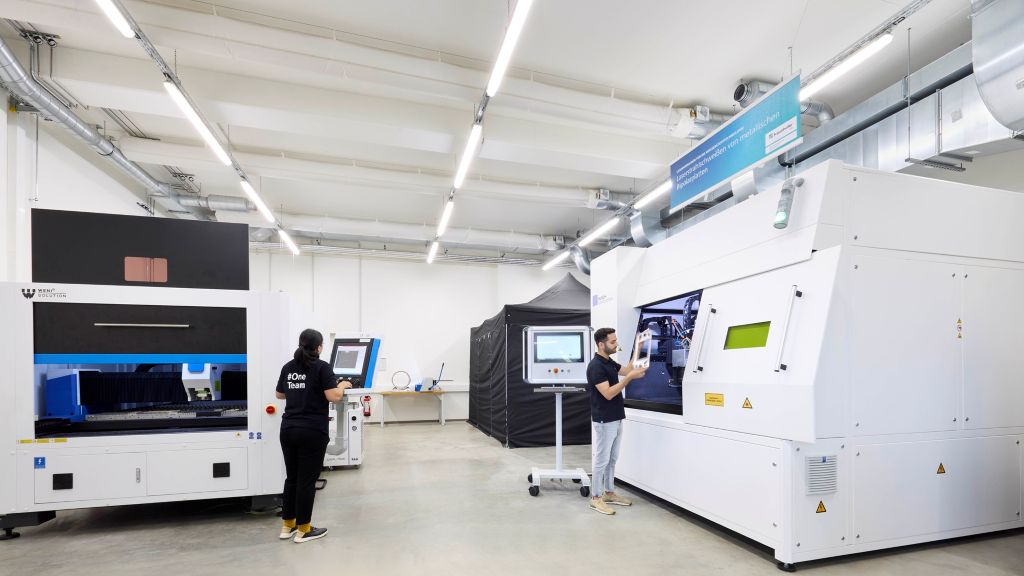
In the hydrogen lab of Fraunhofer ILT, researchers present the entire process chain – from simulation to testing to the manufacturing of components and systems for hydrogen technology.
The global industrial demand for sustainably produced hydrogen is steadily increasing. However, there is currently a lack of sufficient electrolyzers to efficiently convert green electricity into hydrogen. Only with scalable, powerful electrolyzer technology can we fully exploit the potential of renewable energies.
In October 2025, the research project 'AI-supported welding and cutting of mesh structures for the efficient production of electrolyzers' (KISSSEs) started. The goal of the joint project is to develop a technology that enables a more cost-effective manufacturing of electrolyzers. Instead of expensive, noble metal-coated meshes, researchers from Fraunhofer ILT and two regional partners aim to use laser-welded meshes with as high electrical conductivity as possible.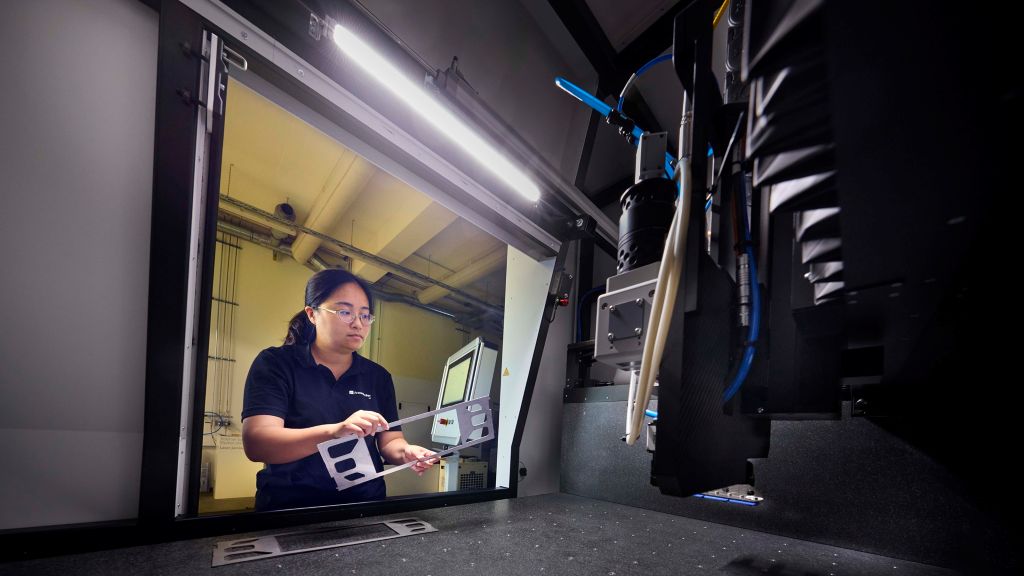
Researchers at Fraunhofer ILT identify optimal points for laser welding in complex meshes using artificial intelligence (AI), thereby improving conductivity. The precise welding of these points with the laser significantly reduces the electrical contact resistances in titanium mesh structures and replaces expensive noble metal coatings. AI-supported laser cutting processes also optimize edges that further increase the efficiency of the electrolyzers.
'Our AI models can identify optimal welding points even in irregular mesh geometries, enabling reproducible contacts with lower resistance,' explains Zhiheng Ye, hydrogen expert at Fraunhofer ILT. 'This lays the foundation for scalable and resource-efficient electrolyzer production.'
PEM electrolysis
The technology addressed in the project uses a proton exchange membrane (PEM) for electrolysis. In this process, the proton-conducting membrane electrochemically separates water into hydrogen and oxygen. It serves as both an electrolyte and a gas barrier, thus enabling a compact, dynamically controllable operation.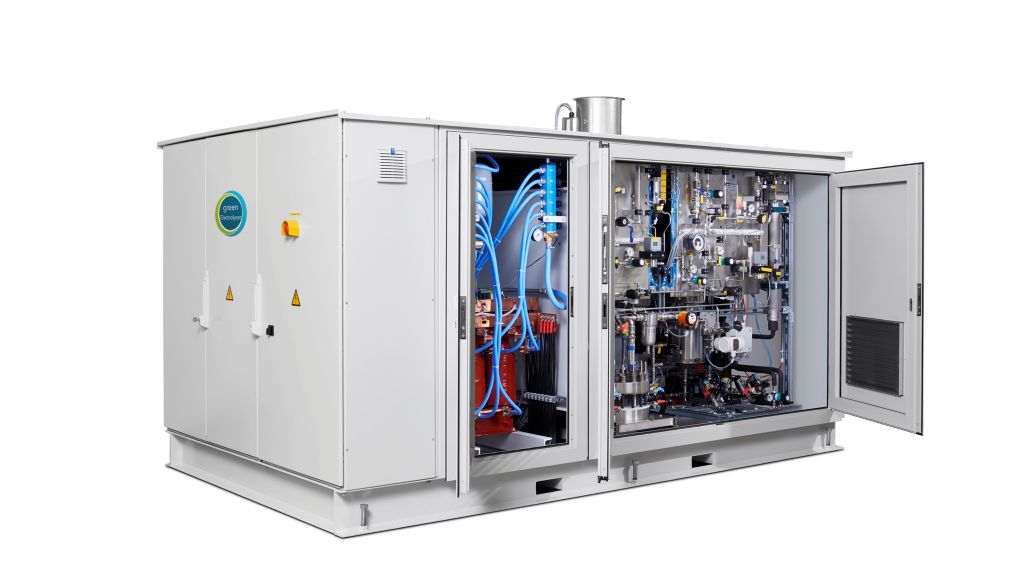
Proton exchange membrane systems are characterized by high power density, short response times, and excellent partial load capability, which particularly facilitates their use in combination with fluctuating renewable energy sources. PEM stacks from project partner iGas energy produce up to 260 standard cubic meters of hydrogen per hour. This corresponds to the volume of a large hot air balloon. The stack's connectivity ensures scalability of power.
Regional value creation
In the project, Fraunhofer ILT collaborates with iGas energy. The engineering and hydrogen company has developed a PEM-based modular high-pressure electrolysis plant with the Green Electrolyzer, as well as a scalable PEM stack platform named ELZA.
On the other hand, dLS LichtSchneiderei is involved, a precision manufacturing spin-off of Fraunhofer ILT with a strong focus on laser and machining technology for bipolar plates in fuel cell and hydrogen technology.
Fraunhofer ILT is responsible for the development and optimization of laser-based welding and cutting processes as well as the AI models for structure recognition in KISSSEs. iGas energy provides the electrochemical system expertise, develops flow and cell models, and validates the components in electrolysis operation. dLS LichtSchneiderei transfers the cutting parameters into industrial production, manufactures prototype parts, and supports the transfer to production facilities.
'Hydrogen is an important component of various sectors in Germany and is to be produced -green- in the future. PEM electrolysis represents a key technology here,' emphasizes Karl-Heinz Lentz, managing director of iGas energy. 'The establishment of this process and the associated value chain can make a significant contribution to the successful structural change in the Rhineland region.'
This close regional cooperation in the Rhineland strengthens the technological basis of a competitive hydrogen economy and sets standards for innovative, locally anchored value creation networks in the energy sector.
KISSSEs is funded as part of the DigiRess program by the state of North Rhine-Westphalia and the Federal Ministry for the Environment, Nature Conservation and Nuclear Safety.
Contact: