
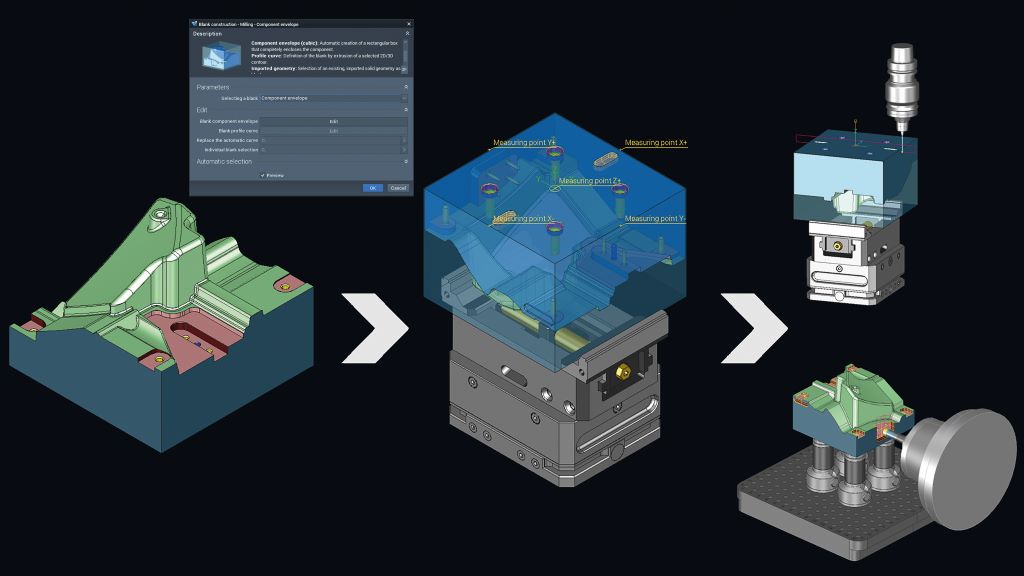
This autumn, Tebis will launch the next powerful release with numerous innovations and extensions. The focus is on the revolutionary Tebis SmartOps technology, which allows for extensive automation of CAD/CAM processes: Several tasks that users must master in design and production planning are significantly accelerated and simplified, making them reproducible at any time.
A lot has also changed in the Tebis milling functions. For example, machine movements can now be controlled even more efficiently – resulting in shorter machine run times and higher tool life.
Various functions from design and surface reworking are now even better automatable.
Tebis SmartOps technology
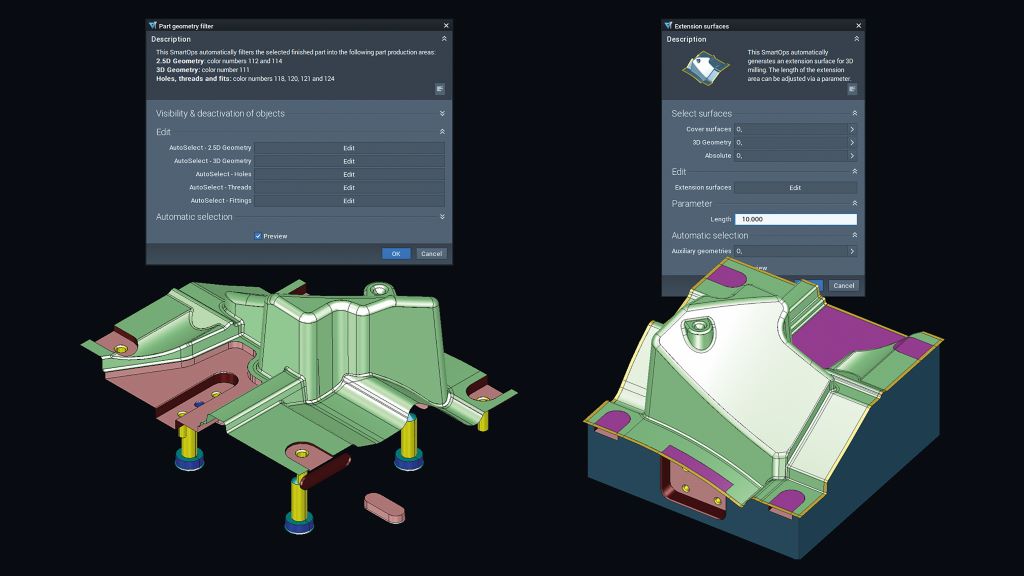
Tebis SmartOps are intelligent linked CAD/CAM operations that can be executed automatically based on templates.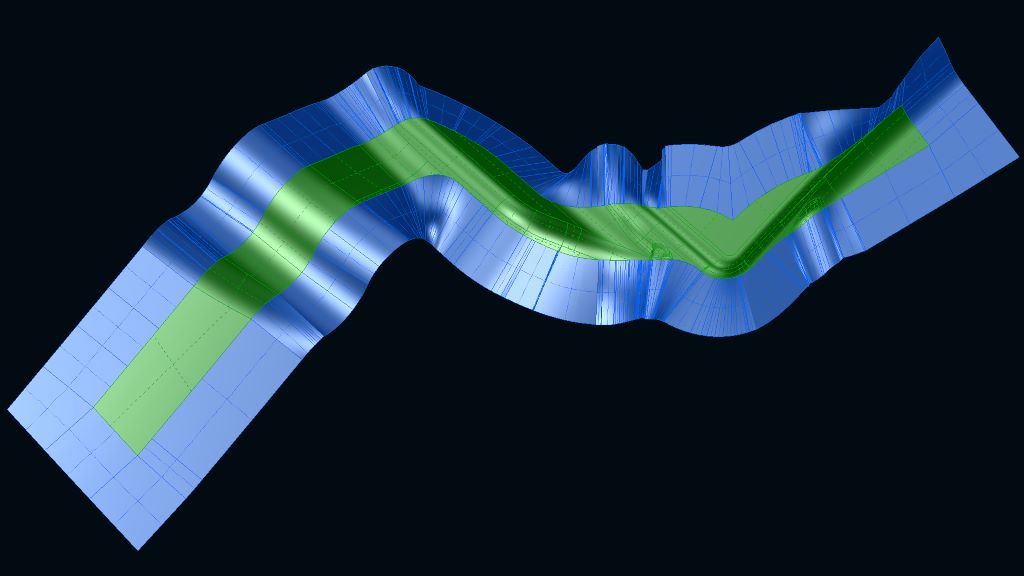
Concrete examples of fully automatable CAD/CAM processes are tasks that are repeated for every workpiece – whether simple or complex: Read part, measure raw part, position clamping tools, define material and machine, assign features if necessary and set measurement points, select processing strategy, generate tool paths, check processing, output NC data.
Overall, the complete Tebis functional toolkit is usable for SmartOps technology. This allows CAD/CAM processes to be individually and purposefully automated and standardized. The SmartOps fit precisely to the specific range of tasks, and the entire know-how of the manufacturing company is stored in suitable libraries.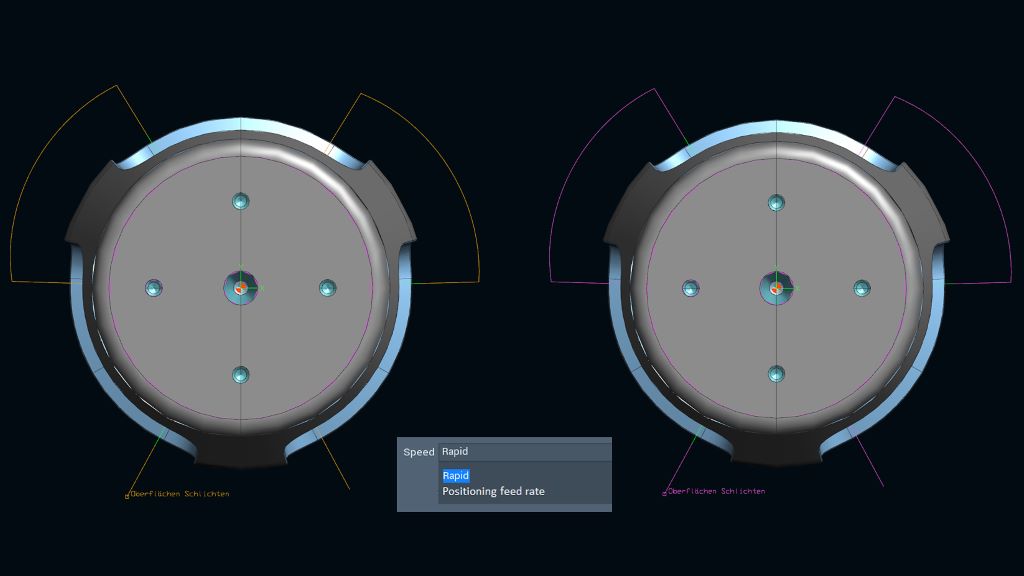
The new technology has already been implemented by several project partners. Torsten Fiedler, Product Manager Automation, says: 'Our pilot customers particularly emphasize that Tebis SmartOps can be created entirely within the familiar CAD/CAM environment without requiring special scripting or programming knowledge – this clearly distinguishes Tebis SmartOps technology from our competitors' products.
Our pilot users are also enthusiastic about the ability to flexibly adjust the CAD/CAM process flow at any time: The user is guided through the individual process steps wizard-based and can intervene specifically if needed. Thanks to parametrization, the entire process can be quickly and easily updated.'
3D design-Quickly and easily tangentially extend surfaces
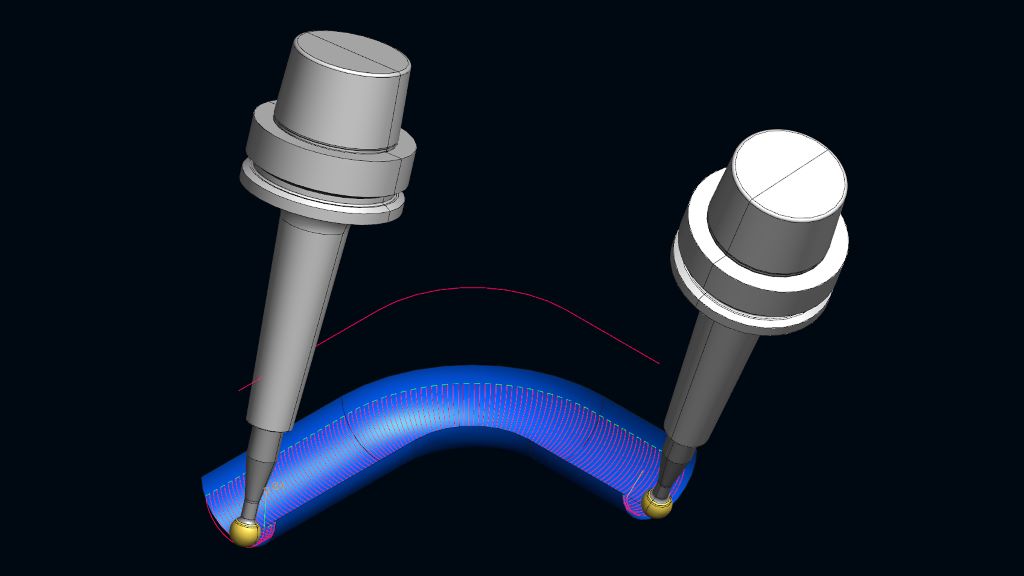
Often, freeform surfaces need to be tangentially extended, for example, for optimal milling results when it comes to avoiding residual material at the edges or protecting cutting edges. In Tebis, this can now be done quickly and automatically. Again, it shows how manufacturing-oriented Tebis's parametrization solution is: The CAD/CAM user can interactively adjust the result and update it comprehensively with a mouse click.
Milling
- Simplified CAM programming for 5-axis simultaneous milling
The programming of tool paths for 5-axis simultaneous machining has been significantly simplified: A curve can now be selected, to which the tool orientation is calculated vertically. Additionally, an angle can be defined to further improve cutting conditions.
Moreover, the retraction movements of the machine for all functions in 5-axis simultaneous milling can now be specifically controlled from Tebis: Retracts can be executed in rapid feed or in feed – thus, the retraction movements are optimally matched to the machine type and control.
-
Optimized feed movements during roughing. Image: Tebis AG 20 percent faster roughing
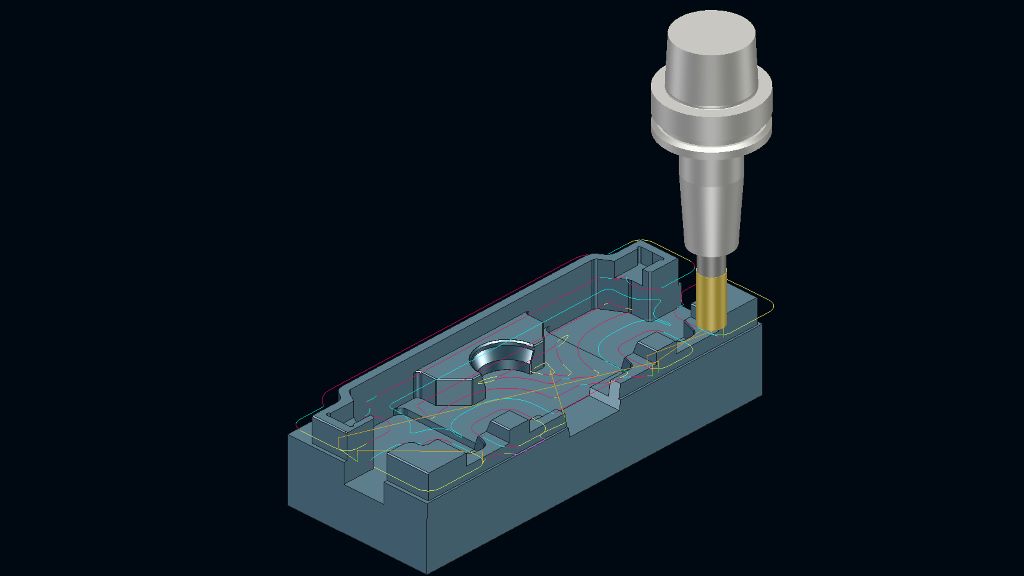
The options for rough machining have been further improved: With optimized feed movements, high-feed milling cutters, which can achieve very high material removal rates especially with large components, can now be used even more efficiently and tool-friendly.
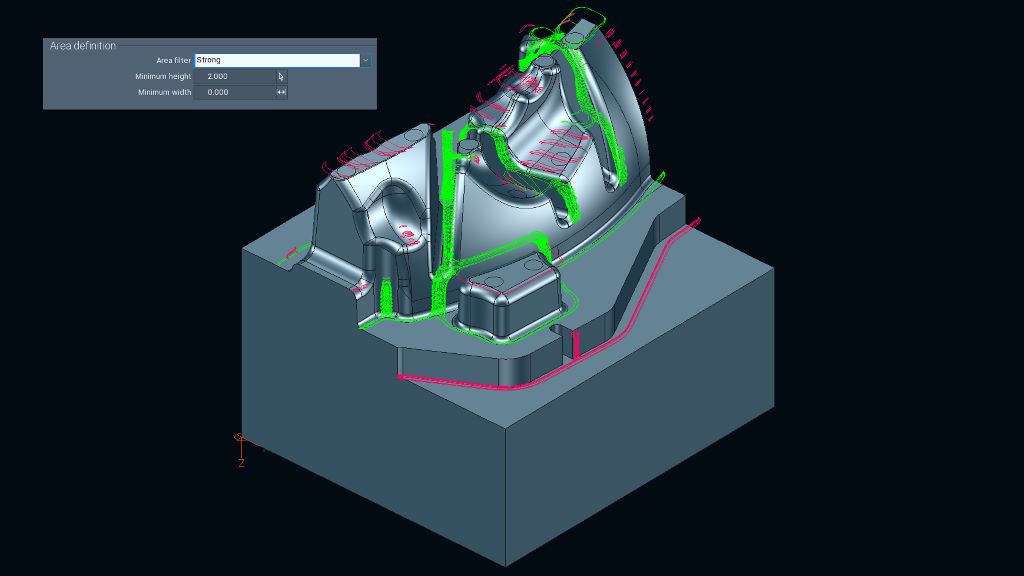
New possibilities in combined roughing operations also ensure higher tool life and up to 20 percent faster machining on the machine: When certain areas are excluded from processing during roughing with area reduction, subsequent processing can be influenced even more specifically through additional filtering options.
- Optimized connection paths for 3-axis machining centers
With Tebis, even machine controls can be fully controlled where linear axes are not synchronized in rapid feed. In the event of possible collisions, the connection path is automatically generated at a safe height. This allows the potential of older 3-axis machining centers to be fully utilized: The machine positions itself as quickly as possible.
CAD/CAM automation
- Use freeform features even more automated
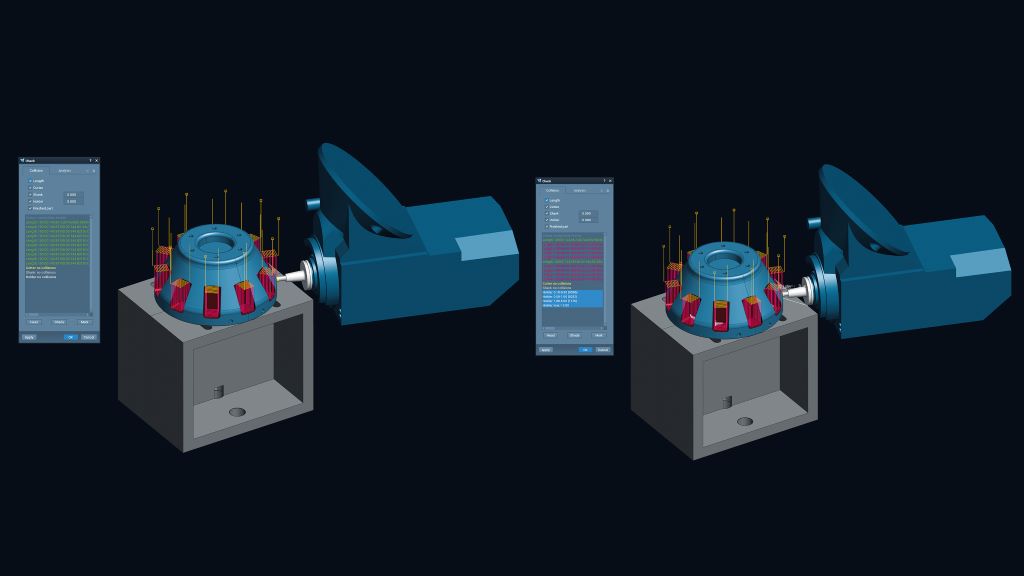
Tebis customers now also benefit from even more automation in the processing of freeform features. Analogous to the processing of standard features, it can now be specified whether the tool should be automatically exchanged for a longer tool in the event of possible collisions during tool search. Alternatively, the user controls the collision inspection manually as before.
Additionally, freeform features can now be prepared even more easily for automated CAM programming: They can be interactively separated, connected, or broken apart.
Contact: