
In the fields of robotics and connected analytics, industrial automation has made rapid progress. However, there remains a blind spot in machining. Although companies have automated monitoring, connected machines, and installed dashboards, the moment the tool makes contact with the workpiece often still depends on the operator's intuition or post-processing checks. The following explains why sensory tools are the next step in automation.
Expectations for smart manufacturing are high. According to the Deloitte 2025 Smart Manufacturing and Operations Survey, 92 percent of surveyed companies believe that smart manufacturing will be the most important factor for competitiveness in the next three years. It positively impacts production performance, productivity, and capacity.
Simply deploying faster executing programs or installing robots around a machine is not enough if the machining process itself continues to rely on feel or overly conservative parameters. A prerequisite for true automation is real-time recognition of what is happening during the intervention and taking corrective actions before damage occurs and downtime escalates.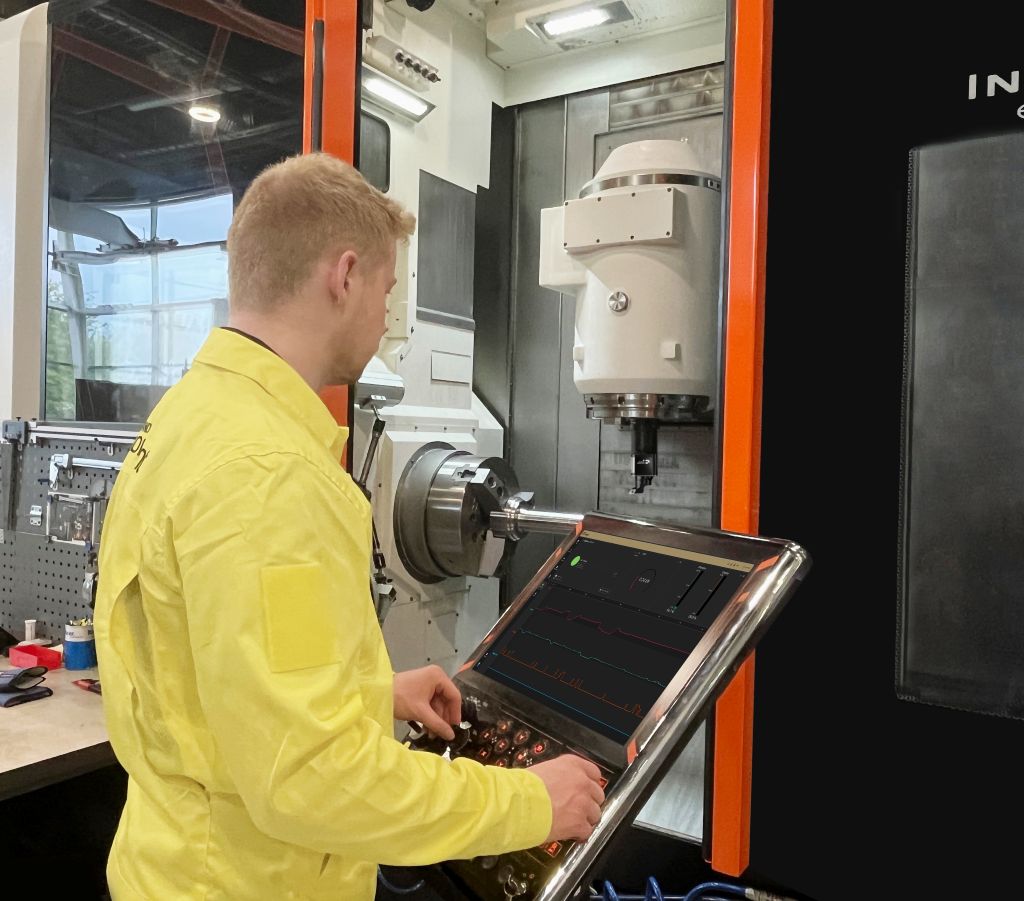
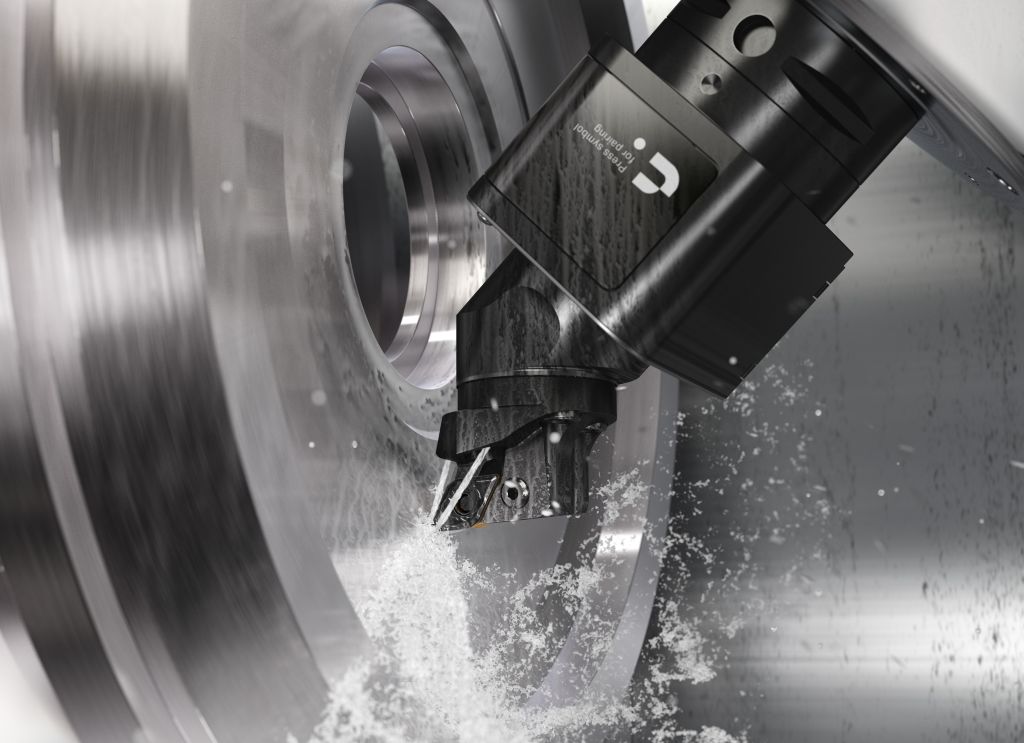
Sensorized tools are cutting tools, adapters, or holders that have built-in or attached sensors. These capture important signals during machining. In this way, the system can detect cutting forces and vibrations, recognize surface chatter at the tool tip, and transmit this information in real-time to an operator interface or the machine control. Anomalies can be detected, and appropriate corrective actions can be taken. This may mean a brief interruption in machining, an adjustment of parameters, or a tool change.
The crucial point, however, is that through reproducible interventions within the machining process – that is, workflows that consistently deliver the same reliable results when repeated – continuity is ensured across all work shifts.
Increased Productivity
Tools with sensors increase productivity by stabilizing the cut and reducing unplanned downtime. Once a process is truly safe, manufacturing companies can confidently extend unattended time windows. The focus thus shifts from high labor costs in manufacturing to sustainable time savings.
Another advantage of sensor-controlled tools is their longer tool life. Many manufacturing companies set conservative change intervals out of fear of unexpected failures. However, this results in the potential tool life not being fully utilized, leading to increased costs. Others exceed the recommended intervals, resulting in breakage and thus higher costs for scrap and recovery time.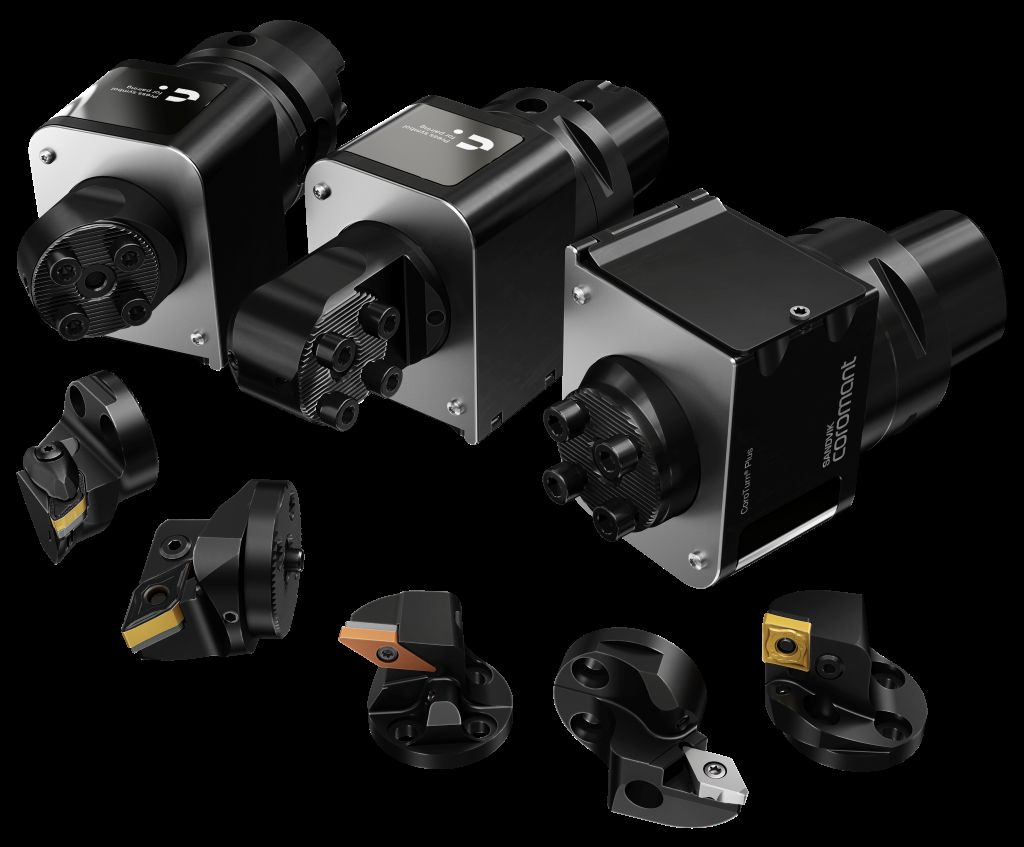
Using live signals from the process, evidence-based decisions are made. For example, a turning insert is replaced because the signal signature indicates that it has reached the end of its life – not because a counter has expired or because it is assumed. This approach leads to longer cutting times, fewer interruptions, and higher utilization across an entire machine fleet and production year, without the need to hire additional personnel.
Closing Knowledge Gaps
According to the World Manufacturing Foundation, 74 percent of companies struggle to recruit the necessary skilled workers. As this problem is expected to worsen in the future, manufacturing companies must offer internal training to further educate their workforce. In doing so, leaders in the manufacturing industry can make several mistakes if they do not use data as a learning tool.
If the feel for an optimal cutting process cannot be captured in systems, it can be lost when new employees join the company and experienced operators leave. Sensory tools help to transform years of experience into explicit, teachable data that new employees in manufacturing can rely on. By storing signal curves, thresholds, and event logs, a reference work is created that serves as a guide for parameter selection and facilitates troubleshooting across shifts and locations.
When knowledge is stored not only in a few heads but also in data and models, decisions become repeatable and verifiable. In this way, manufacturing managers receive traceable cutting data that supports audits and customer documentation. At the same time, engineers have a more solid foundation for continuous improvements, as the process history is a data record and not an anecdote. Most importantly, machine operators can now focus on process optimization rather than on noticing unusual noises, which is essential given the changing workforce.
Machine-Controlled Decisions
In many manufacturing companies, the areas of visualization and automation are often confused. While a diagram on a tablet is useful and undoubtedly provides unique insights, it still requires a human to recognize a problem and respond under pressure.
To achieve true automation, where the system automatically maintains process limits, sensory tools should be used. For example, if the chatter exceeds a defined range or cutting forces increase so significantly that a failure is expected, the control interrupts the process without hesitation, retracts the tool, changes the feed, or triggers a tool change. This way, the quality of the components, the tools, and the system can be immediately protected, and this happens before errors are detected.
Insights into the ongoing cutting process close the feedback loop and enable stable, repeatable cycles as well as unattended run times. In practice, this allows companies to reliably plan their unmanned manufacturing and produce around the clock. The control recognizes conditions outside the limits and automatically applies the configured protective measures instead of relying on a person to notice a trend only after the fact.
A Practical Approach
By bridging the gap between sensor and control, monitoring becomes an internal machine process that consistently protects the machining process. To cater to the different stages of development of manufacturing companies, the sensory tool solution CoroTurn Plus has been designed with two complementary functional levels.
CoroTurn Plus transmits live data to the CoroPlus Viewer on a PC or tablet, providing operators with passive real-time insights into surface chatter and cutting forces. In case of exceeding thresholds, acoustic alarms can also be received. Additionally, they can see trends compared to reference processes, receive alerts for threshold breaches, verify values and deviations, and mark events to accelerate root cause analysis. Over time, the collected signals indicate when a cutting insert has reached the end of its lifespan. This way, employees can replace them at the right time, avoiding both premature changes and severe machine failures.
The next level is machine-integrated protection, where CoroTurn Plus and CoroPlus Connected are combined. In this mode, the same signals are forwarded to the machine's NC control. Through the software or NC code, users set thresholds for chatter, tool load, and vibrations. If an unexpected event occurs, the control automatically initiates protective measures. These include stopping after a blockage, optional pauses, and overriding feed and cutting speed. All this enables improved, machine-driven decision-making and true automation.
Conclusion
In intelligent manufacturing, what happens at the tool tip is crucial. While cloud connections and dashboards improve visibility, a “blind” tool means that tool intervention remains the weak point of the process. Sensory tools create the necessary transparency and allow for direct intervention at the root cause. This transforms tool intervention into a controllable and verifiable process that enables unmanned machining with predictable results.
Contact: