
Artificial intelligence has established itself in many industrial sectors. Members of the Association of German Turned Parts Industry are also increasingly addressing how data-driven methods can support manufacturing processes.
In the production of turned parts, artificial intelligence (AI) meets established structures, tight tolerances, and a high degree of experience. Its potential lies in making processes more stable, transparent, and efficient by evaluating data and recognizing patterns. This allows for the mapping of machining processes, quality characteristics, or relationships between parameters in machining.
In the Association of German Turned Parts Industry, manufacturers of turned parts, machine builders, and software providers are also discussing concrete applications, prerequisites, and limitations. 'In all these discussions, we keep coming to the same conclusion,' emphasizes association managing director Werner Liebmann: 'For artificial intelligence to realize its benefits, those responsible must first define clear goals, describe their processes accurately, and, above all, have access to reliable data.'
Measurable Benefits of AI are the Focus
Some association members are already using artificial intelligence productively, while others are consciously approaching the topic step by step. There is consensus that AI is not an end in itself. It should not digitize existing processes for the sake of it, but rather support where it brings measurable benefits. This primarily includes areas where large amounts of data are available, recurring decisions are made, or experiential knowledge is hard to access. At the same time, it becomes clear that the path to AI remains challenging. The effort for data structuring, system adaptation, and training is high. Standard solutions are rare, and many applications require individual modifications. Additionally, there are limited personnel resources and the necessity to clearly define data security and internal company rules.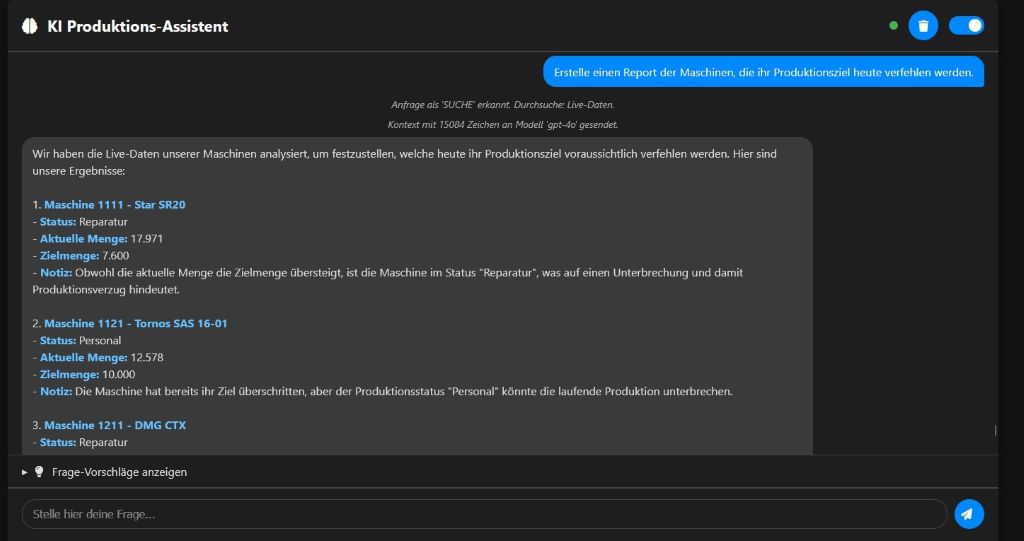
Many manufacturers of turned parts see the use of AI not as a replacement of personnel with machines, but as a shift in tasks. Routine activities can be automated, while employees can engage more in complex tasks. It is important that decisions remain traceable and responsibility lies with humans. Acceptance arises where those responsible involve the workforce early and communicate the benefits for everyday work.
From the perspective of software providers, AI is less a radical break than an evolution of existing digital systems. Structured production, quality, and process data form the basis. AI accelerates their evaluation and helps to make connections visible. However, the actual learning process takes place in the operation: Companies must adapt their existing solutions to real processes and further develop them with the application.
One thing is certain: As AI usage increases, technical complexity rises. Dependencies on stable systems increase, and intervention possibilities change.
Expertise, experience, and human judgment still retain their value. Artificial intelligence complements these competencies but does not replace them.
From Calculation to Production

In practical implementation, many manufacturers of turned parts initially focus on clearly defined application areas. Often, the direct machining processes are not the focus, but rather complementary activities with a high data component and recurring processes. At Julius Klinke GmbH & Co. KG, for example, initial AI approaches are being used in technical calculations, machine occupancy planning, and administrative tasks. The goal of managing director Julius Klinke is to achieve reliable results faster and prepare decision-making processes. He emphasizes the supportive role of technology: 'The final decision must remain with humans. AI should provide us with informed guidance, not directives.'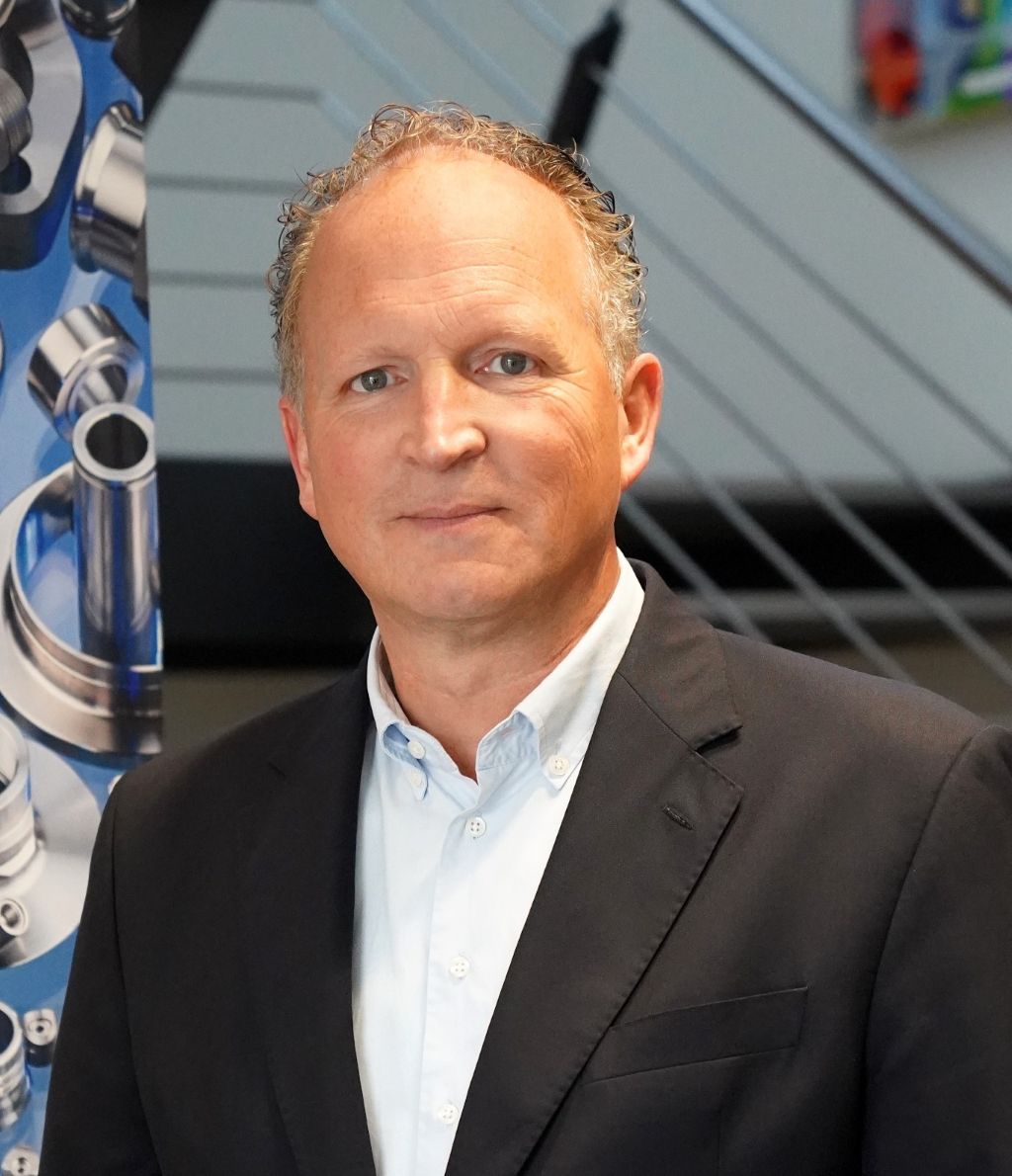
EZU-Metallwaren GmbH & Co. KG is a step further – there, artificial intelligence is already in use in production. The focus is on machine learning and virtual quality control. AI-based systems monitor processes, stabilize series production, and reduce scrap. Managing director Andreas Zumkeller describes the benefits as clearly measurable: 'We have fewer defective parts with higher machine runtimes and lower costs for tools and personnel.' At the same time, he points out that the path to this point was characterized by learning phases and that clear goal definitions determine success.
At Wilhelm Schauerte GmbH & Co. KG, the focus has so far been less on direct manufacturing. Stefan Schauerte describes concrete effects:
'In post-calculation, for example, the process is now fully automated.' AI also supports his employees in test planning, reconciling factory test specimens, and checking incoming invoices. The goal of the managing director is, in the first step, to reduce routine activities and thus free up capacities for more demanding tasks.
From Knowledge Management to Quality Assurance

So far, Maier GmbH & Co. KG has only used artificial intelligence sporadically. Initial applications concern the setup of systems and systematic troubleshooting. Managing director Thomas Braun primarily associates this with expectations for knowledge management. 'I hope that we can archive the right information better and find it faster when problems arise in processes,' he says. At the same time, Braun points out the limitations of current solutions. Many applications need to be individually adapted, which ties up time and resources. However, Braun sees no alternative in the long term: 'Automation and AI are central prerequisites for maintaining industrial manufacturing in Germany.'
Gewatec GmbH & Co. KG also sees application fields along the entire value chain through AI. The software provider is working on AI-based evaluations in areas such as production planning, operational data collection, and quality assurance. Sales manager Peter Bauer sees the added value primarily in linking existing data: 'AI opens up new possibilities to evaluate key figures more quickly and derive action recommendations.' However, the crucial learning process takes place in the operation. Systems must be adapted to real processes and evolve with each application.
Important building block for competitiveness
Artificial intelligence will not only change manufacturing but also the framework conditions of industrial value creation. Digital models of workpieces and production processes are gaining importance and can be utilized along the supply chain. For the turned parts industry, the question is less about whether to adopt it and more about when and how to implement it effectively. At the same time, practice shows that AI is not a short-term efficiency tool. The effort for data structuring, adaptation, and training remains high, especially for small and medium-sized enterprises. Lack of standards and limited resources hinder implementation but simultaneously increase the pressure to act.
Werner Liebmann, managing director of the Association of the German Turned Parts Industry, summarizes: 'Artificial intelligence is not an end in itself.'
However, it can be an important building block for economically operating industrial manufacturing in Germany. Prerequisites are realistic goals, qualified employees, and innovation-friendly framework conditions.
Contact: