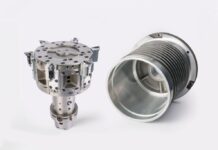

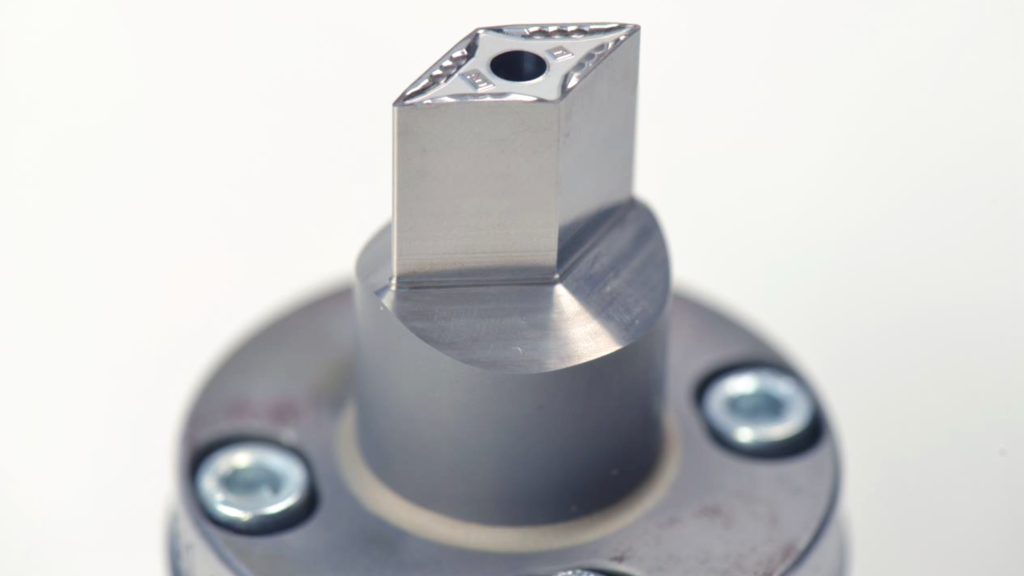
Tools made of hard materials and ceramics like tungsten carbide are particularly wear-resistant. However, the tools used for their production wear out much faster - unless the tool is light. Researchers at Fraunhofer ILT have now developed a process chain in which the shaping and polishing of hard material components can be implemented with a femtosecond (UKP) laser without changing the setup.
Drills, milling heads, rollers, or even punch inserts made of ceramic hard materials not only bite but also last significantly longer. However, as positive as their wear resistance is for service life in production, it is problematic in the manufacturing of these tools. The tools used for their shaping and surface treatment wear out their teeth on the mixed carbide hard metals, cermets, and ceramics used here. Accordingly, wear is high when manufacturers rely on mechanical processing methods.
Femtosecond laser works where mechanical processes reach their limits
This is different with ultrashort laser pulses. Even commercially available femtosecond lasers with 20 to 40 watts of power can efficiently remove the hard materials used in toolmaking. Where their few picoseconds short, high-energy pulses hit the surfaces, the material evaporates. Since this occurs at frequencies in the MHz range, laser material removal achieves area rates of up to 100 cm² per minute. However, with this shaping evaporation of the materials, the potential of femtosecond processing is not exhausted.
Researchers at the Fraunhofer Institute for Laser Technology ILT in Aachen have developed a process chain in which the same femtosecond laser implements both the shaping material removal and the subsequent polishing of the tool surfaces. 'The femtosecond laser is a universal tool with which we can realize different processing steps, partly in the same setup,' says Sönke Vogel, team leader of 3D structure removal at Fraunhofer ILT, who has advanced the process together with Astrid Saßmannshausen, team leader for structuring transparent materials.
The key to linking the process steps lies in the parameterization of the laser: while the material removal occurs with high pulse energy and low repetition rate, it is the opposite for polishing. The femtosecond laser introduces energy into the surface of the workpiece with a pulse frequency of up to 50 MHz, which accumulates there and melts the top 0.2 - 2 micrometers. The material does not evaporate; instead, it forms a melt film that smooths itself out due to surface tension and solidifies upon cooling. The surface properties are also controllable through the process management. 'With femtosecond laser polishing, for example, it is possible to smooth micro-unevenness while maintaining macroscopic structures,' explains Saßmannshausen. Additionally, the laser process can polish complex 3D surfaces with micrometer precision. Selective polishing of selected areas is also possible to specifically adjust surface properties locally or to polish only the necessary areas, which in turn saves time. Femtosecond polishing thus complements laser macro and micro polishing with an even more precise and locally applicable approach to surface polishing.
Efficient process for industrial hard material processing
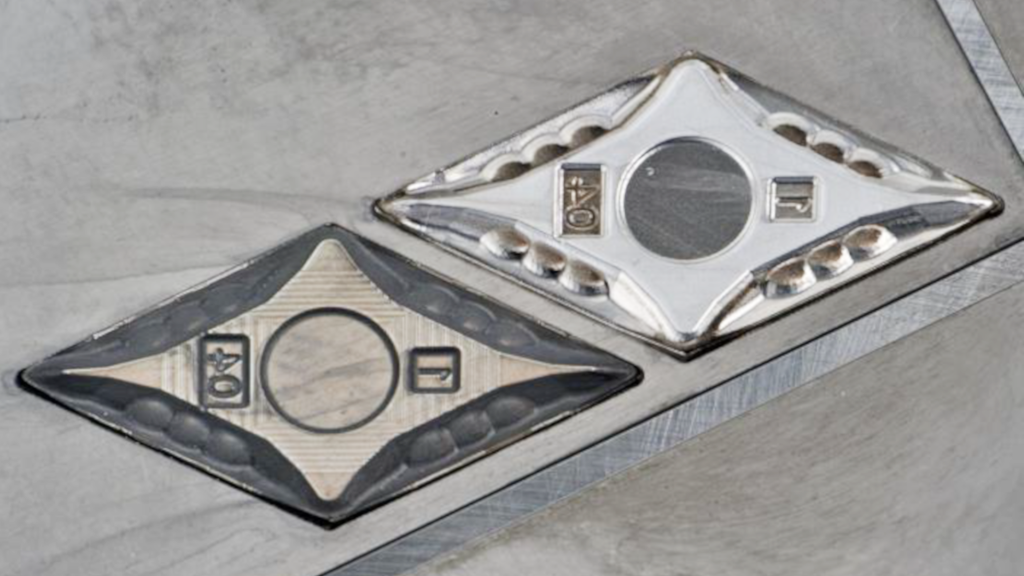
Depending on process requirements, laser polishing achieves surface rates of ten to 100 cm² per minute, keeping pace with the area rates of the preceding material removal. 'The combination of both processes with one laser in the same setup allows companies to expand their offerings with already existing femtosecond lasers or significantly accelerate the amortization after a new purchase,' explains Saßmannshausen.
Above all, it is suitable for replacing mechanical processes in the processing of hard materials, thus ending the sometimes immense tool wear in their production. This contributes not only to cost reduction but also specifically to greater resource and energy efficiency. According to Saßmannshausen and Vogel, the potential of the process combination is by no means exhausted. With faster polygon scanners, higher laser powers, and larger laser spots, it is possible to significantly increase the area rates. Interested industrial partners are invited to tackle the optimization steps together with the research team at Fraunhofer ILT.
Contact: