
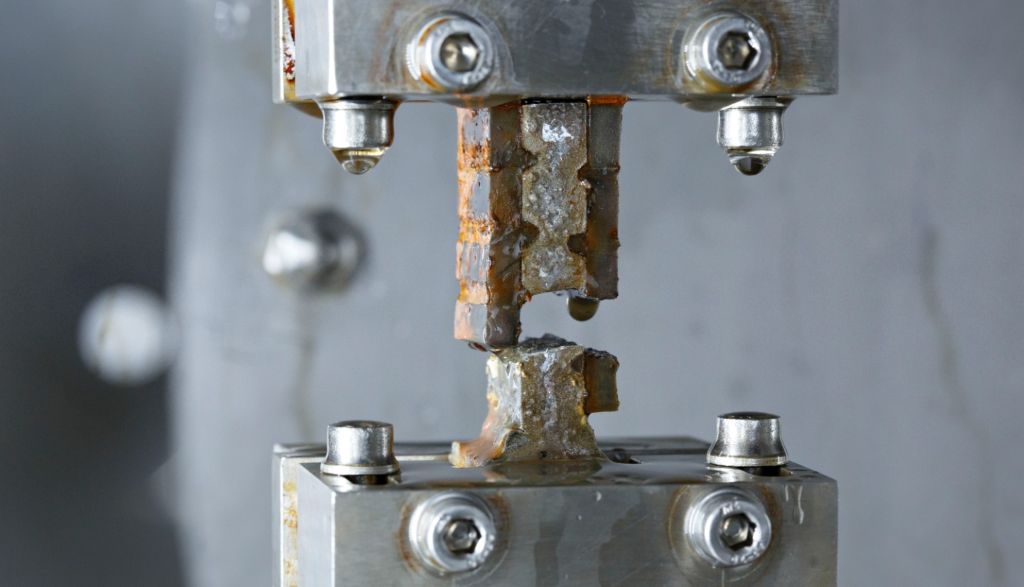
In the research project 'FOLAMI', the Fraunhofer LBF focused on evaluating the mixed joint of steel and aluminum produced by form-fit laser beam welding for operationally stable semi-finished products in shipbuilding. Accompanying the welding process development, numerical and experimental investigations were conducted to initially secure the operational strength at the sample level and subsequently for specifically optimized adapters as connecting elements between steel and aluminum construction elements.
Laser beam welding as an alternative for steel-aluminum connections in yacht construction
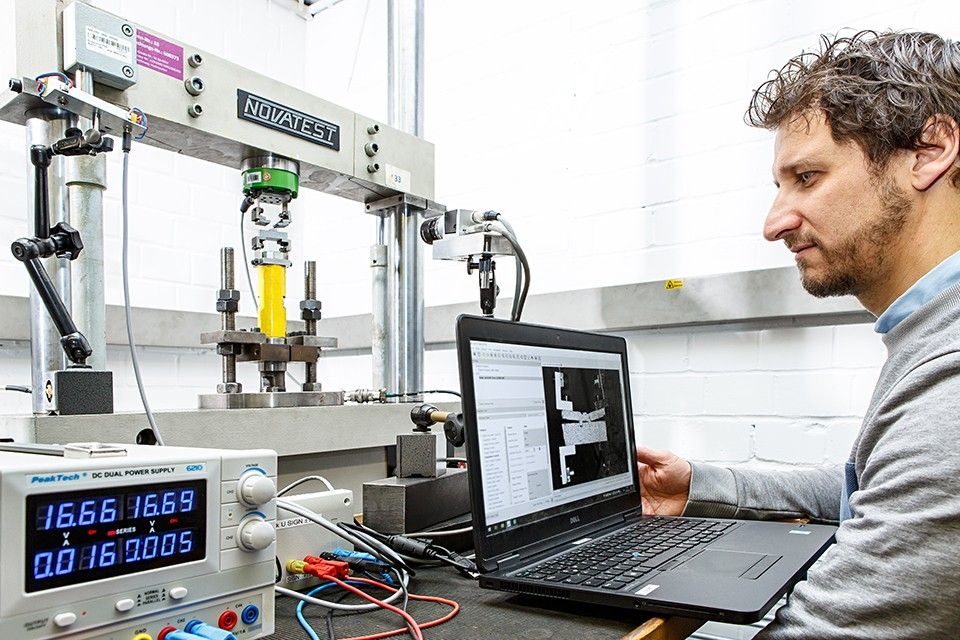
In shipbuilding, especially in yacht construction, multimaterial connections are already widely used when the lightweight material aluminum is combined with conventionally processed steel materials. This steel-aluminum mixed connection is currently realized in the form of so-called explosively welded adapters, also known as explosive cladding. Alternatives to this manufacturing process are motivated by increased costs or constructive and functional limitations. Laser beam welding can serve as a novel welding process leading to an alternative manufacturing process.
Optimization and evaluation with simulation and peak stress method
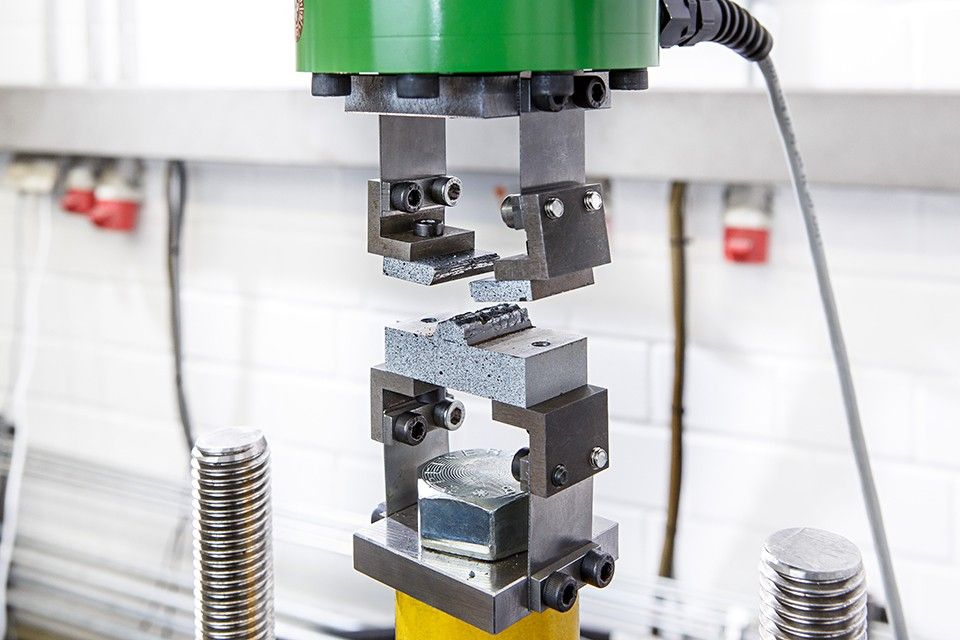
In the development of the welding process, the Fraunhofer LBF initially supported the optimization of the weld seam geometries and consequently the welding process parameters through numerical load simulations. The focus of the research work was on developing a methodology for evaluating the steel-aluminum laser welded joints and its implementation in a welded adapter.
For this purpose, a local evaluation method, the so-called peak stress method, was transferred to the application case of the steel-aluminum mixed connection using digital image correlation for strain matching.
AI-based lifetime prediction of laser welds between aluminum and steel
The evaluation process developed by the scientists at LBF aims to correlate the resulting welding parameters, such as the bonding width or weld depth of the laser weld from EN AW-6082 T6 aluminum in S355 steel, with the fatigue strength derived from the peak stress method and experimentally verified. As an extension of the database compared to the experimental results, parameter variations of the weld seam geometries and finite element load simulations were conducted to derive peak stresses, which are used in a training and test dataset for lifetime prediction with a neural network.
Transferability to other joined metallic multimaterial connections
With the research results, not only is there an evaluation approach for this specific steel-aluminum mixed connection available, but it also offers the potential for transferability to other joined metallic multimaterial connections. Especially in this context, this evaluation method can be transferred beyond applications of welded connections in shipbuilding to cases in other industries.
Sponsors and partners
The collaborative project Form-fit laser beam welding of the mixed connection of steel and aluminum for operationally stable semi-finished products in shipbuilding (FOLAMI), sub-project evaluation of the mixed connection of steel and aluminum produced by form-fit laser beam welding for operationally stable semi-finished products in shipbuilding (funding code 03SX547C), of the Forschungszentrum Jülich GmbH (PtJ) was funded as part of the research program Maritime Technologies of the Next Generation by the Federal Ministry for Economic Affairs and Energy based on a resolution of the German Bundestag.
Contact: