
Repairing, refurbishing, remanufacturing, and recycling are core principles of the circular economy. To handle resources gently, as many raw materials and components as possible should be reused or repurposed in products. In practice, well-intentioned approaches often fail due to costs – when the recovery of these raw materials is associated with too much manual labor or is too complex due to the product's nature. The ZIRKEL consortium demonstrates a better way using the example of electric motors and high-voltage batteries in automobiles: with a product design that already considers later disassembly and with automated, highly efficient disassembly processes for recovering valuable raw materials.
Electric motors are central components of electromobility. Their interior consists largely of sought-after metals such as copper and aluminum and rare earths like neodymium. All materials whose recovery is becoming increasingly essential in light of growing resource scarcity and geopolitical dependencies. The project ZIRKEL, funded by the Federal Ministry of Research, Technology and Space, developed practical solutions for automated disassembly and demanding material recovery of highly integrated components from battery electric vehicles over the past three and a half years. While part of the consortium focused on high-voltage battery storage systems, Fraunhofer IWU concentrated on the electric motor and its material recycling.
Fraunhofer IWU: How can screw connections be loosened quickly and efficiently, even when the components are dirty or worn?
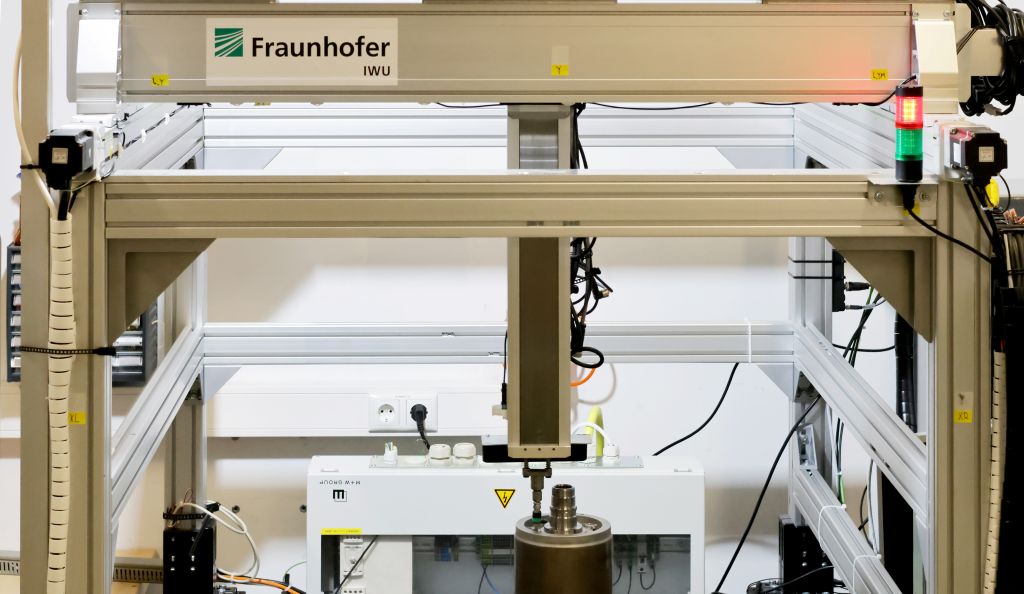
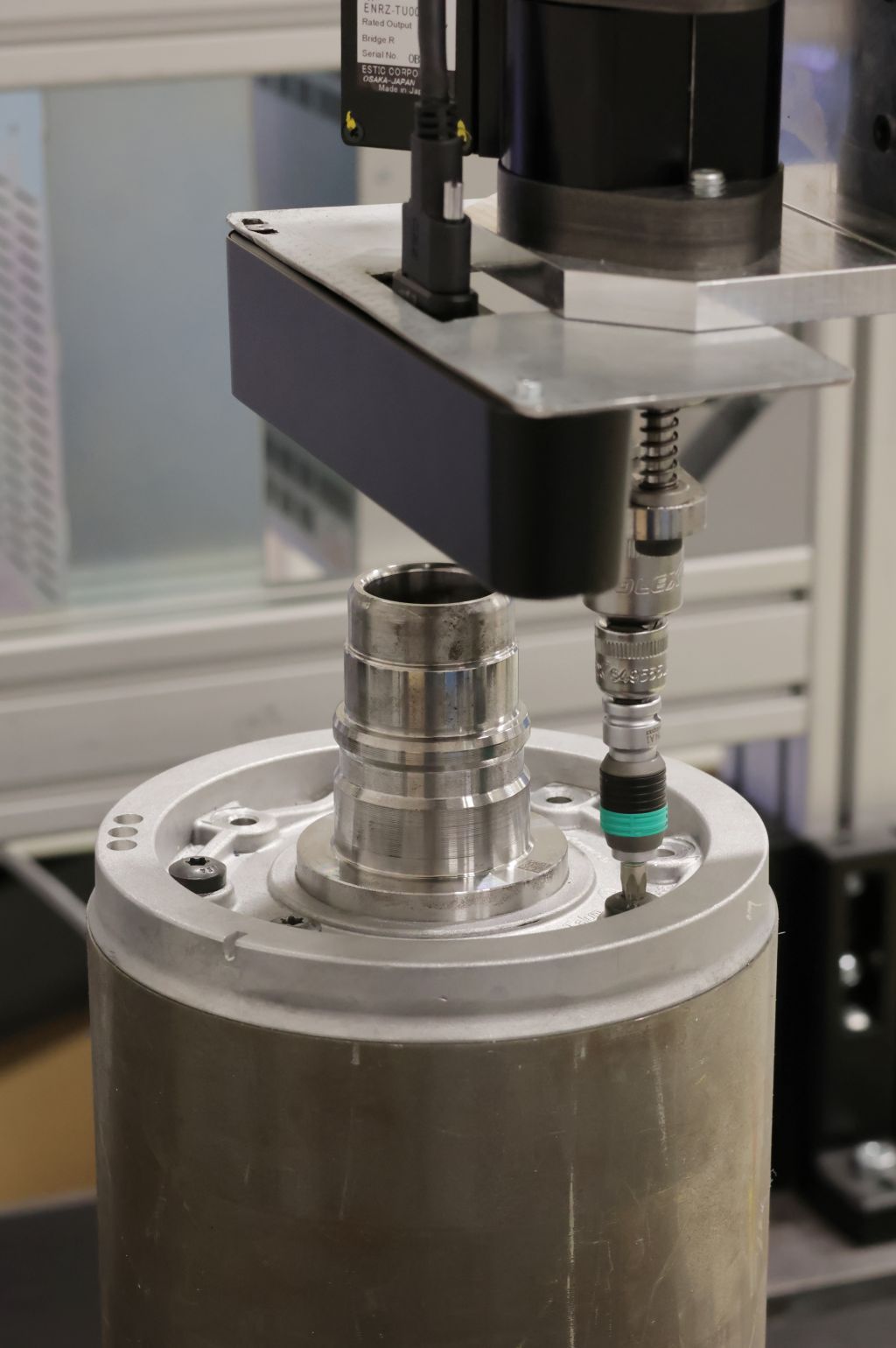
In response to this central question, Fraunhofer IWU developed an adaptive, robot-based demonstrator for the automated loosening of screw connections. Instead of a classic industrial robot, a portal robot is used. With the help of machine vision and AI algorithms, the system can recognize the position and condition of screw connections and loosen them selectively, which also works with heavily soiled or worn components.
Result: detailed disassembly instructions
The starting point was a multi-stage disassembly workshop at Fraunhofer IWU, where rear axle and front axle motors from the Volkswagen Group were disassembled, analyzed, and the process steps documented. This resulted in a detailed disassembly guide that served as the basis for defining automated processes. The insights gained directly flowed into concrete design recommendations for circular-compliant constructions – for example, to standardize screw connections or improve accessibility of connecting elements in the event of disassembly.
Particular attention was paid to the neodymium magnets installed in the rotor, which contain one of the most valuable raw materials for electromobility. Various remanufacturing processes were tested in the project, such as mechanical removal after prior separation of the sheet metal package or targeted extraction using hydraulic presses. The result is a practical methodology for the damage-free recovery and reuse of the magnets.
Conclusion: Only with design for recycling does the circular economy become economically viable
The goal of the project was to technologically advance disassembly and remanufacturing processes so that even complex battery storage systems and electric motors can be largely automated and thus economically deconstructed. Numerous processes and work steps now describe the path from CAD-based disassembly planning to automated screw detection to the experimental reprocessing of magnetic materials.
The developed solution has the advantage of being adaptive, significantly reducing setup times. Initially, it is recognized in a rough alignment that a component is in the disassembly cell. Subsequently (fine alignment), it searches for already learned joining connections. Now, disassembly can occur independently of the component; the only requirement is that the screw head has been trained once. An unlimited number of screw heads can be learned. For the developed cost-effective hardware solution, standard stereo cameras are sufficient.
A central insight is that design for recycling must be an integral part of product development in order to close cycles technologically and economically.
The ZIRKEL Consortium
Behind ZIRKEL is a consortium of industry and research. Partners include: Volkswagen AG, Liebherr-Verzahntechnik GmbH Automation Systems, Deckel Maho Pfronten GmbH, Ascon Systems GmbH, Arxum GmbH, Synergeticon GmbH, Fraunhofer IST, and leading the project, TU Braunschweig.
Contact: