
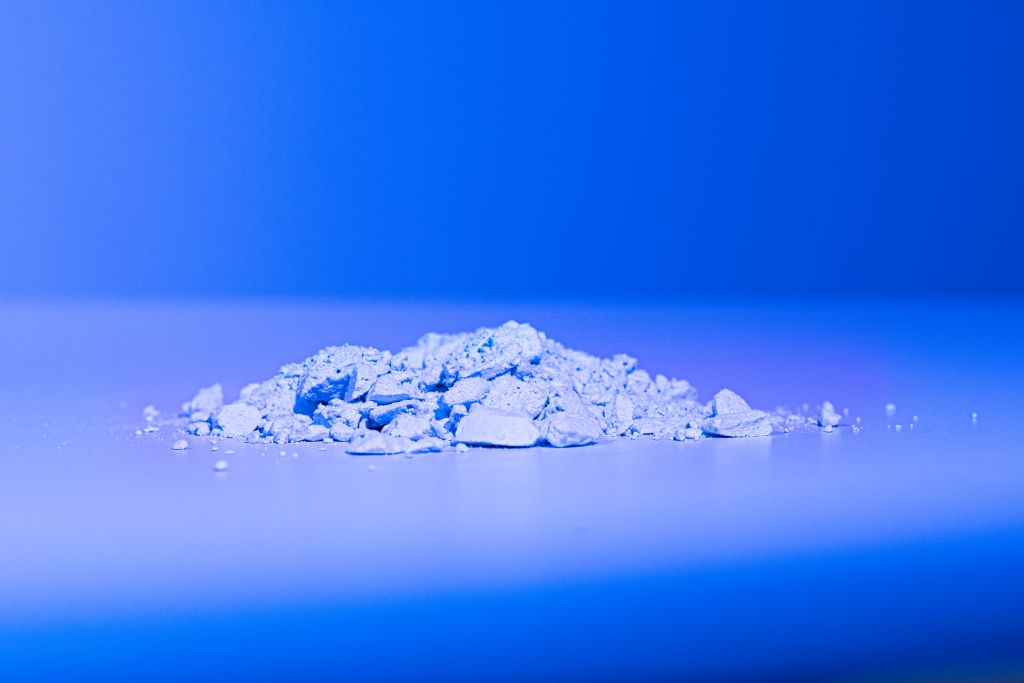
Cobalt is used in lithium-ion batteries for electric vehicles, playing an important role in the energy transition. However, this silver-gray metal is considered a critical raw material for several reasons: Cobalt is rare. Its share of the Earth's crust is only 0.004 percent. The globally known cobalt reserves are estimated at 7.2 million tons. More than half of this, about four million tons, is located in the territory of the Democratic Republic of Congo. Working conditions in the mines of this unstable Central African country are often poor, and the environmental damage from ore extraction is significant.
Whether due to lack of supply security, high prices on the world market, ethical concerns, bans, or product innovations with better material properties: there are many reasons for companies to look for alternative materials. 'While there are databases that product developers can use for research, they often do not provide usable results because they do not consider the exact application case in the company,' says Charlotte Schmidt from the research team Sustainability and Material Compliance Management at the Fraunhofer Institute for Production Technology and Automation IPA.
AI is used to sift through scientific publications
To facilitate the search and achieve more relevant results, Schmidt, along with two colleagues, developed an AI-supported tool for material substitution. Users must first specify specific details about the material or raw material they wish to replace and then provide the required properties of the alternative material as well as information about the context of the desired material use through an input mask. An AI search follows, which sifts through the 'Semantic Scholar' database based on the specific data and user requirements. By matching user inputs with the information available in the database, the AI identifies suitable alternative materials.
The AI connection for material substitution is just one of several components with which the researchers support companies in the search for alternative raw materials, materials, or chemical substances. After the AI has completed its task, they subject the proposed substitutes as well as the original materials to a comprehensive evaluation, considering legal, ecological, and social aspects as well as supply security. In close consultation with the respective company, the researchers then examine how well the proposed materials meet the specific requirements. At the end of the process, a report is produced. This report presents the most suitable substitutes as well as the evaluation of the various criteria. This provides companies with a solid basis for decision-making.
Initial tests show: AI connection is promising
As an alternative to cobalt, the AI-supported material substitution tool suggests, among other things, iron. 'It is not a new finding that lithium iron phosphate can also be used for the cathodes of batteries instead of lithium nickel manganese cobalt oxide,' says Schmidt. 'But this and other results have shown us that the AI connection is promising in the search for alternative materials.'
The AI-supported material substitution tool was developed in the research project 'Ultra Efficiency Factory - Deep Dive', which started in April 2024 and will run until the end of August 2025. The research project is supported by the Ministry of Environment, Climate and Energy Economy of Baden-Württemberg with a total of 1.4 million euros. Project partners include Fraunhofer IPA, Fraunhofer IAO, the Center for Digitalization, Leadership, and Sustainability Schwarzwald gGmbH (Campus-Schwarzwald), Umwelttechnik BW GmbH, Alpirsbacher Klosterbräu Glauner GmbH, Ansmann AG, and Protektorwerk Florenz Maisch GmbH & Co. KG, with ZECHA Hartmetall-Werkzeugfabrikation GmbH as an associated partner.
Contact: