
The focus of the trade fair appearance was on industry-specific vertical AI applications that are directly embedded in ERP, MES, and quality management systems. With oxaion ERP, the MES solution Syncos, and the AppCentral platform, Aptean demonstrates how machining and precision manufacturers can utilize their data for automated processes, faster decisions, and greater transparency in manufacturing. The trade fair presence was complemented by sycat ONE, a platform for AI-supported quality, document, and process management.
The AMB as a meeting point for the metal processing industry
More than 1,000 exhibitors from over 30 countries present current developments along the entire value chain in Stuttgart - from machine tools to automation solutions to digital manufacturing and quality assurance systems. That artificial intelligence has long since arrived in industrial practice is confirmed by Arno Schlingermann, Senior Solutions Consultant Sales at Aptean Germany GmbH: 'Anyone who talks to machinists or precision manufacturers today hardly needs to bring up the topic of AI; it comes up on its own. For companies, the question is no longer whether they should use AI, but at what point in their daily business it creates a concrete added value.'
AI agents take on tasks instead of just providing data
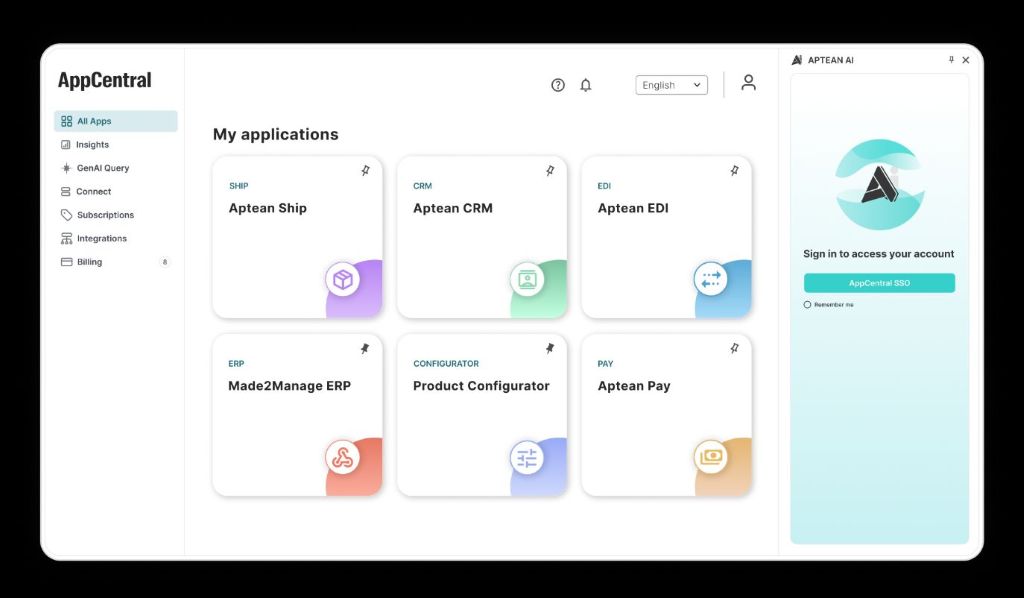
With AppCentral, Aptean consolidates applications, data, and workflows from ERP, MES, CAQ, and EAM in a cloud-based platform. The centerpiece is Aptean Intelligence, an AI layer with embedded AI agents that access structured and unstructured information from all connected systems in real-time and execute tasks independently instead of merely generating reports. In the manufacturing industry, this is reflected in proactive alerts for impending delivery delays, automated handling of recurring routine tasks, and inquiries in natural language across system boundaries, for example, about the current status of an order based on ERP and MES data. The benefits are also evident in procurement: When Aptean Intelligence links external signals such as material prices or tariff changes with internal order data, it becomes visible early on which ongoing orders could come under economic pressure. The AI agents do not replace the ERP system but expand it with proactive, executing functions.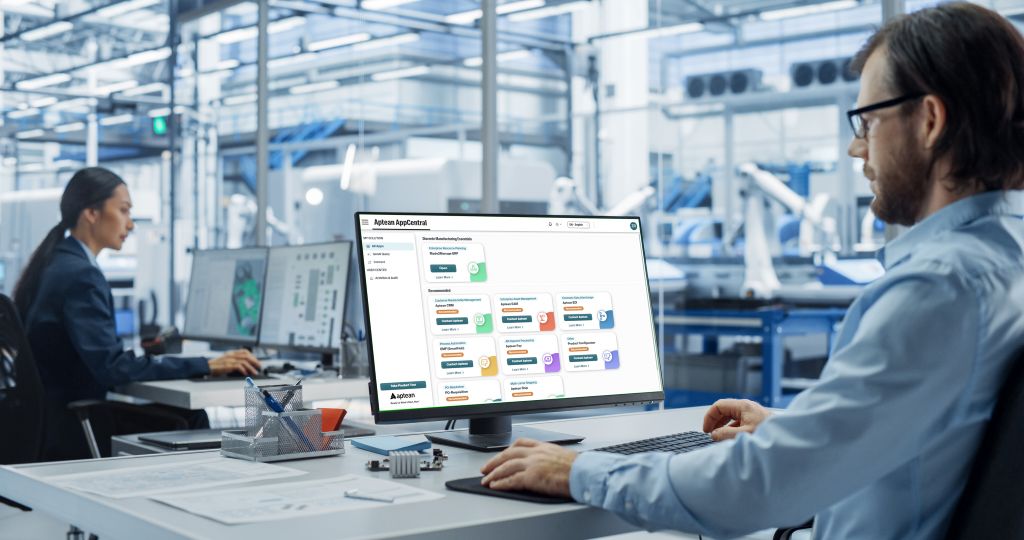
sycat ONE: AI-supported quality and document management
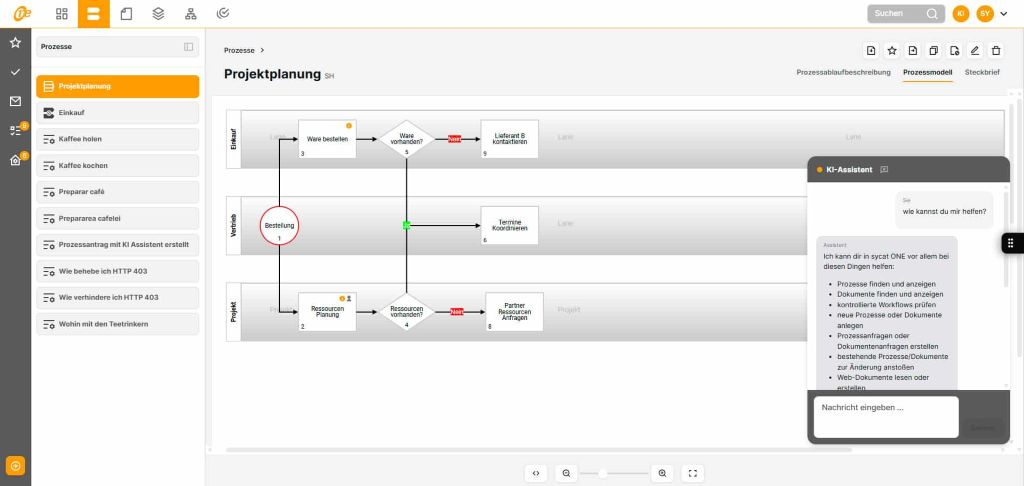
Vertical AI is not limited to ERP and MES: In quality management, Aptean also relies on an AI-supported platform with sycat ONE that consolidates processes, quality, documents, and knowledge transfer on a common platform, thus creating traceable, automatable, and audit-proof processes in manufacturing.
In addition to AI-supported modeling and automation of processes, the qualification of employees is also brought closer to the actual workflow. Training and instructions take place directly on the platform rather than in separate applications. Additionally, Agentic AI takes over automated workflows, for example, in document control or in the verification of qualifications.
Vertical AI: Context makes the difference
What distinguishes industry-specific AI from a generic language model is explained by Andreas Theel, Solutions Consultant at Aptean: 'Vertical AI knows the processes, data, and rules of the respective industry and is part of the system architecture from the beginning, rather than being connected later via an interface. In metal machining, this means specifically: The AI understands what an order, a batch, or a deviation means in the respective system and can act accordingly instead of just generating text.' A general AI assistant cannot provide this context because it lacks access to the evolved processes and authorization structures of a manufacturing company, Theel further explains.
Contact: