
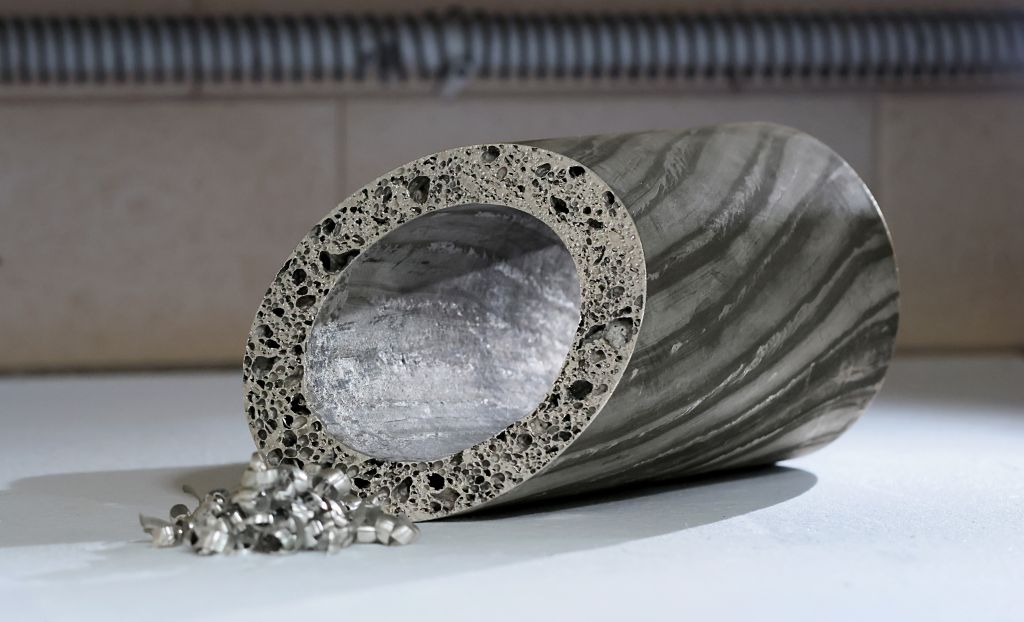
Aluminum is a key material for sustainable mobility and resource-efficient products. However, its production is energy-intensive. Researchers at the Fraunhofer Institute for Machine Tools and Forming Technology IWU now demonstrate how production residues, aluminum chips, and used aluminum foam components can be specifically reintroduced into the manufacturing process.
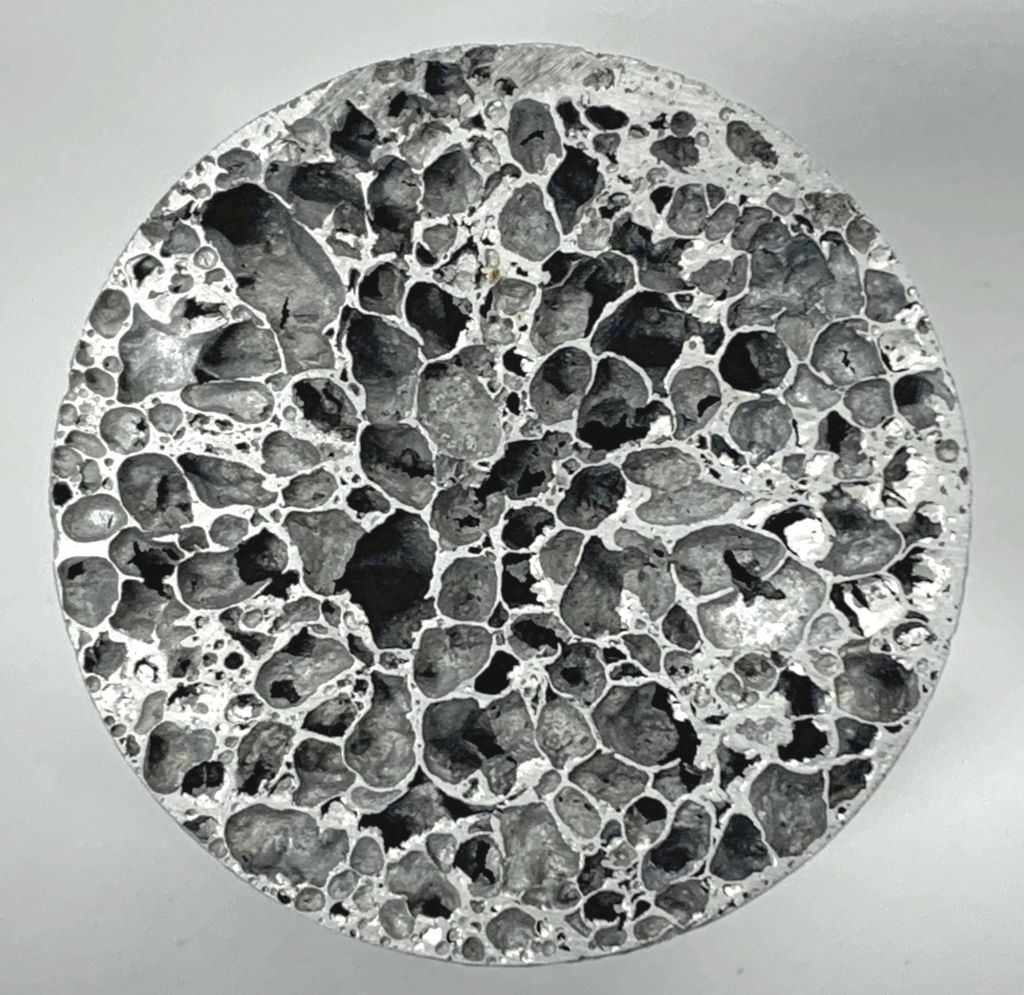
The results open new avenues for a circular-oriented production of aluminum foam and could significantly reduce the use of primary materials.
Aluminum foam is one of the particularly lightweight structural materials. Due to its low density, high energy absorption capacity, and good damping properties, it is suitable for applications in vehicle construction, machine structures, construction, or energy-efficient lightweight systems. However, its production today is predominantly carried out using aluminum alloy powders, the production of which is comparatively complex and costly.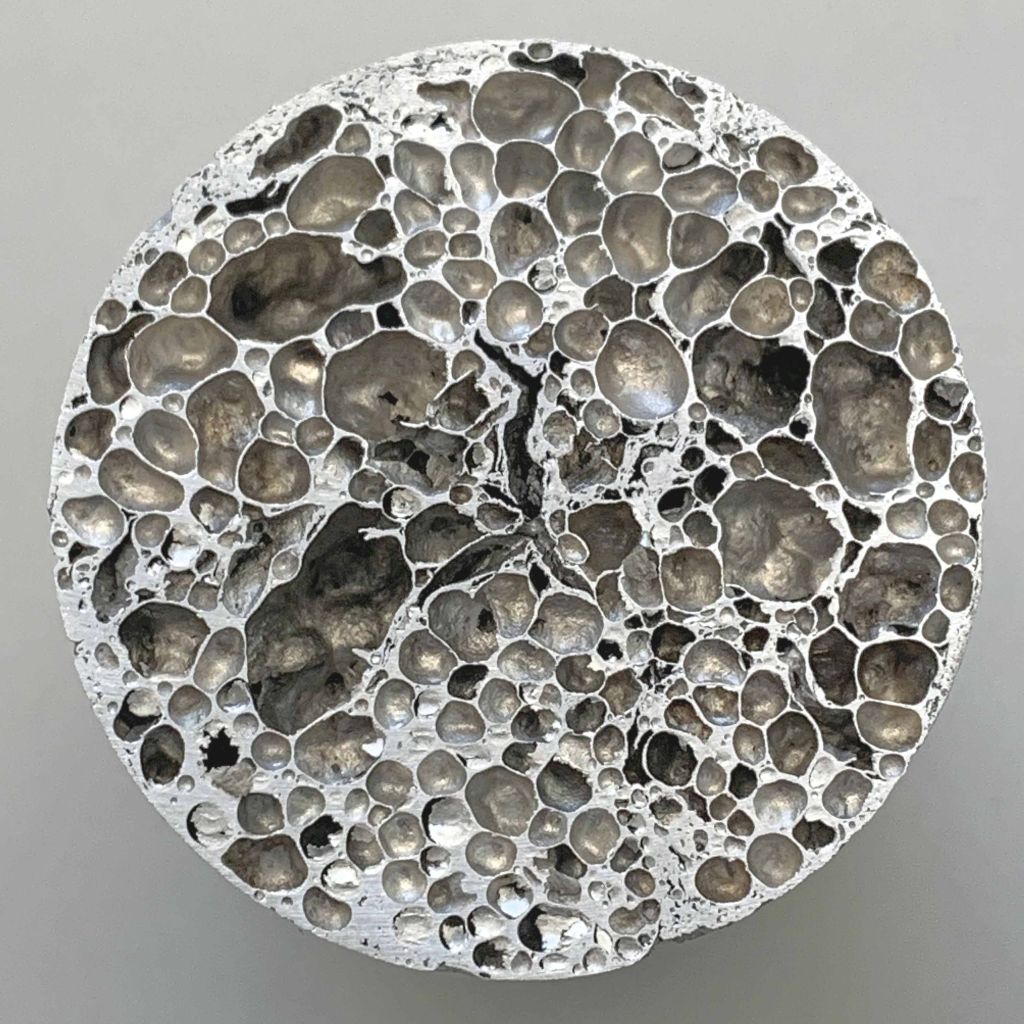
Therefore, the researchers at Fraunhofer IWU focused on a previously overlooked sustainability lever: the use of circular materials within powder metallurgical foam production. The focus was on pure aluminum chips, production residues, and end-of-life materials that can be mechanically processed and used as raw materials for new aluminum foams.
Processed chips instead of new powder
A particularly promising approach is to partially or completely replace energy-intensive produced (new) aluminum alloy powder with processed aluminum chips.
The investigations showed that grinding and classifying (sorting by size) the chips results in a powdery raw material that can be successfully processed into foamable semi-finished products. The foams produced from this achieve comparable structures and densities to conventionally produced aluminum foams.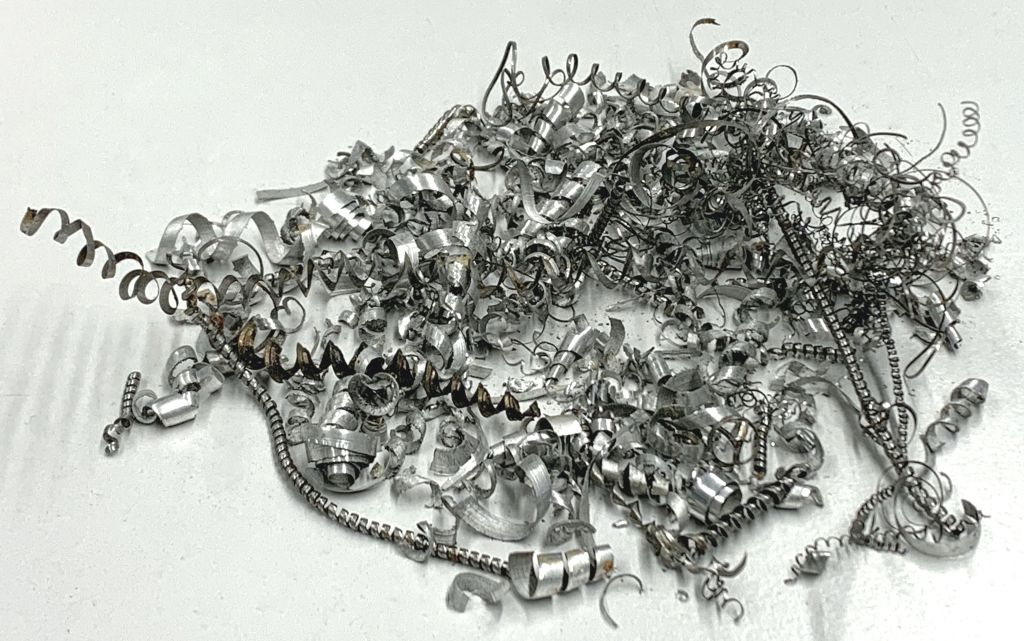
"The use of production waste directly in the material cycle offers significant ecological and economic potentials," explains Dr.-Ing. Jörg Hohlfeld, head of the metal foam group at Fraunhofer IWU. It is particularly noteworthy that significantly less energy is required for the production of secondary aluminum than for primary aluminum. This can reduce both material costs and CO₂ emissions.
From production waste back to functional material
The researchers also examined the processing of larger aluminum remnants such as foils, coils (cutting waste from large rolls of aluminum sheet), or rim material. Through multi-stage mechanical processes such as cutting, breaking, grinding, and sieving, defined particle sizes for foam production could be generated. Used components made of aluminum foam can also be integrated back into the material cycle. For this, the team developed suitable strategies for size reduction, sorting, and material-appropriate further processing.
It is particularly significant that recycling is not limited to simple melting. Instead, Fraunhofer IWU pursues approaches of so-called solid-state recycling. In this process, large parts of the existing material structure are preserved, which can save additional energy and avoid material losses.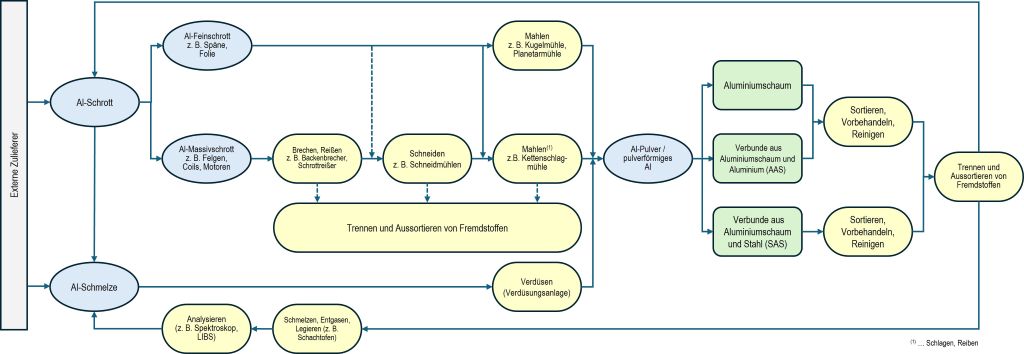
New perspectives for circular economy in lightweight construction
The results show that aluminum scrap in powder form can be used as a technically equivalent alternative to newly produced aluminum alloy powder. This brings a significantly more resource-efficient production of aluminum foams within reach. The researchers see this as an important building block for circular value creation chains, especially in industries with high lightweight construction requirements such as automotive, mechanical engineering, or rail technology.
For industrial implementation, the work is now to be continued. Future research projects will particularly focus on stabilizing the material properties of fluctuating scrap qualities and comprehensive life cycle analyses. This aims to quantitatively demonstrate the ecological advantages of scrap-based foam production and prepare the technology for broad industrial use.
Research partners wanted
Fraunhofer IWU is happy to contribute its findings to further research projects and looks forward to partners who want to collaborate on securing and broadening the study and data base on the circularity of aluminum foam.
Background: Aluminum foam
Aluminum foam is an ultra-lightweight metallic structural material with a density of significantly less than one gram per cubic centimeter. Due to its high stiffness at low weight, as well as its energy absorption and damping properties, it is used in sandwich structures, crash systems, and lightweight components. Fraunhofer IWU has been researching resource-efficient manufacturing processes as well as recycling and circular concepts for this material for many years.
Contact: