
By 2029, the federal government will invest over 2 billion euros in fusion research. The Fraunhofer Institute for Laser Technology ILT in Aachen is an early mover. In collaborative research projects, it researches and develops solutions for future fusion power plants with partners from industry and research. It is about building robust supply chains and developing processes for automated mass production. Internationally, the institute cooperates closely with the Lawrence Livermore National Laboratory, whose National Ignition Facility has repeatedly ignited fusion plasma with the world's largest laser and is achieving steadily increasing energy surpluses. In the development of power plant technology, spillover effects are emerging that could provide photonics access to new application markets.
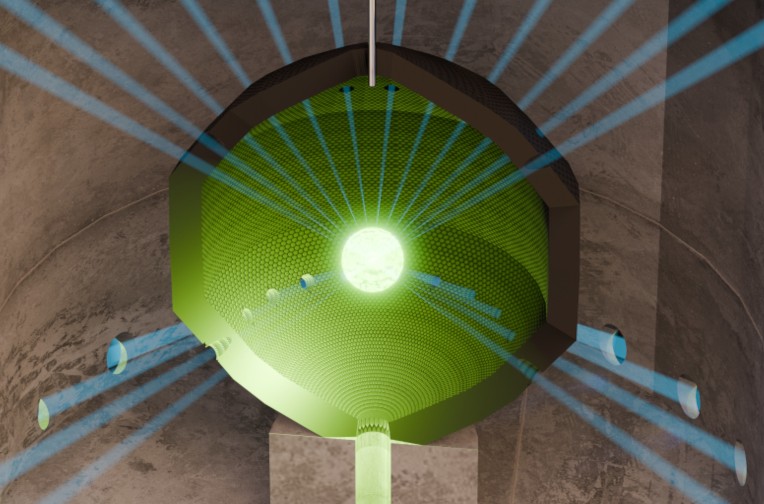
Since December 2022, fusion research has been on the rise worldwide. Researchers at the Lawrence Livermore National Laboratory (LLNL) achieved a historic breakthrough at the California National Ignition Facility (NIF). For the first time, an inertial fusion (IFE) ignited with the help of a high-energy laser released more energy than the laser had focused on a pellet of fusion fuel the size of a pinhead. Since then, LLNL has repeated the experiment multiple times with increasing energy surplus. It is now clear: the underlying physics works.
The vision of climate-neutral, nearly unlimited energy source fusion is more tangible than ever. Moreover, IFE plants are intrinsically safe because the plasma ignites only under enormous pressure and at temperatures around 150 million °C. Without the fuel supply and ignition pulses, fusion extinguishes immediately. Only under these extreme conditions can the repelling nuclei of the hydrogen isotopes deuterium and tritium overcome the Coulomb wall and fuse. For sustained power plant operation, 10 to 15 pellets per second must be compressed, converted to plasma, and ignited with high-energy laser pulses. When maintained this way, fusion generates baseload-capable energy on a large scale: just 1 kg of fusion fuel contains as much energy as 22,500 tons of lignite, equivalent to the load of a 6 km long freight train. No material with similar energy density is known in the entire universe.
German government invests over 2 billion euros in fusion research

As a climate-neutral, baseload-capable energy source, fusion could become an important complement to future energy systems, where cost-effective but volatile wind and solar power cover the majority of demand. According to forecasts from the International Energy Agency (IEA), global electricity demand will increase 2.5 times to 70 petawatt-hours (PWh) per year by mid-century. To cover one-tenth of that, nearly 1,000 fusion power plants would be needed. This is shaping up to be a future market for photonics that significantly exceeds its current revenue volume.
Governments and private investors have recognized the opportunity and are directing large sums of funding and venture capital into this future field. Currently, it is not only about developing the base technologies for such power plants but also about building robust supply chains and developing processes for the mass production of power plant components. This is where the application-oriented research of the Fraunhofer Society comes into play.
There are still enormous technological and operational challenges on the way to commercial power plants. Additionally, there is another promising approach with magnetic fusion (MFE). The federal government is funding both approaches in the program »Fusion 2040«. Its budget was recently raised by the leading Ministry of Research, Technology, and Space (BMFTR) to over 2 billion euros by 2029. This is good news for photonics: high-energy and high-performance lasers, optics, sensors, and highly flexible laser-based manufacturing technology are considered key technologies not only for IFE power plants but also for the development, construction, and operation of the complex tokamak and stellarator reactors for magnetic fusion.
US test facility only a blueprint – the path to fusion power plants is long
The Fraunhofer ILT is among the early movers in fusion research. With partners from industry and research (more than 20 institutes of the Fraunhofer Society are active in this research field), it develops technological foundations for fusion power plants in national and international projects. These collaborative research consortia are the seed cells of the urgently needed supply chains. The projects focus on realistic modeling and simulation of components, subsystems, and entire power plants, as well as the development of robust optics and driver lasers for the high-energy lasers that are to ignite fusion plasma in future IFE power plants at a rate of 15 Hertz. To achieve such a frequency, only elaborate diode-pumped solid-state lasers (DPSSL) are suitable.
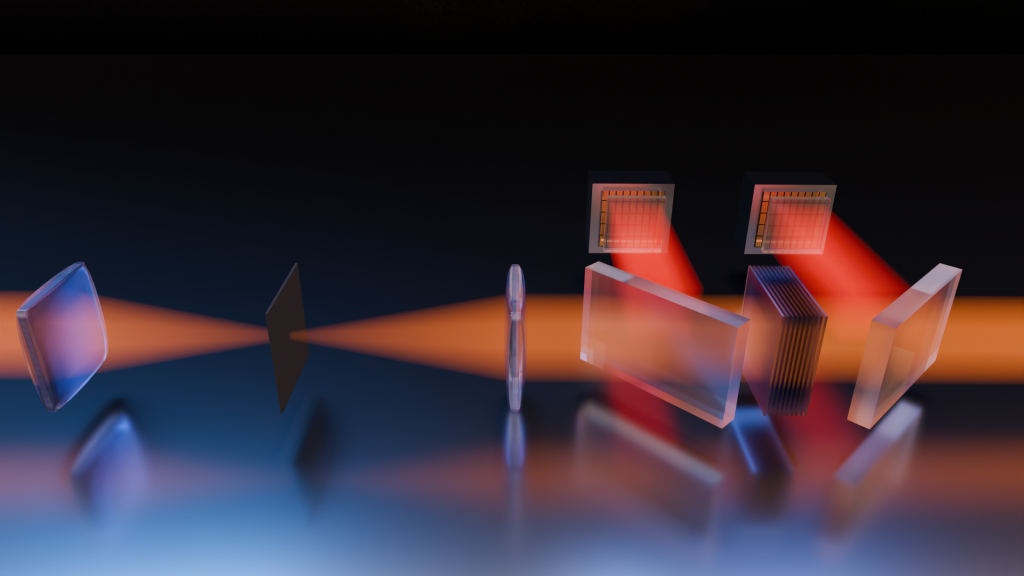
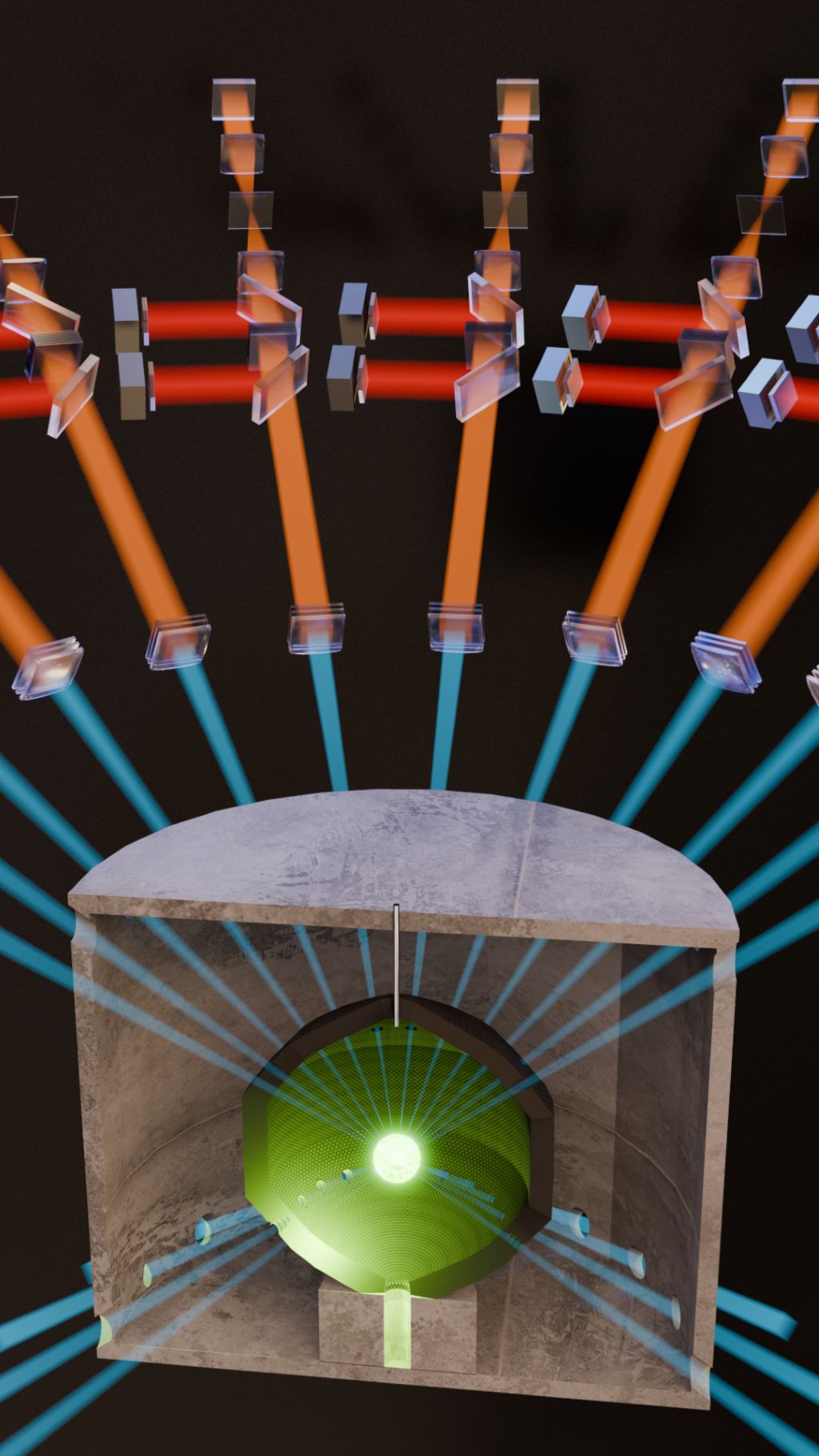
The laser of the test facility in California is based on 192 beam paths, in which flashlamp-pumped glass plates amplify the laser pulses. For this purpose, their photons interact with electrons in crystal glass plates. The energy level of an initial nanojoule pulse increases to the extent that it is as if a normal hand slap were acoustically amplified to the level of a heavy earthquake. This pumping occurs in the infrared wavelength range.
The pulse distributed over 192 beam paths is then converted into green and blue wavelengths – and becomes ultra-short X-ray radiation when all 192 beams hit the target with more than 2 megajoules of combined pulse energy synchronously. The ignition pulse reaches the same power for a few nanoseconds as the entire US power grid. Accordingly, huge capacitors are needed to store the necessary electrical energy. And after the shot, the system must cool down for hours. For the high-energy lasers of future power plants, this is unthinkable. They must deliver highly efficiently up to 15 shots per second. The efficiency of converting electrical to optical energy must increase by a factor of 10 to 15 compared to the NIF. Background: The California test facility was never designed for energy production but for plasma research.
Funding projects are developing the photonic basis for fusion power plants
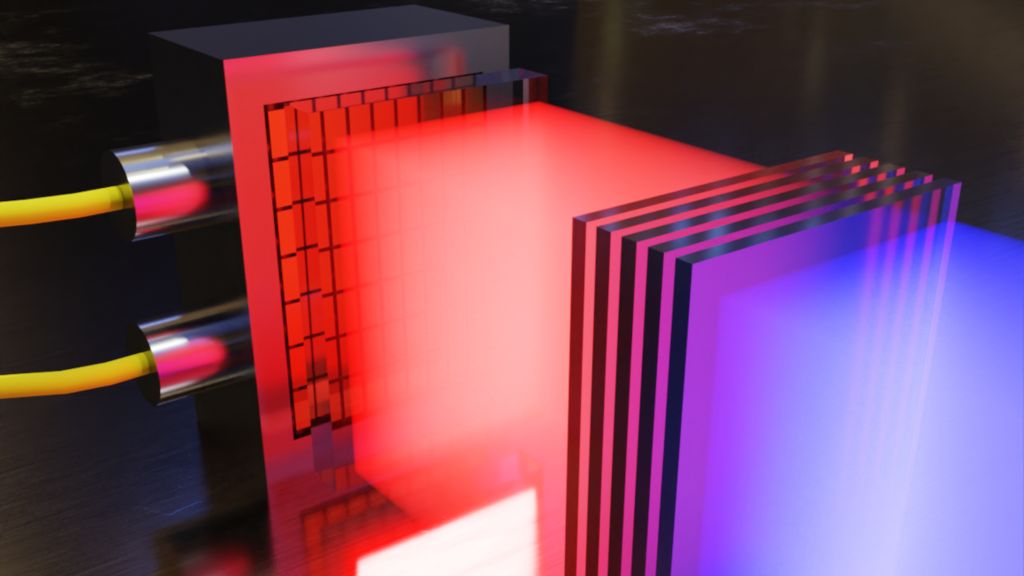
DPSSL are key components for IFE power plants. Instead of being pumped with flash lamps, they are pumped with efficient high-performance laser diodes. In the BMFTR funding project DioHELIOS, Fraunhofer ILT is collaborating in a broad consortium dedicated to the development of the mass-needed high-performance laser diodes. In addition to modeling the diodes, the focus is on their integration into actively cooled modules with collimation lenses, as well as the design of highly automated manufacturing chains.
The goals are ambitious: The pulse energy achievable with the diode pump modules is expected to increase by a factor of 50 with improved efficiency and more homogeneous, stable spectral properties. Additionally, the costs of the diode laser modules must be reduced through fully automated mass production to below one cent per watt of power. This would be less than one-fortieth of their current costs. However, this must not come at the expense of quality: The heavily stressed hardware is expected to last 30 years in power plant operation. The extent of the challenge is also evident in the fact that the current global annual production of high-performance diodes does not even meet the demand of a single IFE power plant. Together with its partners in the DioHELIOS consortium, Fraunhofer ILT is already seeking concrete solutions.
DioHELIOS is one of the measures in the 'Fusion 2040' program. In the closely related project PriFUSIO, a consortium led by Fraunhofer ILT is working on the optical key components of high-energy lasers for fusion power plants. 'It is about their systematic further development and validation,' explains Dr. Sarah Klein, coordinator of fusion research at the Fraunhofer Society. The project is dedicated to new methods for the production, coating, and quality testing of lenses, optical gratings, as well as the simulation and material development of the amplifier plates, which, in conjunction with high-performance laser diodes, are intended to amplify the ignition pulses into the megajoule range. 'All optical components must withstand 24/7 power plant operation. This includes significantly increasing their destruction thresholds,' she says. Additionally, new approaches are needed to manufacture the initially required, often very large optics cost-effectively. Fraunhofer ILT is also pursuing a promising approach: laser-based process chains for shaping, polishing, and post-processing. Compared to mechanical processes, the tool light inherently introduces fewer micro-cracks and disturbances into the optical components, thereby increasing their robustness and lifespan.
In the projects 'IFE-Targetry-HUB' and 'Durable', teams from Fraunhofer ILT are also at the forefront of developing key technologies for fusion power plants. 'Durable' deals with the simulation and process development for the additive manufacturing of plasma-side wall components. In 24/7 power plant operation, neutrons released from fusion continuously bombard the walls. Their kinetic energy is transferred to a cooling medium in the walls, which evaporates and drives a turbine. Special wall elements are also required, in which the neutrons serve to breed the hydrogen isotope tritium from lithium. 'To shape the high-temperature-resistant, extremely robust tungsten alloys of the walls, laser-based additive manufacturing processes are suitable,' explains Klein. Fraunhofer ILT invented and patented metal 3D printing and has systematically further developed it since then. AI plays an increasingly important role, as does the extreme high-speed laser cladding EHLA, which was also conceived and patented at the institute. 'Both additive processes have great potential for the manufacturing of power plant components,' she says.
Equally relevant are laser-supported processes for the manufacturing of fuel targets. When fusion power plants ignite up to 1.3 million times daily in 15 Hz operation, the target costs must drop by orders of magnitude into the cent range. Researchers at Fraunhofer ILT are also addressing this challenge in the 'IFE-Targetry-HUB' project. Many threads in fusion research converge here, which the institute has picked up and spun further over the past decades. Now, this groundwork is paying off. 'Our projects operate at the typical Fraunhofer working point: It is about rethinking technologies and transferring them from research into concrete industrial application,' says the fusion research coordinator.
Understanding high-energy lasers from the ground up
In the future, the high-energy lasers of IFE power plants are expected to have many hundreds of parallel beam paths. Thousands of high-performance laser diode bars will pump amplifier plates made of special glass or crystal to amplify the pulses to the energy level required for ignition. Such complex lasers cannot be realized through a trial-and-error approach. Rather, computational methods are needed to test and optimize them virtually before prototype construction. Virtual prototypes of the components, subsystems, and ultimately the complete high-energy lasers allow researchers to explore their functions and simulate them in a virtualized operation that is close to reality. In recent years, Fraunhofer ILT has developed advanced laser simulation models for the design, development, and industrial scaling of DPSSL. It is now putting these to the test by comparing them with comparable solutions from LLNL in the 'ICONIC-FL' project.
The US institute specializes in the simulation and construction of high-energy lasers, while Fraunhofer ILT specializes in DPSSL with high average powers. Both partners thus bring complementary know-how. 'This project is not about merging our simulation models or exchanging code,' emphasizes Johannes Weitenberg, project manager on the Fraunhofer ILT side. Rather, the two institutes want to learn from each other and double-check their simulation results with regard to the next generation of DPSSL for fusion power plants by subjecting the laser design to independent cross-validation. For this purpose, they will each simulate the amplification stages of the high-energy lasers with their solutions. In doing so, they aim to understand complex physical effects: 'In 24/7 operation, heating, refraction effects, and aberrations can distort the laser beam. Even the smallest effects can have a significant impact and cause efficiency losses or even direct damage to the optics,' says Weitenberg. They want to understand exactly what is happening in each amplifier plate to later simulate complex plate stacks.
Ultimately, current fusion research aims to force technological leaps through multidisciplinary approaches. The example of NIF shows what is possible: With the help of scientific and engineering know-how, as well as simulation- and AI-supported process optimization, it has been possible to increase the energy surplus of fusion from initially 1.5 times to 4 times the energy introduced by the laser. This factor must now be increased to a factor of 50 to 100 with high-energy lasers specifically optimized for IFE power plants.
High-energy lasers are not only interesting for fusion
The large-scale project fusion power plant requires close cooperation between industry and research. Government funding programs can create technological foundations, but in the long run, companies must invest and build supply chains. For innovations, this means that they should not only be aimed at the long-term goal of a fusion power plant but also at other application markets. For example, to build the necessary manufacturing capacity for high-performance laser diodes and reduce their costs to the required level through economies of scale, new applications must be developed. 'In this regard, our institute stands by the industry with concentrated know-how generated over more than 40 years,' explains Klein.
Initial spillover effects are already becoming apparent. From the PriFUSIO project, a new generation of synthetic quartz glass plates has emerged, which is interesting not only for fusion but also for other high-performance laser applications in the near-infrared range – including laser cutting and welding. Manufacturer Heraeus Covantics has optimized the manufacturing process both in terms of performance and cost. Additionally, it offers greater flexibility in plate sizes. The new material is characterized by very low absorption and high power density.
There is also a demand for high-energy lasers beyond fusion: As drivers for secondary sources, they are expected to pave new ways for generating extreme ultraviolet (EUV), X-ray, or neutron radiation. Among the promising applications is the combined X-ray and neutron imaging, which Fraunhofer ILT is currently co-developing in the collaborative project PLANET. It is intended to enable optical and material analyses of the contents of sealed barrels and containers through their walls. Laser beam sources are key to miniaturizing the particle accelerators needed for this and integrating them into compact, possibly even mobile devices in the future. 'Much of what we are working on in fusion research is relevant for many markets. We are not just working on a power plant!' emphasizes Klein. Fusion represents a great opportunity for the laser and optics industry in Germany and Europe. If the commercial success of laser fusion takes longer than hoped, the industry could tap into new markets with the technological leaps achieved in fusion research. If it succeeds, a single power plant would require the current annual world production of high-performance laser diodes as well as tens of thousands of large optics. Even with conservative estimates, the current revenue volume of the global laser market would multiply dramatically.
Fusion at AKL '26
In light of such prospects, the AKL – International Laser Technology Congress (April 22 – 24, 2026, in Aachen) will illuminate the economic and technological potential of the future market for fusion in various sessions. In the Gerd Herziger session on April 23, 2026, Prof. Constantin Häfner will provide current insights into the state of fusion research and the status of the required supply chains in his lecture 'Laser Power Unleashed: Drivers for Fusion Energy and Industrial Ecosystems.' The board member for research and transfer of the Fraunhofer Society is a recognized fusion expert and was responsible for high-energy laser development at LLNL before providing significant impulses for fusion research in Germany during his time as head of Fraunhofer ILT and as an advisor to the federal government. He will also participate in the panel discussion of the session.
Following this, Session 4, Laser Beam Sources II will provide in-depth technical insights into the development of high-energy lasers for fusion and secondary sources. Also in Session 7 – Laser Beam Sources III on April 24, which deals with ultrashort pulse lasers, the slot led by Dr. Sarah Klein will address 'Diode Lasers' semiconductor lasers for the fusion power plants of the future.
Contact: