

Plastic packaging is an indispensable part of our modern society. They protect products, extend their shelf life, and enable efficient logistics. However, plastic packaging is also the subject of controversial discussions regarding its environmental impact and sustainability. Recycled materials play an important role in reducing the consumption of new raw materials and mitigating the environmental impact of plastic packaging. These are reused plastic waste from various sources, including used plastic packaging and industrial waste. Keyword: Recycling.
There are various recycling methods for the recycling process, such as mechanical recycling, chemical recycling, and energy recovery. Mechanical recycling is the most common but has its limits regarding the number of recycling cycles. It is not entirely clear how often plastic can be recycled. It can be assumed that with mechanical recycling, most plastics can generally be recycled multiple times.
A large portion of the materials currently goes through the cycle only once. Due to the mixing of input materials from different sources, the material quality of the end product is high. Quality control ensures that the recycled material meets the requirements. However, this development has not yet occurred to the extent seen with materials like PET (water bottles). For HDPE and PP materials, this is only partially and limitedly possible, as most of the time, new materials are still entering the cycle. It will take some time before 100 percent are permanently in the cycle.
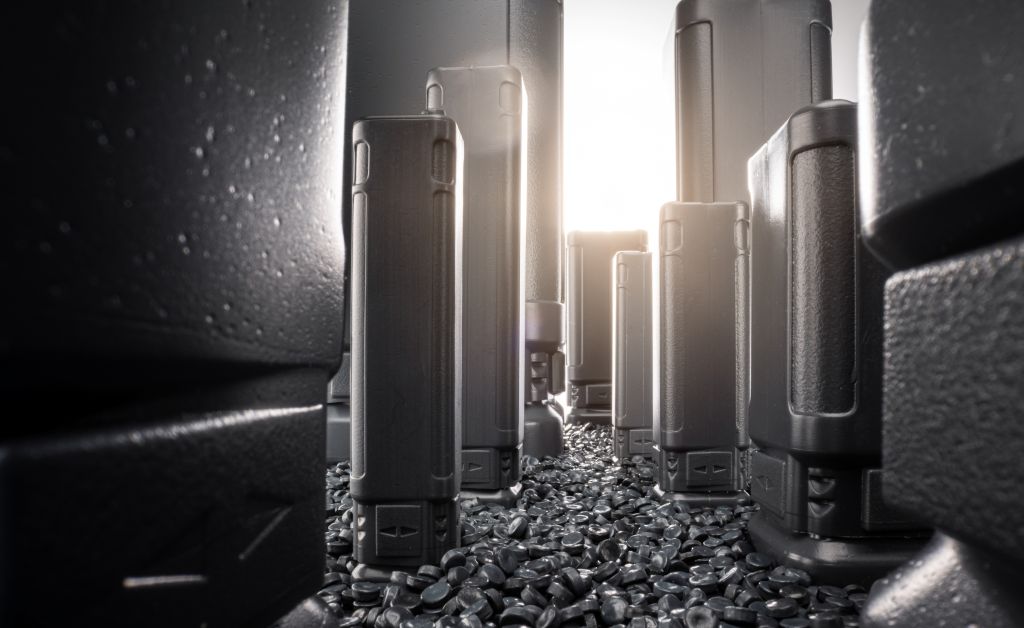
The dark gray recycled packaging that Horn uses is processed through mechanical recycling and then compounded. This means that the shredded recycling material is melted down and processed with additives to ensure that the same material properties are always achieved. These additives help stabilize and optimize the physical and chemical properties of the recycled material. This is important to keep the manufacturing processes stable. Through targeted measures and the right selection of additives, the performance of the recycled plastic can be stabilized and potentially significantly improved.
When the quality of the plastic can no longer be reproduced, it is processed for less demanding applications in practice and ultimately directed to energy recovery for energy generation. Ultimately, the goal is to maximize the recyclability of plastics while minimizing the use of new plastic to reduce environmental impacts.
Arguments in favor of plastic packaging made from recycled plastic:
1. Environmental protection: The use of recycled plastic reduces the need for new plastic, which decreases the consumption of fossil raw materials (oil, gas, etc.) and lowers CO2 emissions.
2. Resource conservation: Recycled materials help conserve natural resources by minimizing the need for new raw materials.
3. Waste reduction: The use of recycled plastic produces less waste, as the raw material is kept in the cycle, thus reducing energy recovery and landfilling (abroad).
4. Energy savings: The production of products from recycled plastic often requires less energy compared to the production of new plastic, leading to a lower environmental burden.
5. Circular economy: The use of recycled plastic promotes the concept of a circular economy, where materials are continuously reused and recycled instead of ending up in a linear system.
6. Regulatory requirements: In many regions, there are increasingly regulations and incentives for the use of recycled materials, encouraging companies to adopt more sustainable practices.
7. Innovations: The development and use of recycled plastic promote innovations in the packaging industry, which can lead to new, sustainable solutions.
8. Consumer acceptance: Due to upcoming regulatory requirements, more and more companies are striving to reduce their carbon footprint, supporting the use of recycled plastics.
"Switching to packaging made from recycled materials is just the next logical step in our understanding of sustainability. As a family business, we think not only in quarters and annual statements but in generations," says Markus Horn, Managing Director of Paul Horn GmbH.
Contact: