
Whether in the production hall, clean room, or laboratory: robots and other automation components are now used everywhere, primarily supporting repetitive, physically demanding, or dangerous tasks. However, much time often passes before they are installed, programmed, and set up. The big goal is therefore 'Automation of Automation'. This means that setting up and commissioning is carried out with suitable tools in a much more automated manner than before, saving time and costs.
The Fraunhofer IPA showcased a whole range of solutions at Automatica in Munich that significantly simplify and accelerate the planning, programming, and training of robots by (partially) automating these processes, even using AI technologies.
A software framework for all machines and systems
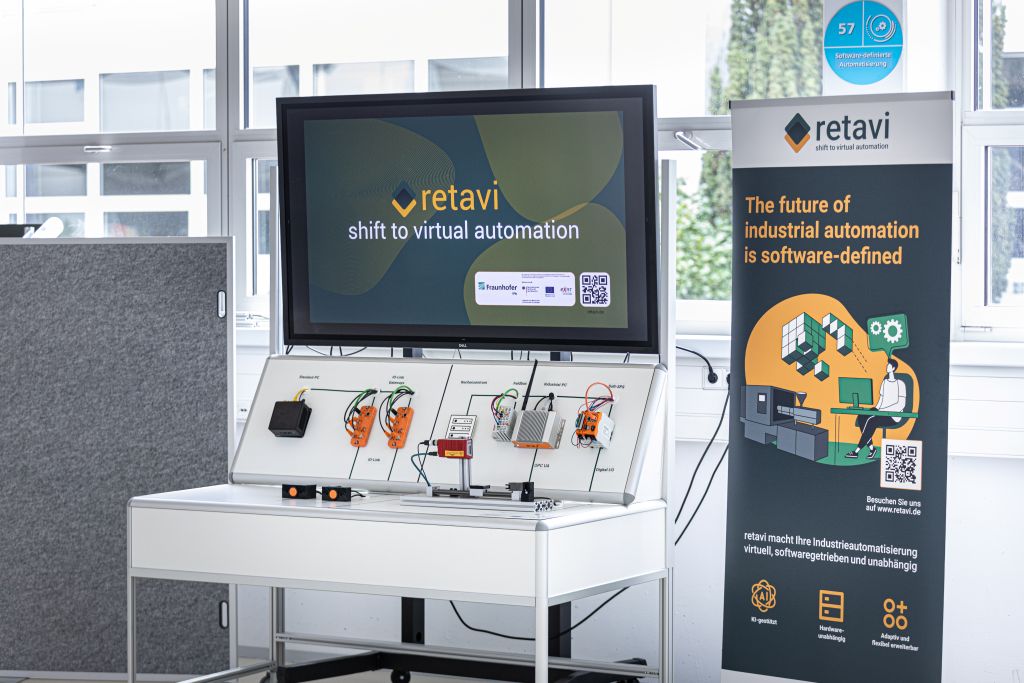
Scientists led by David Breunig from the research team IT Architectures for Production at Fraunhofer IPA have developed a software framework that allows companies to automate their entire production. The programmable logic controllers (PLCs) that have previously regulated the operation of machines and systems and are installed in large numbers in factories may become redundant.
'Anyone who buys the PLC of an established manufacturer today becomes dependent on their hardware, development environment, and programming language,' says Breunig, 'and that is exactly what we want to change with our software framework.'
To demonstrate how this software-defined automation works, Breunig and his team built a demonstrator that showcases the functionality and use of the framework. Visitors can use it at Automatica.
get to know the individual modules of the software framework on the screen and create or optimize an automation project yourself.
Together with a colleague and two colleagues, Breunig plans to become self-employed with the software framework. Their start-up, retavi GmbH, will officially commence operations at the end of the year. Flexibly deployable intelligent mobile manipulators.
Humanoid robots are currently receiving a lot of attention in the media and will also play a significant role at Automatica. According to a study by Fraunhofer IPA as part of the AI Advancement Center "Learning Systems and Cognitive Robotics," many companies, however, have little interest in having robots that can walk like a human.
Instead, the surveyed experts see the greatest potential in humanoid objects being able to grasp flexibly like a human. This is exactly where a current development by Fraunhofer IPA comes in. Due to the many degrees of freedom of a robotic hand, it is not efficient to comprehensively program robots for these grasping processes. To address this, Fraunhofer IPA is researching approaches for the rapid and intuitive teaching of complex grasping and handling movements.
Gripping processes can be trained, for example, in a simulation using Deep Reinforcement Learning. The focus is not only on controlling robotic hands but particularly on intuitively instructing and training new ones.
Applications for fully flexible robotic systems – including mobile multipurpose platforms with multiple arms and grippers. Modern methods such as imitation learning and so-called foundation models are employed for this purpose. Natural language instructions, teleoperated executions, and human-demonstrated processes are used to efficiently convey robotic capabilities.
The demonstrator at the trade fair booth provides a practical insight into selected aspects of the technology and exemplifies how central ideas from current research can be transferred into application. Additionally, there is an opportunity to learn more about the challenges of current imitation learning methods and foundation models, as well as how a hybrid approach can specifically address existing gaps by combining proven, parameterizable robot capabilities with learning-based methods.
Flexible laboratory robotics for handling and dosing liquids
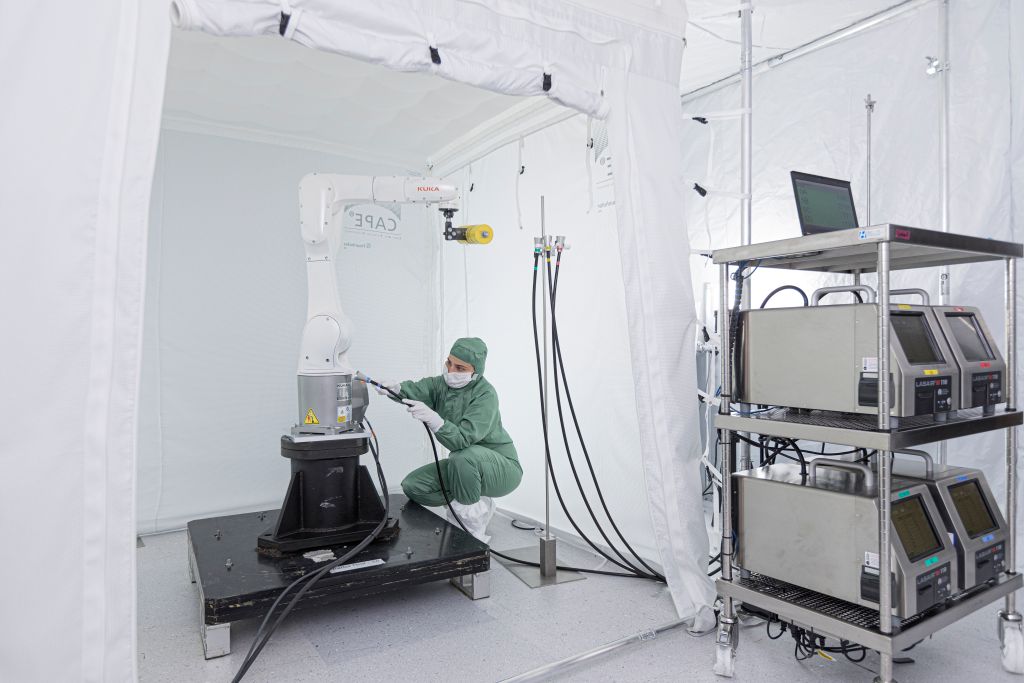
The prevailing shortage of skilled workers is also affecting laboratories and medical facilities. The existing staff spends a large part of their daily working time on monotonous routine tasks, which delay higher-value, value-creating activities. Therefore, automation solutions are in high demand in this environment. However, an 'off-the-shelf' system is usually unsuitable because the tasks and objects to be handled are diverse.
Fraunhofer IPA is therefore developing a customizable software kit for autonomously operating laboratory robots that enables efficient automation of such routine tasks. For example, robots should be enabled to independently collect process-relevant consumables, dose chemicals or samples autonomously, procure sensitive samples 'just in time' from cooling or heating cabinets, or, in the long term, conduct experiments completely independently. For this, the robot must master tasks such as locating and grasping various containers, precisely weighing different liquids and solids, opening cabinets and doors, and autonomous navigation.
At Automatica, Fraunhofer IPA will showcase the current state of development with a demonstrator that can automatically dose liquids of various viscosities and distribute them into defined target containers.
Implementing safe human-robot collaboration semi-automatically

Modern automation solutions are expected to be as flexible as possible due to small batch sizes. However, this also means that safety measures must be continuously adjusted. The basis for this is the risk assessment.
and CE marking – two processes that are still very lengthy and require a lot of expert knowledge. The Fraunhofer IPA has therefore developed tools for both the planning and usage phases that simplify and accelerate safety design.
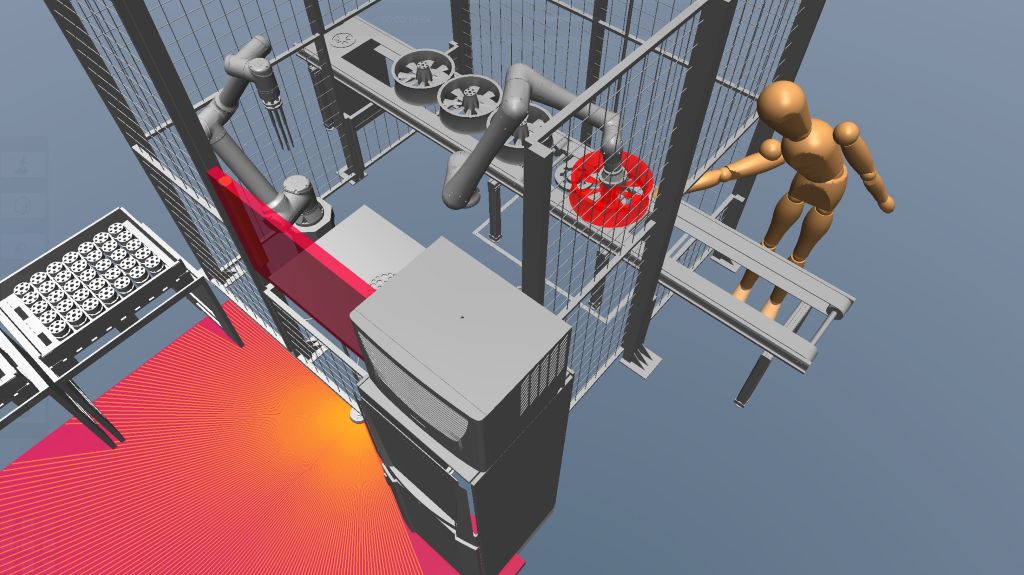
The trade fair exhibit "CARA" is a tool for the planning phase that extensively supports safety design. It helps professionals with a 3D simulation to implement all necessary safety measures even before the commissioning of a system.
six steps to plan and implement. CARA takes into account parameters such as potential hazards, safety distances, and possible interactions between humans and machines. Collision and pinching hazards are automatically identified. The tool then makes suggestions for risk mitigation measures.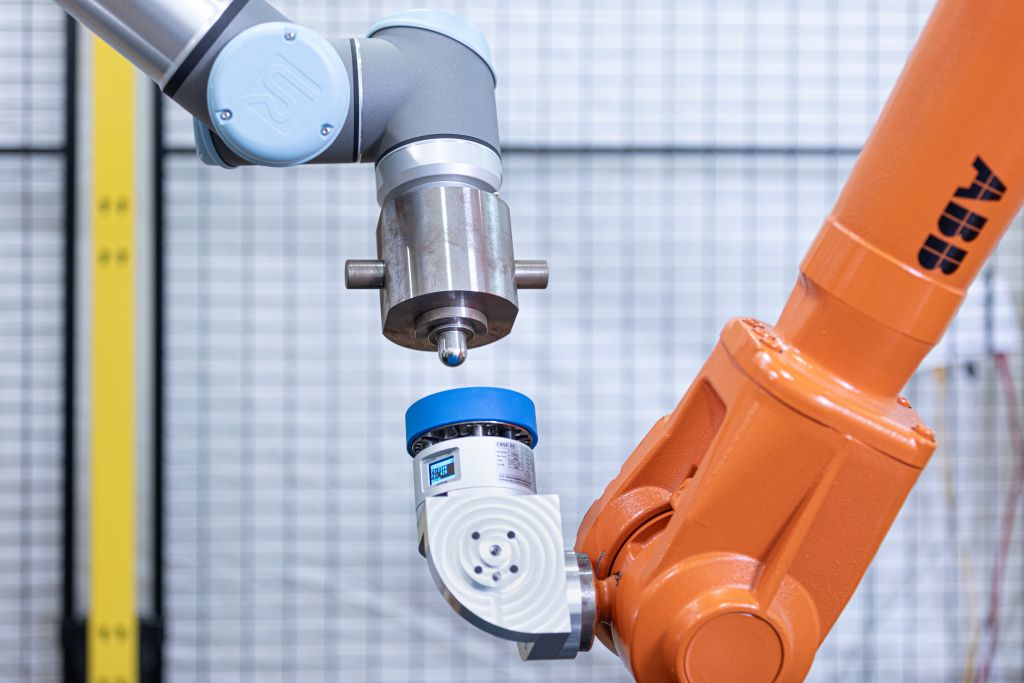
Also in the planning phase, collision models help, which are determined using an automated testing stand developed by Fraunhofer IPA. They address the challenge that maximum allowable forces and pressures during potential collisions can limit the speeds and cycle times of the robot, thereby reducing the performance of the system. However, forces occurring during operation are difficult to calculate mathematically. Once created, the collision models allow for precise assessment of performance already in the planning phase. CARA can rely on these models.
Intuitive robot programming using a new user interface
Robot programming remains a bottleneck when it comes to efficiently setting up or reconfiguring an application. A new user interface demonstrates how to reduce the necessary expertise and make robots more accessible, using a simulated disassembly application at the trade fair as an example. The user interface allows users to assemble individual skills, or robot capabilities, into a complete task. For this purpose, skill modules from the
Software "pitasc" from Fraunhofer IPA can be used, which can be assembled and combined in an application-specific manner without any programming knowledge.
Automation in ultra-clean environments: 2ndSCIN and Tested Device
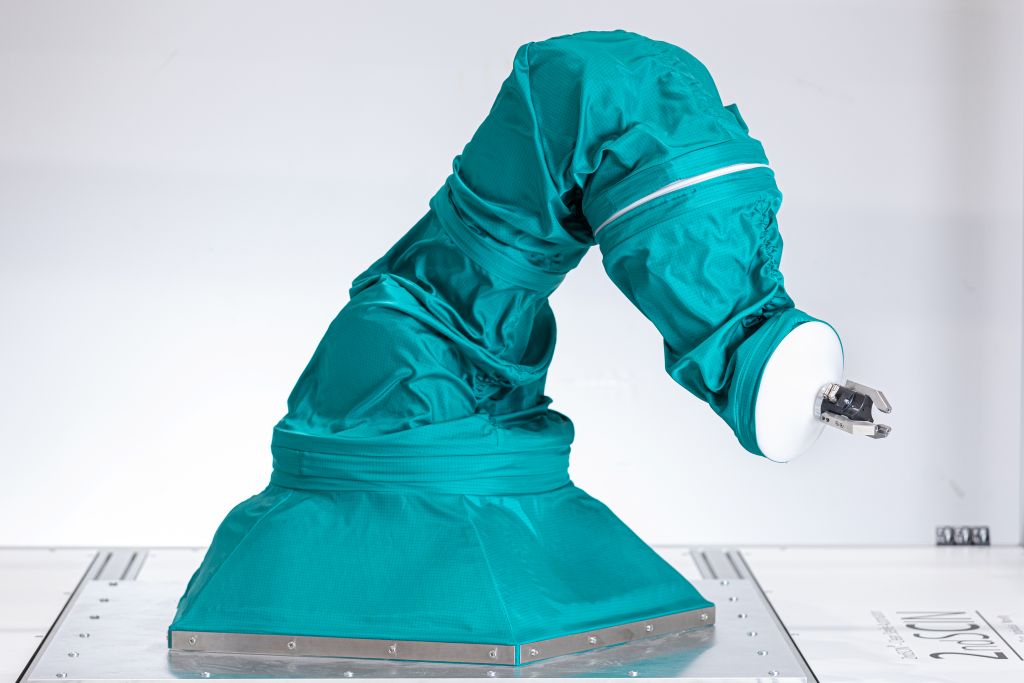
2ndSCIN is a patented protective covering that prepares robots and other movable automation components for ultra-clean production. The covering consists of a permeable, flexible, and multilayer textile that is designed to...
is modeled after the functioning of human skin. The textile layer is equipped with sensors that continuously measure parameters such as particle concentration, chemical contamination, pressure, or humidity.
AI-based algorithms evaluate this sensor data and enable, for example, predictive maintenance. Depending on the application, two or more textile layers can be stacked on top of each other, separated by spacers.
In the gaps, for example, air can be sucked in or expelled. This allows for the removal of particles that originate from the environment or from the automation component. The introduction of special gases into the gaps of the system enables, for example, its sterilization. The casing can be changed in about an hour and can be reused after decontamination. "2ndSCIN is extremely variable in its design, allowing us to meet individual needs. This addresses many requirements for cleanliness-compatible protective casings for cleanroom components that previous products do not fulfill," explains Udo Gommel, head of the contamination-critical production division at Fraunhofer IPA. He and his team presented 2ndSCIN at Automatica.
For many years, Fraunhofer IPA has also offered processes for particle emission, outgassing, ESD, and other requirements. The products examined are awarded the Tested Device certification, which trade fair visitors can also learn about at the event.
Companies receive a confirmation of the purity and cleanroom suitability of their systems, devices, or consumables with the product- and customer-specific test report. The examinations include
the production environments atmospheric clean rooms, dry clean rooms, and vacuum conditions.
Contact: