Users of sliding head lathes often face a problem when long turning and small milling chips occur simultaneously. Classic hinge belt conveyors are overwhelmed in this case. Instead of conveying all chips from the machine, the small chips fall through the gap between the hinge plates and quickly sludge the tank and conveyor system. Medical technology and bone screw manufacturer Hermann has found a very efficient solution with a KNOLL plate conveyor.
Pure turning – does it still exist (here)? Almost all lathes today are equipped with capabilities for drilling, milling, and other machining processes. Users utilize driven tools and milling spindles for complete machining, so that some parts falling from a lathe suggest processing by a milling machine.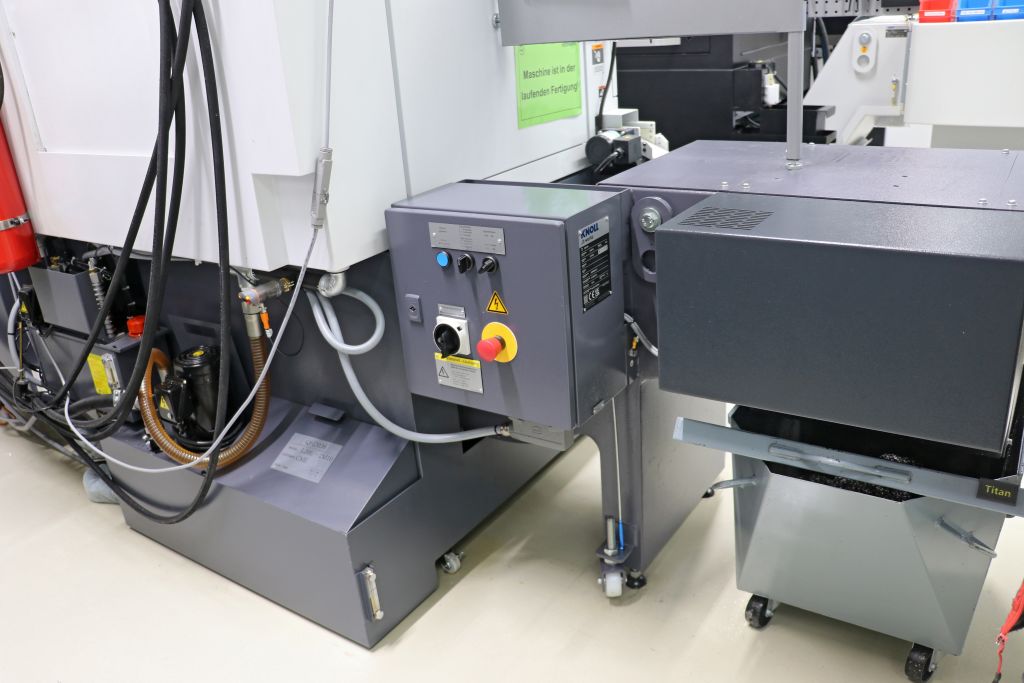
However efficient the complete machining of bar material is, difficulties can arise with sliding head turning, for example with chip transport from the machine: While the typically generated long turning chips are easily transported to the container by the classic hinge belt conveyor, the fine drilling and milling chips pass through the hinge plates. They are collected in the machine container and increasingly sludge the coolant tank system.
Filters downstream for coolant preparation also become prematurely contaminated, and especially with light chip fractions from aluminum or titanium, the worst-case scenario can occur: The required cooling of the machine and tools is absent, the machine stands still – production downtime.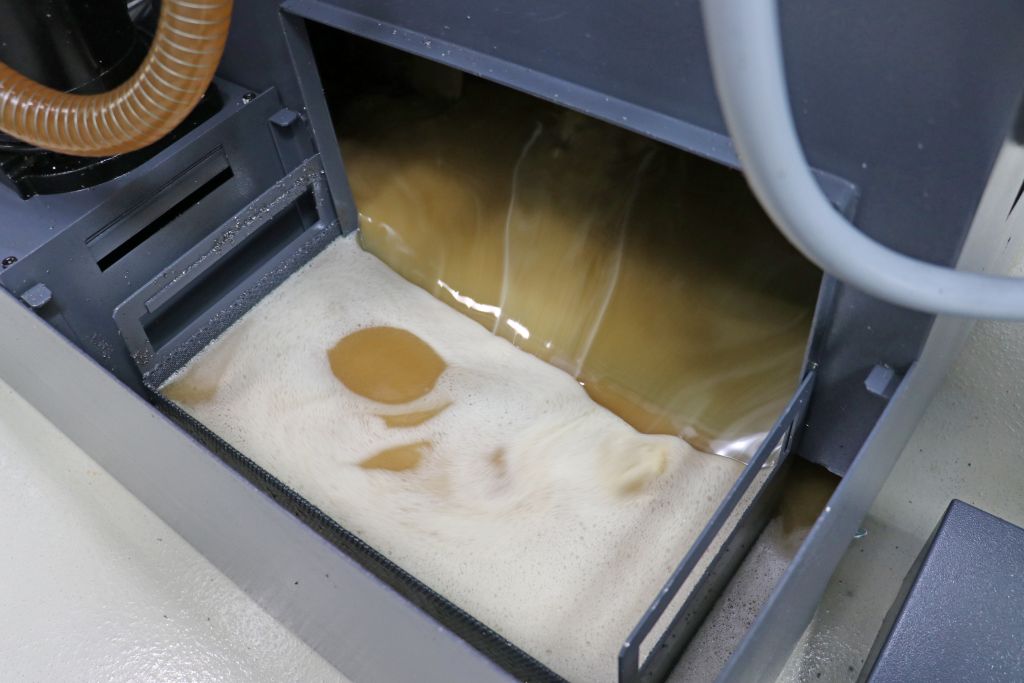
Practical example: Bone screws made of titanium
Hermann Medizintechnik in Fridingen faced such challenges. The renowned manufacturer of implants and instruments primarily uses modern Citizen sliding head lathes of the type Cincom L20 for the production of bone screws. Wolfgang Epple, head of the turning department, describes:
"These screws are demanding components made of titanium, where turning plays a rather subordinate role today. Because the screws contain numerous cross holes, recesses, and flat surfaces." He points to a sample screw with a diameter of just under 3 mm and a length of 80 mm, highlighting the Torx screw head that is precision machined with a 0.3 mm cutter: "At a depth of 1.3 mm, we must maintain a tolerance of 14 µm."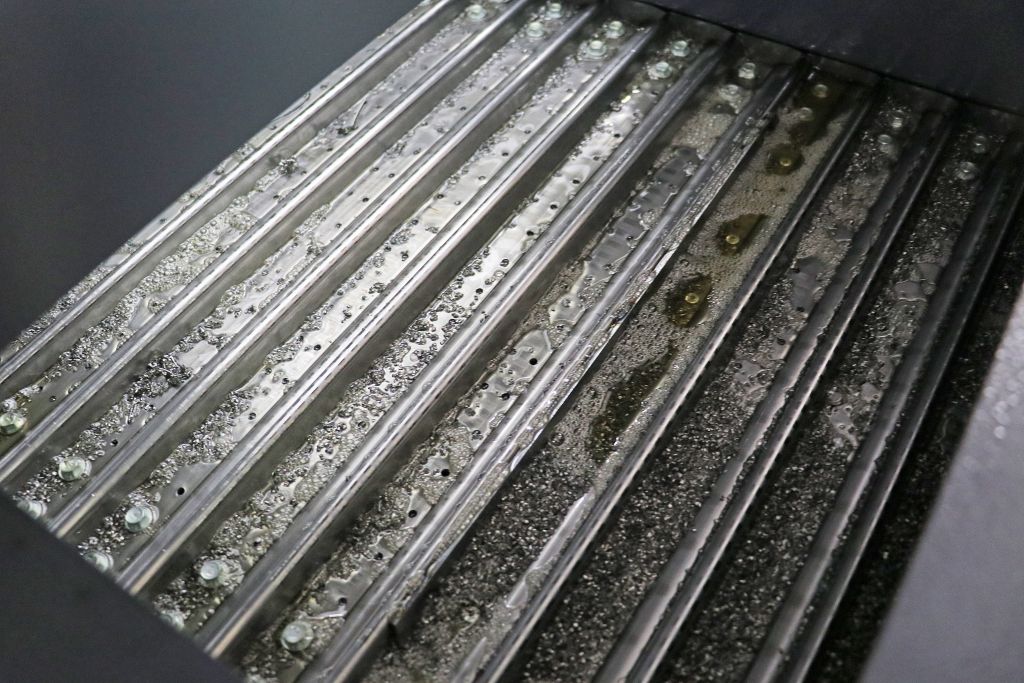
In all these machining processes, tiny, very light titanium chips are generated. "Most problematic chips occur during thread whirling," explains the trained turner and industrial master. The raw material – usually three-meter-long titanium bars with a diameter of six millimeters – receives the screw contour in the desired diameter from a nine-blade whirling apparatus. The quantity of small chips generated accumulated at Hermann Medizintechnik in the hinge belt conveyor, in the tank, and in downstream units.
Eduard Schoener, the process optimizer responsible for turning, reports: "After a short time, the coolant container was contaminated, and the light, floating chips hindered the oil flow, so we had to dismantle the entire conveyor and clean the tank. A major effort that meant one to two days of machine downtime every month."
The alternative: a plate conveyor
That cannot be, Eduard Schoener thought, and turned to KNOLL Maschinenbau in Bad Saulgau, a long-valued partner for coolant and chip management at Hermann Medizintechnik. The specialists there for chip transport were already aware of the problem, and a solution was already well advanced. Sales representative Matthias Wachter reports:
"That was in early 2025. At that time, we were able to offer our customer the replacement of the hinge belt conveyor with the prototype of a plate conveyor that we had recently adapted specifically for such sliding head lathes."
Plate conveyors had been part of the KNOLL program for longer, but until then only for larger machines. However, the Cincom machines (like other sliding head lathes) have a lower machine bed. Therefore, KNOLL developed the special variant with smaller edges, etc., which fits under these machines.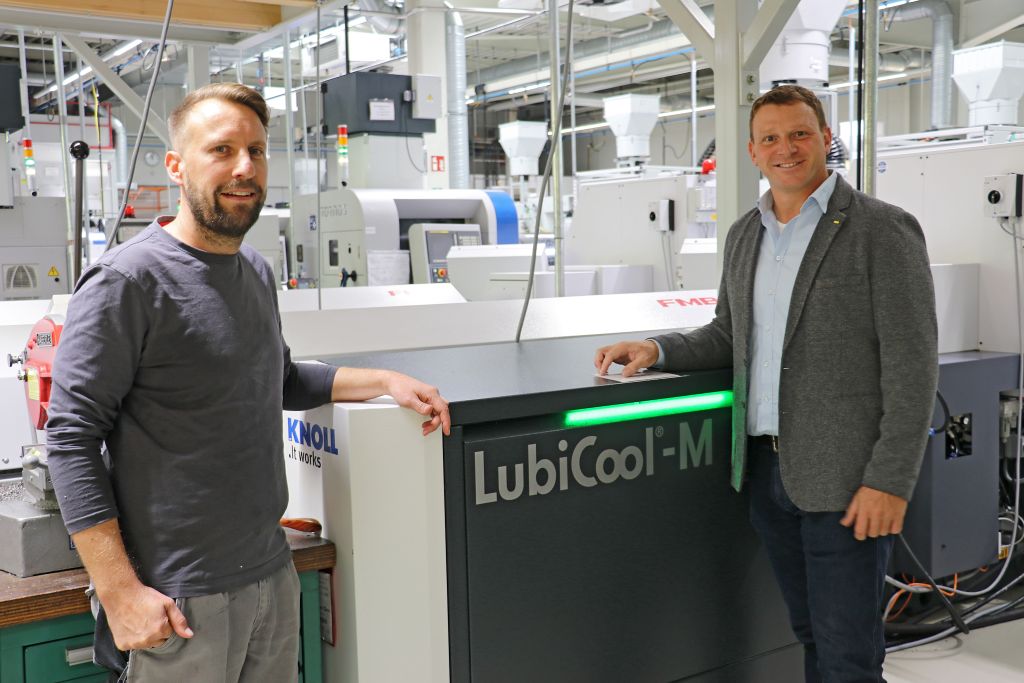
How the plate conveyor works
Basically, plate conveyors are constructed similarly to hinge belt conveyors, except that instead of hinges, there are plates. These form a form-fitting band through which hardly any chips can pass. For use on machine tools with wet machining, the band is perforated so that the coolant can drain off and be fed back into the machining process.
The test installation of the modified conveyor for sliding head lathes was a complete success at Hermann Maschinenbau. "The plate conveyor has worked perfectly from the start," says process optimizer Schoener. "Therefore, we retrofitted our second Cincom L20 machine for screw production identically."
The investment pays off quickly
When another Citizen Cincom L20 was delivered in mid-2026, it already included the described plate conveyor. Matthias Wachter explains: "The success of this conveyor for sliding head lathes was so overwhelming that we included the product in our standard program in 2025. Citizen also now offers our conveyor in the catalog for the Cincom lathes."
Turning department head Epple summarizes: "The situation has improved immensely for us. It is now sufficient to clean the machine once a year according to the maintenance plan. This means we gain one to two days of production capacity per machine each month, so the investment pays off quickly."
Epple also emphasizes the process reliability that has grown due to the reliable chip transport: "Our screw machines are designed for unmanned weekend operation. For this, we absolutely need a clean medium that is available to us under constant high pressure."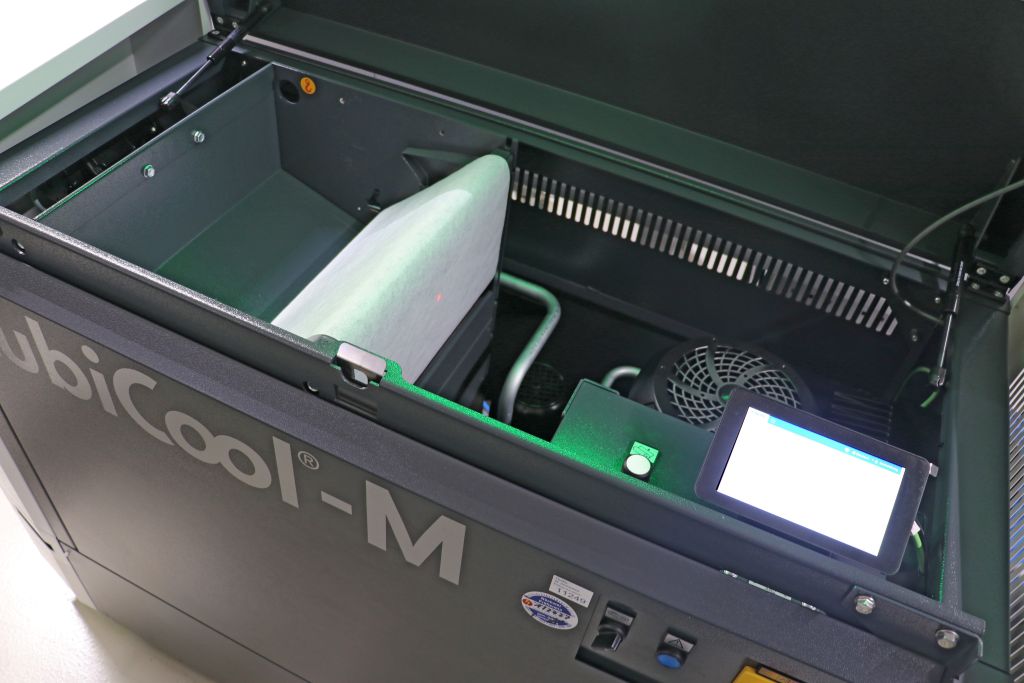
Constant high pressure is essential
With this, the trained turner and industrial master refers to other KNOLL products that are essential for screw manufacturing: the high-pressure systems LubiCool. Wolfgang Epple mentions: "We have a deep drilling unit on our Citizen machines for screw production that only works with high-pressure coolant supply. This machining option is very important for us because we manufacture many cannulated screws."
At Hermann Medizintechnik, commonly used deep hole drills have a diameter of 1 to 2 mm and can be up to 150 mm long. These single-lip drills feature an internal coolant supply channel with a maximum diameter of 0.4 mm. "To reliably deliver the cooling to the cutting edge, we need a pressure between 130 and 150 bar, and it must be constant," explains Epple. "The KNOLL high-pressure system LubiCool-M provides us with these values, even when two or three valves are opened simultaneously. That makes the difference compared to some other suppliers."
The investment pays off quickly
The high pressure is also needed by Wolfgang Epple's team at the lathes to be able to define the chip removal and specifically for the swirl apparatus. Without cooling, a temperature would arise there that could quickly lead to sparks and a fire. "In addition, we achieve very long tool life and correspondingly reduced costs through the high-pressure supply," adds Eduard Schoener. He also highlights the filter performance of the LubiCool-M:
"This high-pressure system is equipped with a fleece roll that ensures a filter fineness of up to 20 µm. The service life of the filter medium is longer than one year, which means very low operating costs."
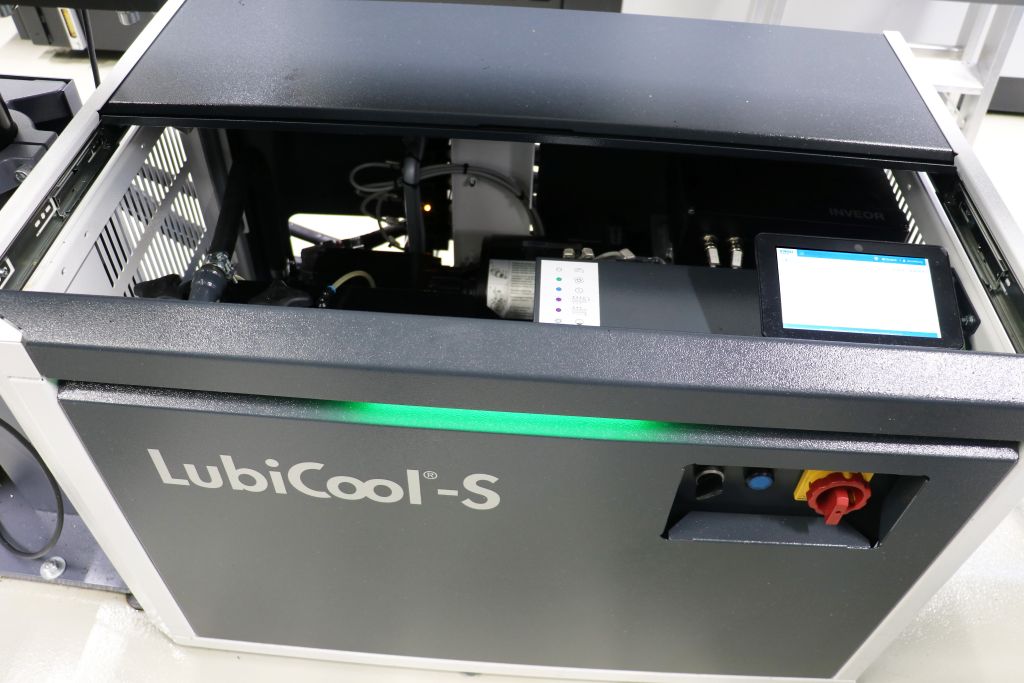
The quality of the KNOLL high-pressure systems LubiCool-M impressed Eduard Schoener several years ago. However, the M variant is a standalone unit that does not fit everywhere due to its dimensions of 1496 x 600 x 1198 mm. With the KNOLL LubiCool-S (985 x 635 x 663 mm), there is a smaller variant that fits under any bar loader. "We have now invested in three LubiCool-S high-pressure systems. They provide a pressure of up to 100 bar, which is more than sufficient for our Citizen ATC long-turning machines and the operations running on them."
A partner as one wishes for.
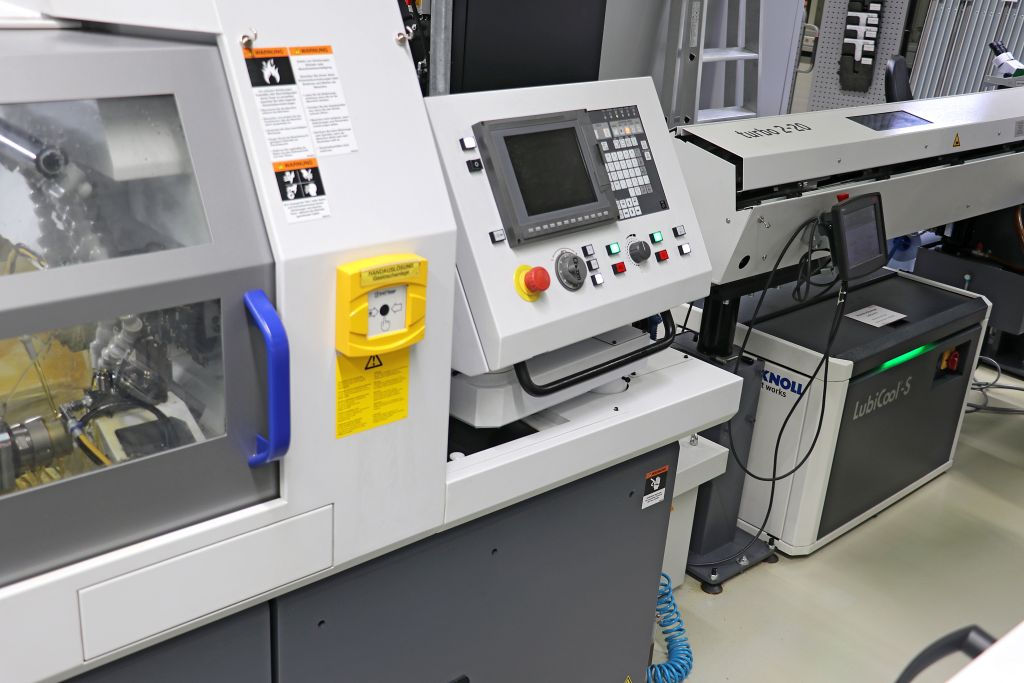
The maintenance effort is also low with LubiCool-S. The filter cartridge installed there needs to be replaced after about six months, but this is not a major effort, as Wolfgang Epple confirms. The head of the turning department specifically highlights the good partnership with KNOLL: "The KNOLL employees are immediately available to assist us whenever any problem arises. Not only in turning but also in the milling department, where all 23 Hermle machining centers are equipped with KNOLL chip conveyors and filtration systems."
"The service is simply excellent." Eduard Schoener adds: "The entire collaboration is exemplary. This was also the case during the testing of the plate conveyor. A KNOLL employee regularly came by to see if everything was working and to offer their support. You definitely don't get that from every supplier."
Contact:
www.hermann-medical-technology.com