
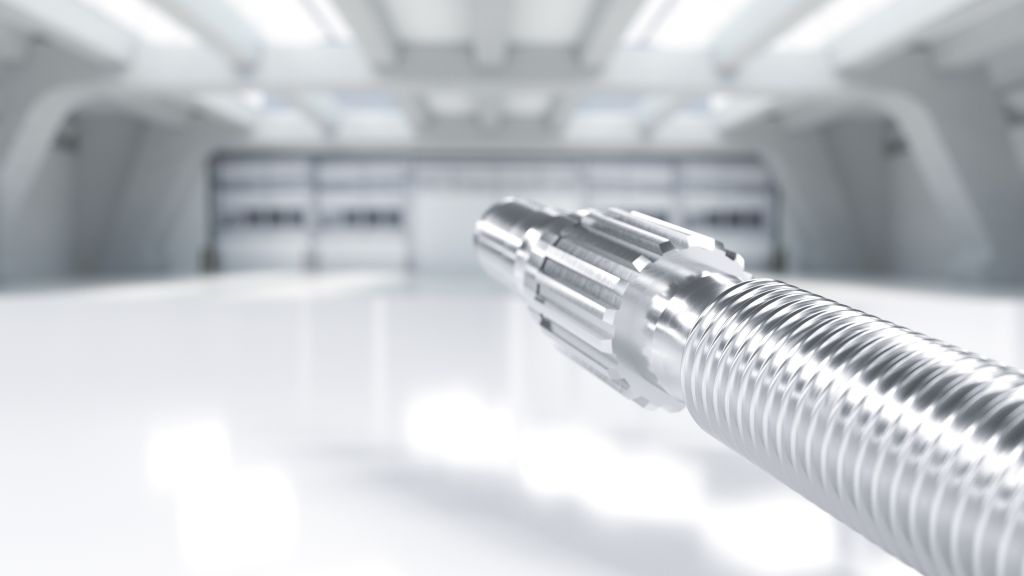
Few machine elements are as ubiquitous and important as the thread. This ingenious principle – a helical groove that transforms rotary motion into axial force – was developed thousands of years ago in early high cultures, used in antiquity for presses and water lifting devices, and became the basis of modern machine mass production through standardization during the industrial revolution. Today, it literally holds our modern world together, whether it's the screw from the hardware store, the ball screw in electric steering gear, or the implant thread in medicine. The rule is: the higher the demands on the thread, the more challenging its production.
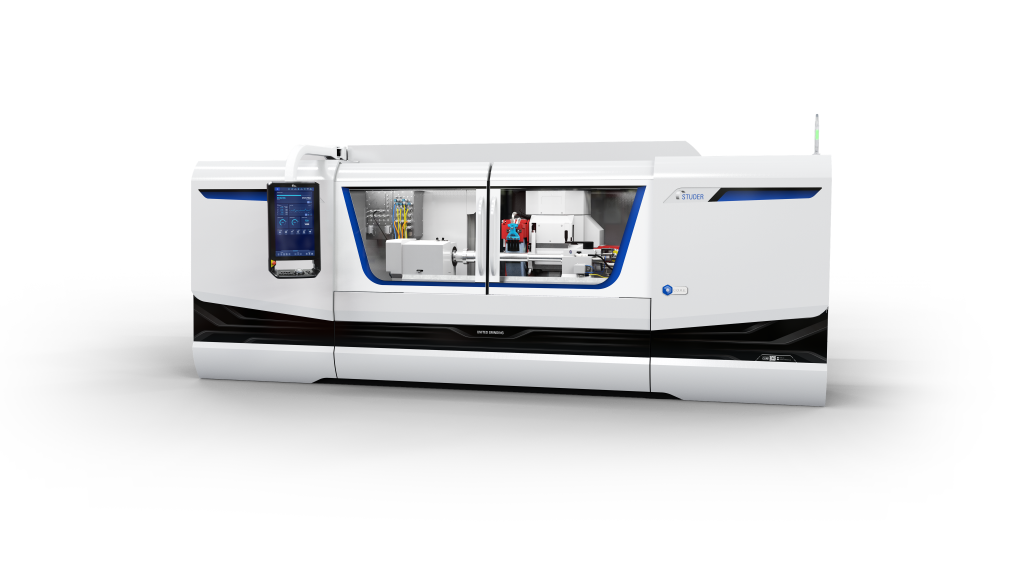
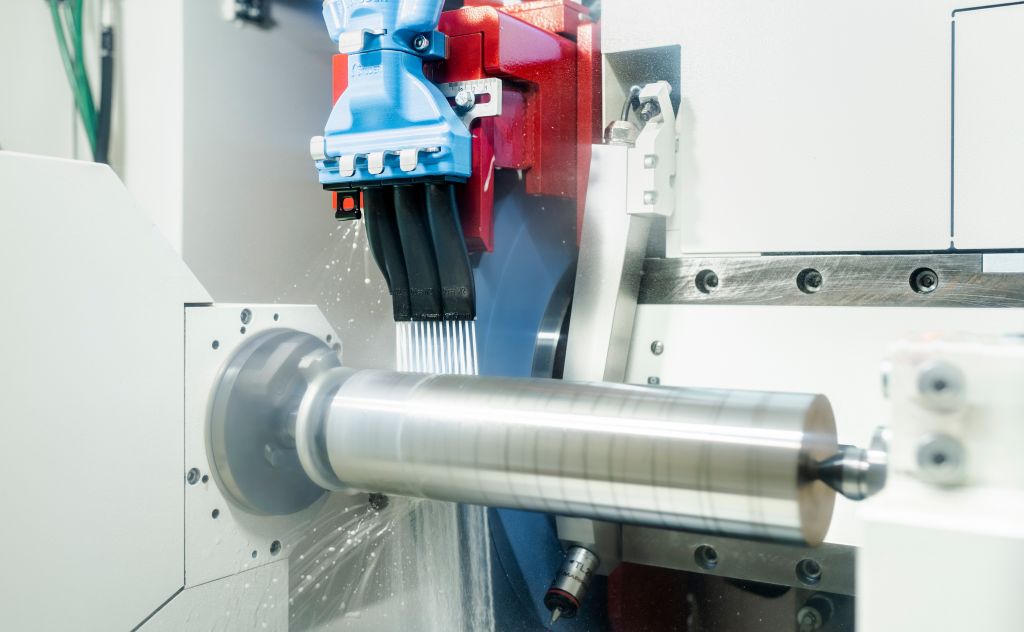
High-performance threads are usually produced after hardening the workpiece, which often can no longer be turned or milled, but can only be ground. In this process, a specially profiled grinding wheel transfers the negative image of the thread profile into the workpiece under synchronized CNC control.
This process places the highest demands on the grinding machine in terms of precision: tolerances are in the few micrometers, reliable reproducibility is extremely important, heat build-up quickly leads to grinding burns, and even the smallest vibrations affect surface quality. All of these are grinding technology challenges that STUDER is well acquainted with. The modern universal cylindrical grinding machines from the Swiss technology company enable high-precision thread grinding for industrial applications.
Thread grinding on the universal cylindrical grinding machine brings advantages
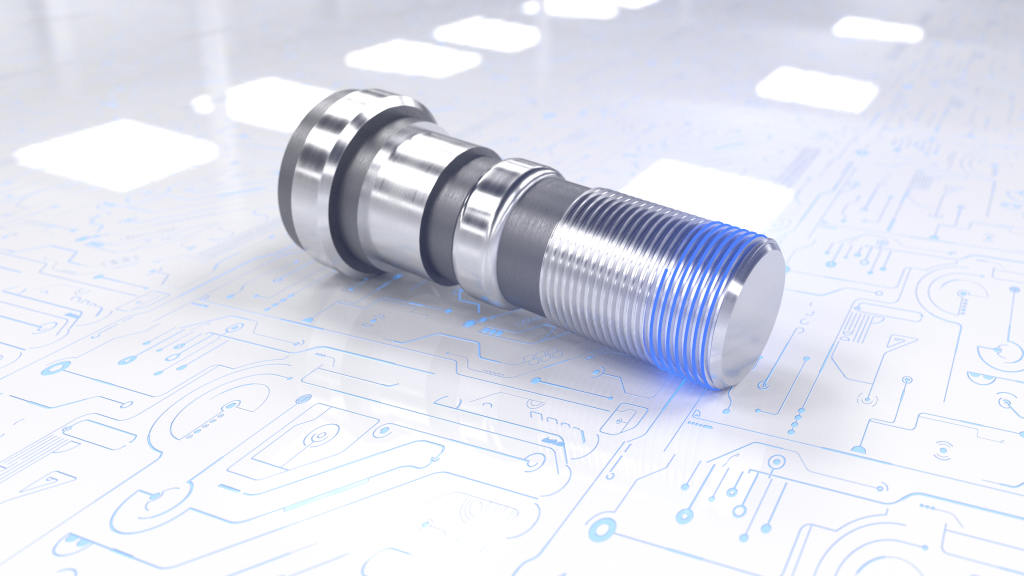
“For customers, there are numerous advantages to being able to grind threads on a universal cylindrical grinding machine instead of relying on a specialized machine,” explains Daniel Huber, CTO of Fritz Studer AG. The traditional manufacturer began developing innovative software in conjunction with a controlled C-axis for this demanding manufacturing technology in the mid-1990s.
Today, all STUDER universal cylindrical grinding machines in the current portfolio are capable of thread grinding with the corresponding software option. This universal machine concept offers clear advantages. Because cylindrical, form, and thread grinding in a single setup eliminates setup errors and ensures higher positional accuracy. Those who previously operated specialized machines or outsourced parts are now consolidating on a single machine, saving floor space and bringing value creation in-house. It is therefore not surprising that every sixth delivered STUDER machine is equipped for thread grinding.
Whether ISO metric threads, fine threads, fastening threads on tool holders, tapered threads, or internal and external thread gauges: on all STUDER models, the majority of industry-standard components can be produced with the C-axis and software-based profile correction. “And for workpieces with a large pitch angle, such as multi-start ball screws, screws, or extruder shafts, we introduced the A-axis as a swiveling grinding spindle axis in 2013,” explains Huber. It is available on the S41 and S22 – a revolutionary mechanical solution that did not exist for universal cylindrical grinding machines before.
A-axis, WireDress, and SmartJet: Maximum performance in thread grinding
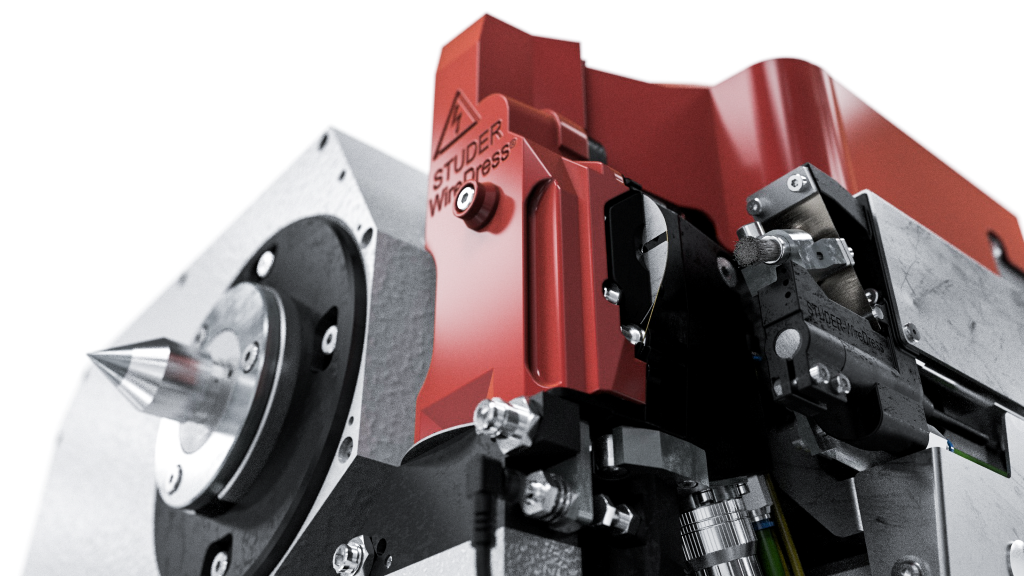
Another groundbreaking STUDER technology for thread grinding is WireDress®. The dressing technology based on the principle of electroerosion for external and internal grinding on the S41 and S22 can contactlessly profile and sharpen metal-bonded diamond and CBN grinding wheels at full working speed directly in the machine.
The conditioned grinding wheels are extremely sharp, reduce the risk of grinding burns, and can grind threads directly from the solid. The result is significant productivity increases compared to conventional dressing methods. The intelligent STUDER coolant nozzle system SmartJet™ has also been specially developed for thread grinding and prevents grinding burns. With the most powerful thread grinding configuration in the STUDER portfolio, even the hardest materials with a large pitch angle can be processed reliably, such as carbide threads for tool holders, high-precision ball screws in drive technology, or robotic lead screws in high production.
All customers benefit from a well-thought-out software ecosystem that allows even less experienced users to safely enter thread grinding and reduces errors. StuderThread first creates the dressing program for the grinding wheel. The library of all common ISO standard threads included there and the ability to graphically configure multi-start threads or roughing and finishing teeth significantly reduces programming time. During the dressing process, ExactDress checks using body sound sensor technology whether the grinding wheel profile is fully conditioned. The dressing process is automatically repeated until the grinding wheel is optimally shaped across the entire profile. Subsequently, InOneThread is responsible for the grinding cycle. The smart software visually represents the thread grinding process graphically on the screen in advance and suggests sensible cutting divisions. The entire operating process is intuitively designed, and if questions arise, customers always have access to the reliable customer care of STUDER as well as training by competent professionals.
Intuitive software for every experience level
The software developed by STUDER with extensive grinding know-how is embedded in C.O.R.E., the modern and networked operating platform for machine tools from UNITED GRINDING with a large touch panel directly on the machine. There, control, programming aids, and process monitoring are bundled in a user-friendly interface.
STUDER's extensive experience in automation also benefits customers in thread grinding. For example, STUDER machines can be configured for high-volume production with portal loader systems into fully automated grinding cells that deliver threaded parts with reliably high quality in unmanned operation.
In the future, the demands for tolerances, materials, and surface quality in thread grinding will continue to rise, driven by trends such as electromobility, humanoid robots, efficiency, and sustainability, emphasizes Huber. Therefore, STUDER continuously develops and optimizes hardware and software and works on the implementation of new technologies. For example, the evaluation of sensor data can further improve process monitoring and detect anomalies early. “Thread grinding on universal machines was a pioneering achievement 30 years ago. Today, it is one of the most economically attractive options in precision manufacturing for our customers,” says Sandro Bottazzo, CEO of Fritz Studer AG. He is confident that the thread will remain a backbone of the modern world in the future.
Contact